.png)
DR Congo’s Long-Awaited Redemption: From 1974 Trauma to 2026 World Cup
Published: 07:23 PM, 19 June 2026
For more than half a century, a dream lay dormant in the heart of Central Africa. In the vast landscape where the Congo River flows toward the Atlantic, football carried a wound that never fully healed. The memory of 1974 refused to fade—an era when the nation, then known as Zaire, stepped onto the world stage under the shadow of dictatorship and emerged with humiliation that would define generations.
That long silence has now been broken.
The Democratic Republic of the Congo has finally returned to football’s grandest stage, securing qualification for the 2026 FIFA World Cup after defeating Jamaica 1–0 in extra time in the inter-confederation playoff. The victory triggered nationwide celebrations, with the government declaring a public holiday and streets in Kinshasa erupting in joy, tears, and disbelief.
For many, it was more than qualification. It was historical repair.
The Shadow of 1974
In 1974, the country—then called Zaire—appeared at the FIFA World Cup in West Germany under the authoritarian rule of Mobutu Sese Seko. Despite being one of Africa’s strongest teams at the time, having won the Africa Cup of Nations in 1968 and 1974, their World Cup campaign collapsed amid political interference, financial disputes, and psychological pressure.
Players reportedly went unpaid after government officials allegedly mismanaged FIFA funds. What followed was a breakdown in morale and structure. Heavy defeats and internal unrest turned their campaign into one of the most controversial in World Cup history.
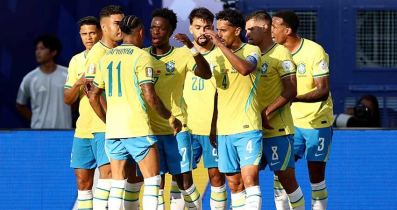
One infamous moment came during a match against Brazil, when defender Mwepu Ilunga ran out of the defensive wall and kicked away a free-kick before it was taken—an incident widely misunderstood at the time but later explained as an act of desperation amid threats and fear.
That tournament left deep scars. After returning home, state support for football declined, and many players struggled to rebuild their careers or livelihoods. The legacy of that failure lingered for decades, often described as a “football curse” attached to the nation’s name.
A New Generation Emerges
Fifty-two years later, that narrative has been rewritten.
The decisive breakthrough came in the intercontinental playoff final against Jamaica. In a tense and tightly contested match, DR Congo struck in extra time to secure a historic 1–0 victory, sealing their place in the 2026 World Cup.
But the real story unfolded in the days that followed.
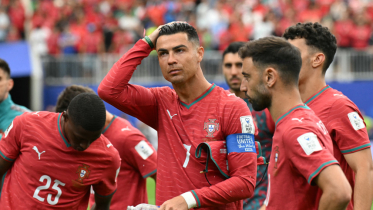
In Houston, at the NRG Stadium, DR Congo stepped onto football’s biggest stage once again—this time not as a symbol of failure, but of resilience. Facing a star-studded Portugal side featuring veteran icon Cristiano Ronaldo, few expected an upset.
Portugal struck first in the 6th minute, asserting control and reinforcing expectations of a routine victory. The stadium, packed with over 60,000 fans, largely wearing red, echoed with confidence.
But football, as always, refused to follow the script.
A Historic Equaliser
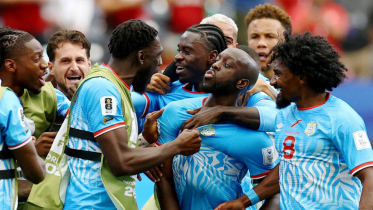
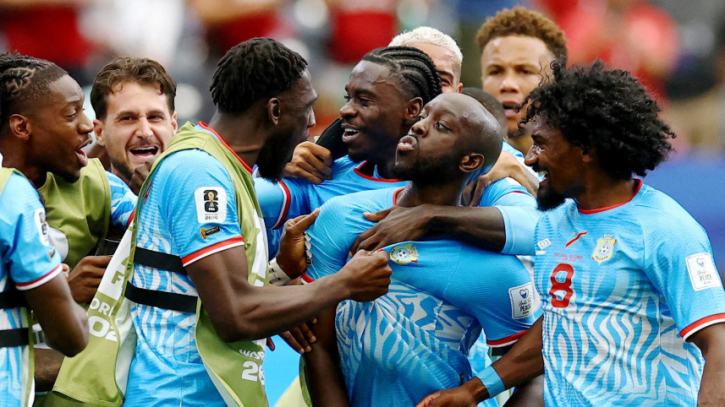
Deep into first-half stoppage time, DR Congo found their moment. A precise cross from Arthur Masuaku swung into the box, and Yoane Wissa rose above the defence to head home the equaliser.
Silence turned into eruption.
For DR Congo supporters in the stadium—small in number but immense in spirit—it was more than a goal. It was history. It marked the nation’s first-ever World Cup goal after decades of absence.
The match ended 1–1, securing DR Congo’s first-ever World Cup point in history.
Beyond the Scoreline
The result cannot be measured by numbers alone.
It represents a generational shift—from a past defined by political manipulation and sporting collapse to a present built on professional discipline and international competitiveness.
The ghosts of 1974 still linger in memory. That team, once considered among Africa’s best, became a symbol of how politics can distort sport. But the current generation has reclaimed that narrative, transforming it into one of endurance and renewal.
In Kinshasa, celebrations stretched deep into the night. Families gathered around televisions, recalling stories passed down from parents and grandparents—stories of the 1974 squad, of lost opportunities, and of a dream that once seemed permanently broken.
Now, that dream has returned—not as memory, but as reality.
A Nation Reborn in Football
The Democratic Republic of Congo’s qualification is more than a sporting achievement. It is a cultural moment, a national release of decades of frustration and longing.
From the trauma of Zaire’s 1974 World Cup campaign to the joy of a 2026 qualification and historic draw, the journey reflects a full-circle transformation.
Football, in this case, did more than entertain. It healed.
And for DR Congo, the long night is finally giving way to dawn.
MMR
.png "Advertisement")