.png)
Hydrogen-powered train launched in India
Published: 05:35 PM, 17 July 2026
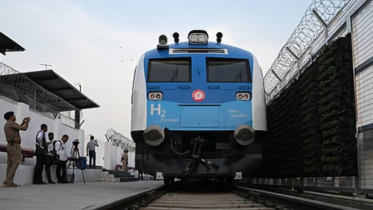
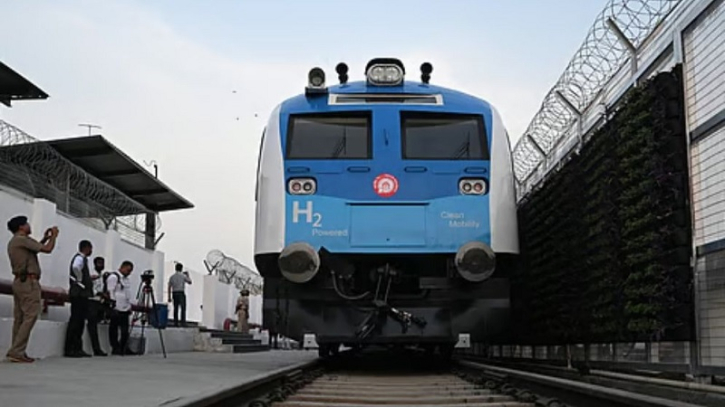
India has entered a new era of clean and environmentally friendly rail communication. The country's Prime Minister Narendra Modi inaugurated the first hydrogen fuel cell-powered train built with its own technology. Officials have called this 10-coach train, which runs on the 89-km Jind-Sonepat route of the Northern Railway, the world's longest and most powerful hydrogen train.
With this inauguration, India has joined the elite club of hydrogen technology in rail communication after developed countries like Germany, Japan, China and the United States.
Running in a completely opposite direction to the traditional diesel engine, this hydrogen train can generate onboard electricity with its own technology without any overhead electrical wires. At the heart of this system is a 1,200-kilowatt proton exchange membrane fuel cell, which generates electricity through a chemical reaction between hydrogen and oxygen.
The train's two power cars carry compressed hydrogen gas in high-pressure cylinders. When this hydrogen enters the fuel cell, a platinum catalyst separates the hydrogen protons and electrons. When the electrons are forced through an external electrical circuit, electricity is generated, which powers the train's traction motor.
At the same time, oxygen from the surrounding air combines with the hydrogen protons and electrons. This completely electrochemical process produces no combustion or smoke. As a result, instead of harmful carbon emissions, only water vapor and heat are released as byproducts, making it one of the cleanest means of transportation in the world today.
Excess electricity generated by the fuel cell is stored in lithium iron phosphate batteries, which provide additional power when the train accelerates and regenerates and stores the energy generated during braking.
Hydrogen has a much higher energy density than diesel. While diesel has an energy density of 43 megajoules per kilogram, hydrogen has an energy density of around 120 megajoules. This enables it to operate at a high efficiency without generating any carbon emissions.
To keep the train running round the clock, India's largest railway hydrogen storage and refueling station has been set up at Jind in Haryana. Built entirely using indigenous technology, the station can store around 3,000 kg of hydrogen and is built in compliance with international safety standards.
Built under the technical guidance of the Research, Design and Standards Organisation, the 10-coach train can carry around 2,600 passengers. Designed to have a maximum speed of 110 kmph, the train will be operated at a speed of 75 kmph for safety reasons. There is no compromise on the safety of this train, which connects Jind Junction, Gohana Junction and Sonipat. It includes hydrogen leak detectors, flame detection systems, automatic hydrogen shut-off mechanisms and real-time health monitoring for drivers.
This pilot project, undertaken under the ‘Atmanirbhar Bharat’ and ‘National Green Hydrogen Mission’, will provide Indian Railways with important experience in expanding its eco-friendly public transport system in the future and achieving its long-term goal of net-zero carbon emissions.
Source: India Today.
.png "Advertisement")