.png)
Military arrogance or assessment of reality—will the United States continue its strategic mistakes?
Published: 10:27 PM, 30 July 2026
Wars are not won only on the battlefield; sometimes the biggest defeats are caused by overconfidence and miscalculation of military power. The history of US foreign policy is full of examples where pride in weapons has been given priority over realistic analysis. As a result, Washington has been trapped in the trap of a long, expensive and fruitless war.
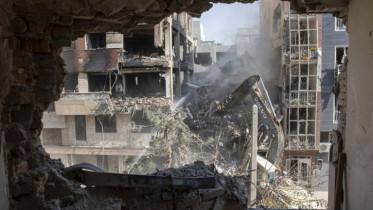
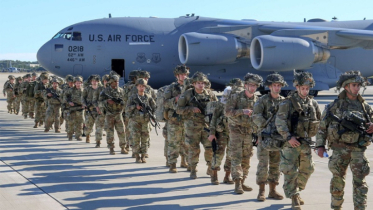
The US’s ‘Forty Day War’ against Iran can also be assessed from this perspective. Although this war began with the aim of changing the balance in favor of the US and its allies through a demonstration of military power, in reality it became a test of ‘hard power’ or the limits of military power.
In this context, the US magazine Foreign Affairs wrote in their in-depth analysis that on the eve of Operation ‘Epic Fury’, the Pentagon had concluded that the US could achieve a quick and final victory only through military force. Their idea was that Iran would be forced to retreat in a short time due to the force of a fierce attack, technological superiority and operational capabilities. But in reality, the opposite happened on the ground. Washington could not achieve their strategic goals, and on the contrary, Iran did not budge an inch from its position.
According to Foreign Affairs, due to this misconception, the United States is now the victim of a disgusting situation of its own making; a situation that has not brought any sustainable gains for Washington, but has imposed a huge security, political and economic cost on them.
Misconceptions of power and repetition of the past
This assessment of the concept of power of US policymakers is very critical. In recent years, the idea has repeatedly emerged in Washington that geopolitical realities and the goodwill of regional states can be replaced with military superiority. The same mentality led to the United States facing extreme disasters in Iraq and Afghanistan. Both wars began with absolute military superiority, but in the end Washington failed to achieve its desired political goals and returned empty-handed after spending huge sums of money for years.
The same miscalculation has been repeated in the case of Iran. Some US policymakers believed that a military strike could break Iran’s defenses and force Tehran to comply with Washington’s demands. However, war experience has shown that deterrence is not simply a matter of numbers of missiles or fighter jets; rather, it is a combination of military capability, resilience, internal unity, political will, and willingness to pay. Ignoring these elements has led to the US’s initial calculation failing.
The Path to the Future: Education or Conflict?
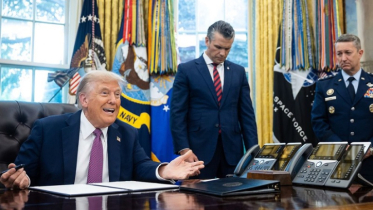
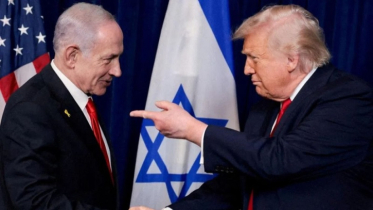
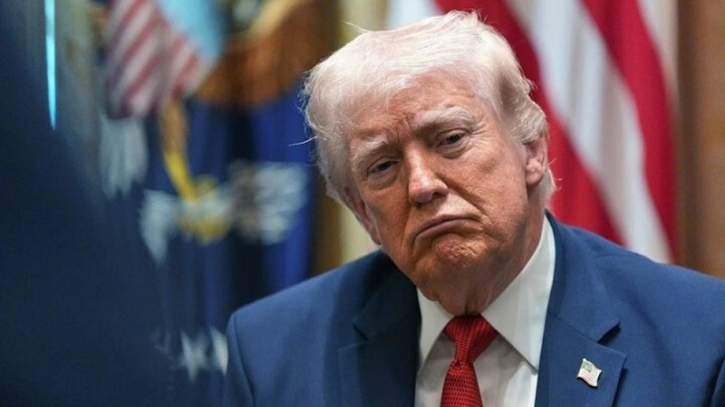
The situation has now taken a new turn. In addition to continuing political and economic pressure on Iran, Donald Trump is once again using the language of threats such as military action. This situation proves that Washington is once again at a crossroads where it must choose between two different paths. Either it must learn from past experience and accept that this crisis cannot be resolved by military force alone; or it must once again follow the same path of trial and error. The path that has not only failed to achieve the declared goals of the United States in the past, but has also imposed a huge burden of costs on the country.
The repetition of the same failed assumption could lead to a situation worse than a limited military conflict. The West Asia (Middle East) region is much more complex today than at any time in the past. At the same time, conflicts on multiple fronts, competition between major powers, energy crises, and the fragile state of the world economy can turn any escalation into an international crisis. In such a situation, any new military decision against Iran could give rise to a chain reaction that will not be easy even for the United States itself to control.
New Equations of Deterrence and Global Acceptance
The experience of recent years has shown that the concept of deterrence in the region has changed dramatically. It is no longer possible to break the morale of an adversary by relying solely on air superiority or precision strikes. Regional states have developed their own means of responding, which has significantly increased the cost of using military force. This is why many Western analysts believe that a threat-based policy will strengthen Iran’s deterrence logic and increase mistrust, rather than changing its behavior.
Another important issue is the impact of this decision on the global acceptance of the United States. Great powers are not measured solely by their military power; their acceptance also depends on their ability to make rational decisions, manage crises, and avoid the pitfalls of long-term war. If Washington repeats the same mistake, it will send a message to the world that it has not yet established a balance between its military capabilities and political goals. Such a perception could further weaken America’s international position and encourage its rivals to test the limits of America’s power.
Warning bells and final consequences
From this perspective, the warning from Foreign Affairs is a
.png "Advertisement")