.png)
Iranian oil being sold to Malaysia in defiance of US sanctions, final destination China
Published: 10:36 PM, 30 July 2026
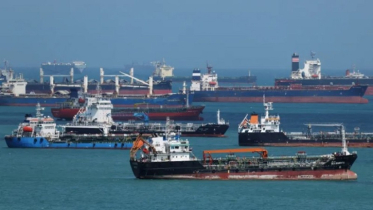
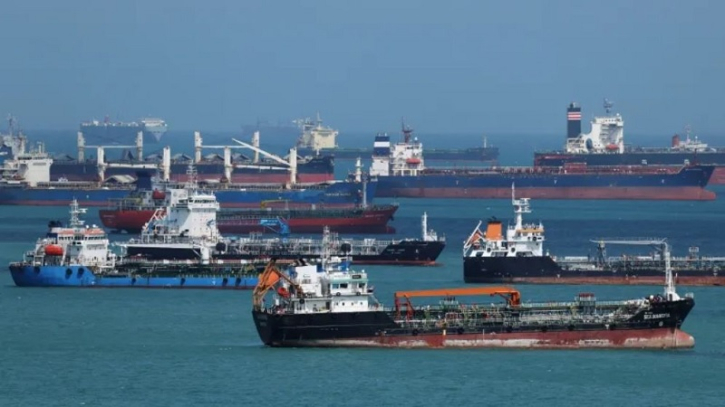
The vast anchorage area off the Malaysian coast has now become a major market for the sale of oil under sanctions.
Last Saturday (July 25), the Iranian oil tanker ‘Humanity’ suddenly switched off its ‘Automatic Identification System (AIS)’ after heading northeast towards the Malaysian coast via the Strait of Malacca and Singapore.
According to satellite tracking data, the 330-meter-long crude oil tanker has reached Malaysia’s ‘Eastern Outer Port Limits (EOPL).’ It covers an area of 1,200 square kilometers in the South China Sea and is located about 70 kilometers from the coast.
Ships heading to China and going dark
Maritime security experts say the ship likely went off-track and went dark in preparation for unloading the oil onto another ship waiting at sea for middlemen. According to the US-China Economic and Security Review Commission, the oil is likely destined for China, which historically has bought about 90 percent of Iran's crude exports.
For decades, analysts say the EOPL has been used as an unofficial market for Iranian, Russian and Venezuelan oil embargoed by the United States, despite a five-month US-Israeli war on Iran and a US naval blockade of Iranian ports (which lasted from April 13 to June 18 and resumed on July 14).
Ray Powell, director of the Maritime Security Monitoring Project SeaLight, an affiliate of Stanford University, told Al Jazeera that since the beginning of the year, he has observed 62 ships using false or revoked identities while traveling between the Gulf, the EOPL, Hong Kong and northern China. Erica Downs, a senior fellow at Columbia University's Center on Global Energy Policy, said the ships are essentially part of a network of middlemen who help sell Iranian oil to China's independent "tippots," or small refineries.
She added that crude oil from Iran to China is transferred from one ship to another in international waters. This process can happen multiple times before reaching China to disguise the source of the oil.
Compared to China's large state-owned companies (such as CNPC, Sinopec and CNOOC), these small refineries are outside the reach of the US financial system. So they are more interested in buying Iranian oil that is under sanctions at a lower price.
Quiet waters and legal loopholes
Charlie Brown, director of the Southeast Asia regional program at the Yokosuka Council on Asia-Pacific Studies (YCAPS) and a maritime security expert, said the anchorage area adjacent to Malaysia’s EOPL is as busy as ever.
He said that before the war and at every stage of the conflict, ships have been seen anchoring there and carrying out various activities such as ship-to-ship oil transfers.
The EOPL, which is about the size of Hong Kong, has the advantage of being quiet waters, close enough to reach suppliers in Singapore and Malaysia. It is also located at a distance that has historically made the area a legal gray area. Although the area is outside Malaysia’s territorial waters, it falls within its Exclusive Economic Zone (EEZ). But the region prioritizes fishing rights and natural resource extraction over maritime restrictions. Malaysia’s Maritime Enforcement Agency has previously said that patrolling the area is difficult due to its remote location and territorial limits.
Kuala Lumpur has, however, taken steps to strengthen its legal system. Malaysia amended its EEZ law in June to prohibit illegal anchoring, bunkering and the transfer of goods from ship to ship in the EEZ without government approval. The Malaysian Foreign Ministry has not commented on the matter.
According to Charlie Brown, on any given day there could be as many as 200 ships anchored in the area, half of which are likely to be Iranian-linked.
Satellite data reviewed by Al Jazeera shows that 18 Iranian-flagged oil tankers, including the Humanity, have gone untracked after reaching the EOPL in the past month.
On Thursday (July 30), another Iranian oil tanker, the Dor, was seen sailing through the Strait of Malacca towards the Middle East. At least 50 US or EU-sanctioned ships were on the EOPL that day with their AIS signals on. Experts believe that many more ‘dark’ ships are there.
Payment mechanisms and China’s role
According to Europe-based global forecasting consultancy ‘Geopolitical Intelligence Services’, the sale of Iranian oil transferred between ships in the EOPL area is completed through China’s ‘Cross-Border Interbank Payment System (CIPS).’ This allows oil prices to be paid in Chinese currency, the renminbi, bypassing the US-monitored SWIFT network.
China has not officially acknowledged buying Iranian oil. A spokesperson for the Chinese embassy in Washington, DC, said they were not aware of any Iranian oil being transported to China via the EOPL.
Previously, China's Foreign Ministry has repeatedly stated that it opposes the illegal unilateral sanctions imposed by the United States and the basis of international law.
.png "Advertisement")