.png)
US losses in Iran attack: 2.569 billion taka
Published: 08:50 PM, 4 March 2026
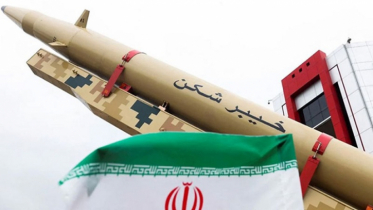
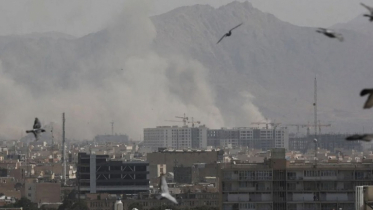
The occupying Israel and the United States have jointly attacked Iran and set the entire Middle East on fire. After the February 28 invasion, Tehran has also let go of its grip. They are firing missiles and drones in droves at US interests in the extremist Zionist territory and Gulf countries.
The conflict has spread throughout the region. The energy market has been hit the hardest. Europe and America have started to cry out after Iran closed the Strait of Hormuz, the main route for the world's oil and gas supply. Overall, the US could lose 21 billion dollars in this war. Which is 25.69 trillion or 2.569 billion taka in Bangladeshi taka. According to the current currency market, this number is obtained by taking 122.352 taka per dollar.
According to Kent Smetters, director of the Penn Wharton Budget Model and a revenue analyst, a U.S. war with Iran could cost the U.S. economy up to $210 billion.
Smetters recently said that the ongoing conflict is already disrupting trade, global energy markets and gasoline prices, although it is difficult to estimate the exact economic impact of the war. His current estimate puts the economic damage at $115 billion, but that could range from $50 billion to $210 billion, depending on the nature and duration of the conflict.
“One of the problems I have with the war cost estimates is that they completely ignore the counterfactual,” he said in an interview. If Iran had actually gotten a nuclear weapon, we would have had to spend a lot more money on our military and even rebuilding cities.
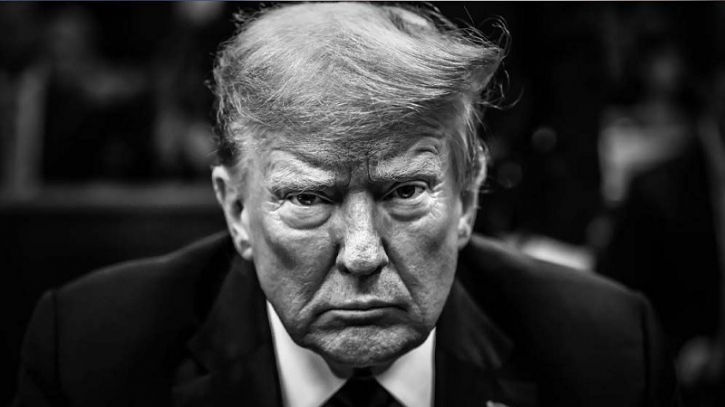
US President Donald Trump has already acknowledged the economic threat of the war and has offered to provide government insurance and naval escorts for oil tankers passing through key points in the Persian Gulf.
On Tuesday (March 3), Trump announced on Truth Social that the US Navy would begin guarding tankers passing through the Strait of Hormuz as soon as possible if necessary. No matter what the situation, the US will ensure the free flow of energy to the world. The US economic and military power is the best in the world.
Speaking to reporters in Washington, Trump acknowledged that the war could keep oil prices high “for a while,” but stressed that when the conflict ends, “I believe that the price will be lower than it was before.”
Benchmark West Texas Intermediate crude oil prices rose more than 5 percent in late trading on Tuesday (March 3), and the average price of gasoline nationally rose more than 10 cents per gallon, according to the American Automobile Association.
Analysts say the economic impact of the war will largely depend on how long the conflict lasts. Alex Jacques, head of policy and advocacy at Groundwork Collaborative and a former economic adviser to Biden, said markets are currently underestimating the risk of a protracted conflict—one that doesn’t end quickly, doesn’t restore normal traffic through the Strait of Hormuz, and doesn’t return to normal in a timely manner.
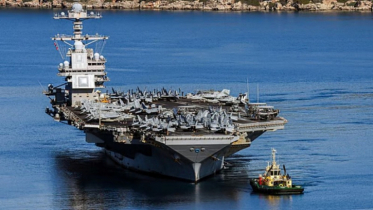
In addition to the economic toll, the massive military operation, which has deployed air and naval forces from bases in the region, could cost another $65 billion. Trump said in a letter to Congress that it was “not possible at this time” to determine how long the U.S. operation, dubbed Operation Epic Fury, would last. He wrote on March 2 that while the United States wants a swift and lasting peace, the full scope and duration of the military operation required is not yet known.
He had previously indicated that the bombing could last ‘four to five weeks’.
Source: The Independent.
.png "Advertisement")