.png)
Are the US-Israeli attacks on Iran legal under international law?
Published: 06:32 PM, 2 March 2026
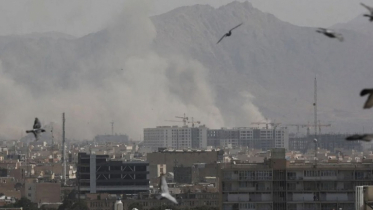
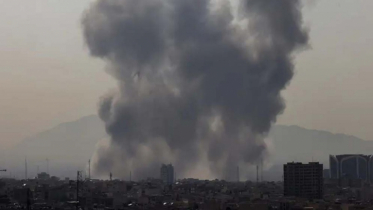
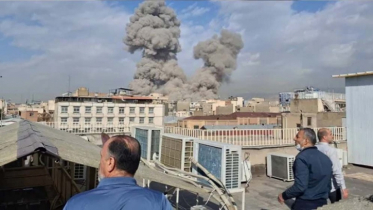
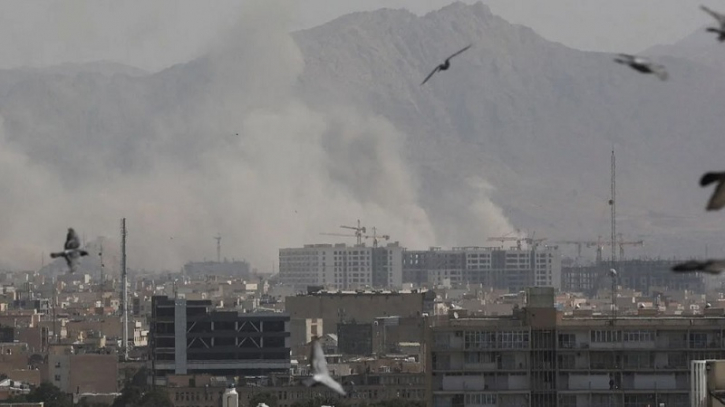
The US and Israel have carried out a series of air and missile strikes across Iran, killing Iran’s supreme leader Ayatollah Ali Khamenei. Many more people have been killed. Does international law support such attacks inside a country?
Legal experts have said that a series of US and Israeli attacks over the past year are illegal under international law. They have called the actions, including last June’s, illegal under international law.
Marko Milanovic, professor of international law at the University of Reading School of Law and who has written extensively on the subject, says that position remains unchanged.
“These attacks are clearly illegal, as they violate the UN Charter, which prohibits the unilateral use of force between states,” he told Middle East Eye.
“The only possible exception to such attacks would be self-defense,” he added, “but the condition of legitimate self-defense was not met here.”
Iran has retaliated against Israel and several Gulf states since Saturday. Explosions have been heard in Saudi Arabia, the United Arab Emirates, Kuwait, Bahrain and Qatar, where US military bases have been targeted.
It is unclear how many Iranians have been killed in the US and Israeli strikes so far. However, at least 63 girls, aged between 7 and 12, were reportedly killed in an attack on a school in southern Iran.
How are the US and Israel justifying the attacks?
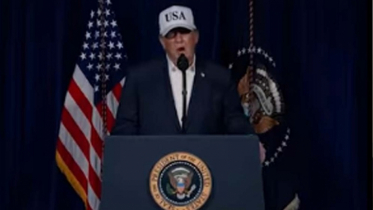
US President Donald Trump said early Saturday that the operation was aimed at preventing Tehran from acquiring nuclear weapons and eliminating the imminent threat of an Iranian regime. He also indicated that regime change was also one of the goals of the attack.
He told Iranian opposition groups, “When we are finished, you take over your government. This will be for you. This may be your only chance in generations.”
Israeli Prime Minister Benjamin Netanyahu said the attack would give the brave Iranian people the opportunity to determine their own destiny and throw off the yoke of dictatorship.
Israel’s defense minister described it as a “preemptive” strike in response to a threat against the country.
What does international law say about the use of force?
Article 2(4) of the UN Charter prohibits states from using force, with only two exceptions—
1. When authorized by the UN Security Council
2. When an armed attack is launched against a member state and the right of self-defense is exercised (under Article 51)
The attack on February 28 did not require Security Council authorization, so the only possible justification is self-defense.
Under international law, the use of force, with the exceptions above, is considered a crime. As a result, the responsible officials can face accountability if convicted in a domestic or international court.
Although no state leader has yet been tried for the crime, aggression is one of the four core international crimes under the Rome Statute of the International Criminal Court (ICC)—the others being genocide, crimes against humanity, and war crimes.
However, the United States, Israel, and Iran are not members of the ICC, so their leaders are not subject to jurisdiction over aggression.
Does the right of self-defense apply?
There were no armed attacks by Iran against the United States or Israel immediately prior to the February 28 attack.
In this situation, states have to rely on the theory of ‘anticipatory self-defense’, which some states consider legitimate only when an attack is imminent and unavoidable. Many states, especially those in the Global South, do not even recognize the legitimacy of self-defense in the event of an imminent attack.
According to Milanovic, there are three types of self-defense interpretations—
1. Preventive self-defense (to prevent a distant or potential threat)—which is widely rejected
2. Anticipatory self-defense—when an attack is imminent
3. Self-defense after an attack—a strict interpretation of Article 51
In his opinion, even assuming an imminent attack argument, the conditions for legitimacy are not met here.
How plausible is the claim of a nuclear threat?
One of the rationales for the operation was to prevent Iran from acquiring nuclear weapons. However, there is no evidence that Iran is developing nuclear weapons. Iran has always said that its program is for civilian purposes.
Oman's foreign minister, who is the main mediator in the US-Iran talks, said on Friday that Iran had formally agreed that it would never possess nuclear material capable of producing a bomb.
Neither US intelligence agencies nor the UN nuclear watchdog have found evidence that Iran is developing nuclear weapons.
"Iran does not yet have nuclear weapons, and if it were to use them, there is no evidence," Milanovic said.
Is Iran's retaliatory strike legal?
Milanovic said Iran could exercise its right to self-defense, but it must be necessary and proportionate. He said that attacking the territory of a third state, such as Saudi Arabia, which was not involved in the attack, is problematic.
Source: Middle East Eye
.png "Advertisement")