No Eid in Gaza for the third year in a row

Published: 01:31 AM, 26 May 2026
The Gaza Strip’s livestock sector has been completely destroyed due to continuous Israeli attacks, a strict blockade and successive displacements. As a result, most Gaza families are going to fail to celebrate Eid al-Adha for the third year in a row.
This long-standing religious and social tradition is now on the verge of being erased from the lives of Gazans.
Before the war, Mazen al-Jerzawi was one of the leading livestock farmers in Gaza City. At this time of year, he would prepare to sell hundreds of sheep and goats for the occasion of the sacrifice. However, the current reality is completely different. Jerzawi now runs a small restaurant, where he has to rely on frozen meat that somehow enters the Strip due to the Israeli ban.
Expressing his anger, he said that at this time of year, he used to sell about 200 cows and sheep, but today he does not have a single animal. Israel does not allow any live animals to enter Gaza. They see the people of Gaza as if they are living here temporarily, and are being provided with only what they need to survive.
Usually, during Eid al-Adha, there is a huge demand for sacrificial animals in Gaza. Before the war, about 40 to 60 thousand sheep and calves were imported every year to meet this demand. But due to the war and blockade that has lasted for more than two and a half years, that familiar scene is not returning this time either.
According to the Gaza Chamber of Commerce and Industry, more than 90 percent of Gaza's livestock sector has been destroyed due to the Israeli offensive that began in October 2023 and the embargo on animal feed and agricultural equipment.
The livestock shortage has pushed prices in the market beyond the reach of ordinary people. Before the war, a sheep in Gaza cost $500 to $600. Today, buyers have to pay about $7,000 (about 20,000 shekels) to buy the same sheep. Due to the high price, Jerzawi urged expatriates to use the money to buy frozen meat or help relatives with other basic needs instead of sacrificing animals.
Statistics from the UN Food and Agriculture Organization (FAO) show that 80 percent of Gaza's sheep and 70 percent of its goats died at the beginning of the war. In addition to the animals, farms, barns, feed warehouses and veterinary clinics have been systematically destroyed.
Farmers said that not only did the bombing kill countless animals, but the repeated orders to leave the area made it impossible to keep the surviving animals alive. During the displacement, farmers were forced to sell their animals for cheap or even for the price of water to buy flour.
Rafat Asalia, a spokesman for the Gaza Ministry of Agriculture, said that before the war, there were 60,000 sheep and goats in Gaza, but now there are only 3,000. And cows and calves have almost completely disappeared from Gaza. The few sheep and goats that are left today are with nomadic herders and are not for sale. With no water pumps or wells functioning, there is no chance of reviving the sector.
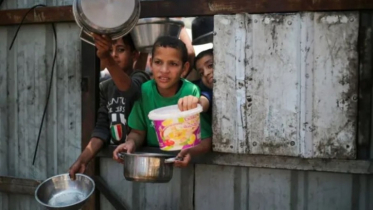
The absence of the sacrifice has left deep scars on the social and psychological life of Gazans. Muhammad Aburiyala, a schoolteacher in Gaza City, said they have not been able to celebrate Eid for three long years. The joy of the sacrifice and the feeling of sharing it with others has been completely lost. He added that it has now become impossible for most Gazan families to afford three meals a day. Many have not tasted frozen meat for more than a year.
The UN-backed IPC assessment found that about 1.6 million people in Gaza are suffering from extreme food insecurity. The crisis has been exacerbated by Israel’s strict and irregular restrictions on humanitarian aid and commercial goods despite the ceasefire.
The devastation of the livestock sector has not only shut down a festival, but has also crippled an entire economic system, including veterinarians, farmers, butchers and restaurateurs involved, say those involved. Locals allege that Israel has deliberately maintained the blockade to keep Gaza society dependent and to block all avenues for self-reliance.
Source: Middle East Eye