.png)
Shooting ‘Clash of Loyalties’ in the midst of war
Published: 10:45 PM, 5 July 2026
Saddam Hussein wanted to make Iraq the Hollywood of the Middle East
On the one hand, the devastation of the Iran-Iraq war, on the other hand, the shooting of a big-budget international movie. Sirens all around, the threat of missile attacks, compulsory military conscription and secret police surveillance. Although it sounds like a movie story, it is a real event. And at the center of that reality was the ruler of Iraq, Saddam Hussein. Details are in this report.
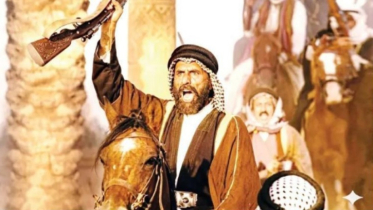
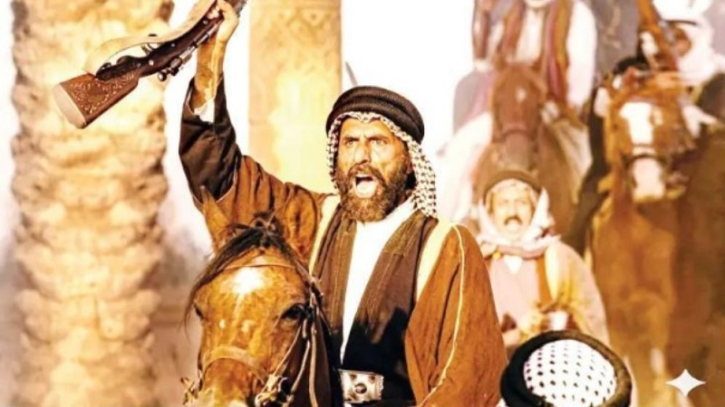
In the early eighties, the then ruler of Iraq, Saddam Hussein, had a dream that seemed incredible to many. He wanted to make Iraq a center for international film production. In his imagination, Baghdad would one day become the ‘Hollywood’ of the Middle East, a new film empire would be built on the banks of the Tigris River. The first and biggest project of this dream was an epic historical movie called ‘Clash of Loyalties’, through which an attempt was made to present Iraq’s nationalist history to the world.
* Historical stories, political messages
After coming to power in 1979, Saddam Hussein realized that not only military or economic power, but also cultural influence were important in the international arena. Just as Hollywood played a role in shaping the image of America, he saw cinema as a powerful medium for spreading political messages. ‘Clash of Loyalties’ was based on the 1920 Iraqi uprising. That movement against British colonial rule was presented as the basis of Iraq’s national identity. The main story of the film showed the assassination of British officer Gerald Leachman and the Iraqis’ struggle for independence. Many critics later called the film ‘Saddam’s Lawrence of Arabia’. Because it was not just a historical film; it was also an attempt to build Iraq’s political identity.
* There was no shortage of money
The rise in oil prices in the late 1970s gave Iraq enormous economic power. As a result, there was no hesitation in spending money on film production. Producer Latif Zorefani said that when Iraqi officials told Saddam that a large sum of money was needed to make an international-quality film, his answer was very short, "Whatever it takes." The film, made at a cost of about $30 million, became one of the most expensive projects of its time. For comparison, the budget of Hollywood's famous "Return of the Jedi", made at the same time, was also at about the same level.
* Then the war began
The film began shooting in the desert area near Baghdad. But shortly after work began, Iraq was attacked by Iran. The long and bloody Iran-Iraq War began. Suddenly, the film unit found itself in a war-torn environment. Zorefani later recalled that the approximately 140 members of his unit were working in the midst of war. None of them were prepared for such a situation. Because they were used to working at Pinewood Studios in London or in the controlled environment of Hollywood. But this time they had to work in a country where real bombs and missiles were exploding.
* From the shooting set to the army
The war had a direct impact on the shooting of the film. Many local actors and staff were suddenly called up to join the army. As a result, several scenes had to be re-shot. Even the props made in the style of World War I weapons brought from the UK for use in the film caused problems. They were stopped at the Turkish border. The border guards could not believe that they would only be used for the film. In the end, the production company used an alternative long route to bring the equipment to Baghdad.
* A drunk actor, the entire project in crisis
However, it was not the war, but the film's biggest crisis was caused by its lead actor Oliver Reed. He was already known for his controversial behavior and drinking. One night, while drunk, he caused an incident in a restaurant in a luxury hotel in Baghdad that angered the Iraqi authorities. After the incident, some ministers even demanded that he be immediately expelled from the country. But removing the main character would have meant reshooting the entire film. So producer Zorefani finally managed the situation. “I had to fight tooth and nail to save it,” he says.
* When cinema and reality merge
A scene in the film shows a train explosion. The scene was filmed on an abandoned railway line near the Iranian border. The next day, Iranian media reported that their revolutionary forces had destroyed a military train inside Iraq. In reality, it was a scene from the film, but in the tense atmosphere of the war, many believed it to be a true story. This incident became a symbol of the entire film. Because the real war and the fantasy of the film were repeatedly mixed together in the production of ‘Clash of Loyalties.’
* The End of the Dream
After its release in 1983, the film won praise and awards at the Moscow Film Festival. But it did not achieve great success in the international market. Then, when international sanctions were imposed on Iraq following its invasion of Kuwait in 1990, Saddam's plan to build a movie empire collapsed. The project, which had been envisioned as building a new Hollywood in the Middle East, was ultimately limited to a single movie.
.png "Advertisement")