.png)
Oil prices jump after US-Iran retaliatory attacks

Published: 09:51 PM, 13 July 2026
Oil transport through the Strait of Hormuz has once again become uncertain after fresh retaliatory attacks by the US and Iran. This has had an impact on the international energy market. Crude oil prices rose more than 4 percent on Monday (July 13). According to analysts, the latest tensions in the Middle East
The price of Brent crude rose by $3.10, or 4.8 percent, to $79.11 per barrel as of 9:25 a.m. Bangladesh time on Monday, according to Reuters. At the same time, the price of US West Texas Intermediate (WTI) crude oil rose by $2.95, or 4.11 percent, to $74.36 per barrel.
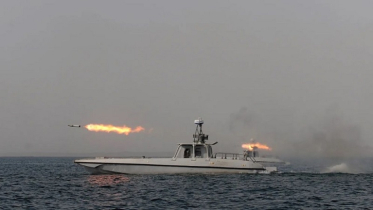
Earlier, the US Central Command (Centcom) said that it had carried out new attacks in various places in Iran on Sunday (July 12) and hit multiple targets. On the other hand, Iran's Islamic Revolutionary Guard Corps (IRGC) claimed that it had attacked US military bases in Kuwait, Bahrain and Jordan.
US President Donald Trump said that the Strait of Hormuz is open to commercial shipping. However, Iran had earlier said that it had attacked a ship that had strayed from its designated route without authorization. The Strait of Hormuz was then closed.
Before the war began in late February, about 20 percent of the world's crude oil and liquefied natural gas (LNG) transported through the Strait of Hormuz. According to shipping tracking company Kepler, only six ships passed through the Strait of Hormuz on Sunday, the lowest number in five weeks.
Meanwhile, the renewed attacks have also raised uncertainty about the future of the interim agreement reached between the United States and Iran last month. The agreement aimed to reopen the Strait of Hormuz and end the war through another 60 days of negotiations.
The International Energy Agency (IEA) said in its monthly report released on Friday that global oil supply increased by 4.1 million barrels per day in June after the agreement. However, it is still 9.4 million barrels per day lower than before the war.
Analysts at Australia and New Zealand Banking Group (ANZ) said hopes for a quick return to normalcy were now largely uncertain as tensions rose again over the weekend.
.png "Advertisement")