.png)
US economy could collapse within 10 years

Published: 09:58 PM, 19 March 2026
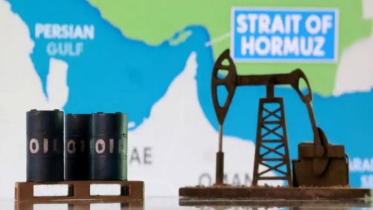
The genocidal Israel and its ally the United States are jointly attacking Iran. This has not only spread conflict in the Middle East but also caused instability in the global economy. In particular, as Iran closed the Strait of Hormuz, a sea route known as the energy corridor, the price of crude oil is exceeding $200 and the price of natural gas is also at its highest level in at least 30 years.
Even though there has been no direct counterattack on US soil after this invasion, the country's citizens are feeling the economic impact. Already, the prices of several goods and services, including fuel, transportation costs, airfare, and food, have increased. Inflation is also rising. More than half of the country's citizens themselves have expressed fears that the US economy could collapse within 10 years.
According to a new opinion poll, more than 4 in 10 Americans believe that the country is heading towards a complete economic collapse within a decade.
The YouGov poll, released Wednesday (March 18), found that Americans are more concerned about the economy than about potential threats to democracy or the prospect of civil war. Forty-two percent of respondents said there was a very high or somewhat high chance of a “complete economic collapse” within the next 10 years, while 38 percent dismissed the possibility.
Economic concerns are much higher among Democrats (53 percent), compared to just 28 percent of Republicans. Many respondents believe the domestic economy is already in dire straits. Forty-three percent of Americans believe the United States is currently in a recession.
Fifty percent of respondents also said they have no confidence in President Donald Trump’s ability to handle the economy. Just 32 percent said they have a lot of confidence and 18 percent had some confidence.
The survey of 1,111 U.S. adults conducted from February 24 to March 1 comes as the Iran war has raised fears of global economic instability. The conflict has disrupted tanker traffic in the Strait of Hormuz, a vital global trade route, sending oil prices above $100 a barrel several times in recent weeks.
Experts have warned that the higher fuel prices will have a knock-on effect on the broader economy, affecting the prices of essential goods, ship charters and airfares.
Other recent indicators show signs of stress, even as the economy slows. The Commerce Department said on Friday (March 13) that the U.S. economy grew at an annualized rate of 0.7 percent between October and December, much slower than previously estimated. Growth in the third quarter of last year was 4.4 percent and 3.8 percent in the second quarter.
The Labor Department said last week that U.S. employers laid off 92,000 workers last month and the unemployment rate rose to 4.4 percent.
But inflation has remained broadly stable. The Federal Reserve left interest rates unchanged on Wednesday (March 18). Its head, Jerome Powell, said there was uncertainty about how the Iran war would affect the labor market. Powell stressed, “What I mean is, nobody really knows (what the future holds).”
Source: The Independent.
.png "Advertisement")