.png)
Trump in a dilemma over Iran war
Published: 09:15 PM, 16 March 2026
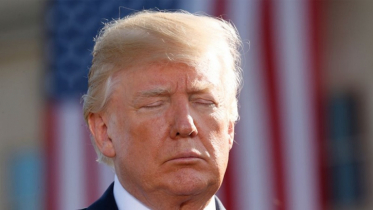
The ongoing war between the United States and Israel with Iran has been going on for two weeks. And as this war has dragged on, US President Donald Trump, who started the war, is now facing a difficult decision. The question now is whether he will continue the war—or find a way to gradually withdraw from this increasingly widening and intensifying conflict.
The risks that the Trump administration gave relatively little importance to when starting the war, are now becoming more apparent in reality. Continuing the war may, on the one hand, be able to put more pressure on a weakened Iran, but it is having a major impact on the economy, diplomacy and military situation of the United States and its allies.
The war has created instability in the energy market and led to attacks in various places in the Middle East. This is increasing US military spending and putting the lives of American soldiers at risk. At the same time, there is concern among Trump's political supporters, because he promised during the election not to involve the United States in new wars.
On the other hand, if the United States withdraws from the war now, most of Trump's stated goals will remain unfulfilled. One of them was to prevent Iran from ever acquiring the ability to build nuclear weapons. According to US officials, joint operations by the US and Israel have so far destroyed many of Iran's missiles, air defense systems and a large part of its navy.
Iran has confirmed that Supreme Leader Ayatollah Ali Khamenei was killed in the conflict. However, the country's theocratic regime still survives and a new force is emerging at its leadership. According to analysts, Iran can still complicate the situation by using asymmetric warfare tactics such as cyberattacks, minelaying at sea and missile strikes.
More than 2,100 people have been killed since the war began, most of them Iranian citizens. Iran's representative to the United Nations said that at least 1,300 of the dead were civilians. Meanwhile, 13 US soldiers have also been killed in the war so far.
The US is sending more troops to the Middle East to deal with the situation. There are currently about 50,000 US troops there, and 2,500 new Marines are being sent. US forces have already launched attacks near Iran's important oil export center, Kharg Island.
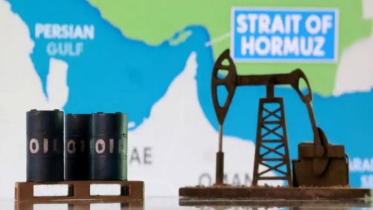
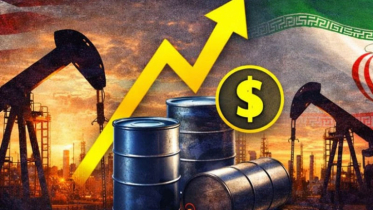
The war has had a major impact on the Strait of Hormuz, a vital waterway in the Persian Gulf. A significant amount of the world's oil is transported through this waterway. But due to attacks and security risks, many ships are now not daring to use this route. As a result, oil prices are rising rapidly in the world market and international trade is also being affected.
In this situation, Trump has called on China, France, Japan, South Korea and Britain on social media to send naval forces to ensure the security of the waterway. According to analysts, this indicates that the United States is struggling to handle the situation alone and is now trying to build a larger international coalition.
Another big question in the war is Iran's nuclear program. According to international observers, Iran still has about 970 pounds of highly enriched uranium, which is close to making a nuclear weapon. This uranium is believed to be stored in deep underground facilities.
US officials say that if the materials are not removed, Iran could try to build nuclear weapons again in the future. However, retrieving them would require a special military operation, which is extremely risky.
.png "Advertisement")