.png)
US bombing and failed negotiations, what is Trump’s next plan for Iran
Published: 11:21 PM, 11 July 2026
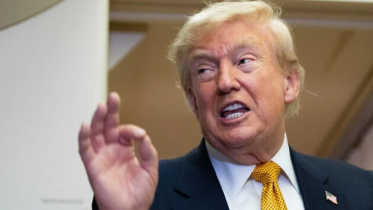
US President Donald Trump recently signed a preliminary agreement with Iran in Versailles. A few days before signing the agreement, he and his aides had announced their strategy. Their strategy was to open the Strait of Hormuz to shipping. For this, the US would lift sanctions on oil in a way that would allow Iran to sell billions of dollars of oil.
Trump said the strategy was that after years of sanctions, Iran would quickly turn its attention to this direction, given the huge revenue flow and the opportunity to transact in dollars with Western banks. Three days before signing the memorandum of understanding on June 17, he told a New York Times reporter by phone, "This is a really great deal for Iran."
Regarding Iran's mediators, Trump said, "They were actually proud of this deal. I think they were tired of being beaten up all the time." But in reality, that doesn't seem to be the case.
The two sides agreed to negotiate a large, complex, and permanent deal within 60 days, but no timetable has been set for negotiations. Less than a month after the deal, three ships were attacked in the strait. The attack took place outside Iranian control. Trump revoked Iran’s special concessions for oil sales. The United States bombed more than 170 Iranian military installations for two consecutive nights.
If Trump and his allies now have a “Plan C” after the bombing and the failure of the initial deal, they have not revealed anything about it; instead, they seem to be going back to the oil embargo and bombings they had before. Trump has described these measures as “devastating,” but so far they have only created complications.
But US Vice President J.D. Vance put it very simply. On Wednesday, he said, “If they fire on the ships, we will show them hell.” J.D. Vance initially opposed the February 28 attack. But he was later given the task of advocating for the war and negotiating a solution to the crisis.
Richard N. Haas, a veteran diplomat who served in the State Department and National Security Council in several US administrations, including George W. Bush, at the beginning of the Iraq war, said, “We are strategically stuck in a place where there is no way forward. The crisis here is that the more we attack, the more Iran will retaliate against oil and energy facilities in the Gulf. And the (US) administration has not yet figured out how to protect those facilities.”
“Trump first thought he would bomb the Iranian government. Then he thought he would bomb them and force them to surrender—neither worked,” Haas said. The opportunity that Iran was given to profit from selling oil also did not work.
Trump and his aides have said little publicly about their next steps since returning from the conference last Thursday. A US official, speaking on condition of anonymity, said the administration remains committed to a peaceful solution. They hope to continue “technical discussions.” But even that is a contradiction in terms. The disagreement between Tehran and Washington is not a “technical” issue; it is political.
One example is the future of Iran’s nuclear program. The June ceasefire agreement left many important issues unclear. Among them is whether Iran would retain control of its stockpile of nuclear fuel. Under a 2015 deal signed by then-US President Barack Obama, Iran handed over 97 percent of its nuclear stockpile. Trump later withdrew from that deal.
But the first political battle could be over who controls the Strait of Hormuz. The administration is now paying the price for an unclear clause in the memorandum of understanding Trump signed in Versailles.
Article 5 of the agreement states: “From the date of signing of this Memorandum of Understanding, the Islamic Republic of Iran will make every effort to ensure the safe passage of commercial vessels from the Persian Gulf to the Sea of Oman and vice versa. No fees will be charged for this passage for 60 days only.”
Trump and his allies thought that this condition would open the shipping jam and put all the responsibility on Iran. On the other hand, Iran saw it as an opportunity to control the main oil shipping route. They insisted that the ships must pass through the channel near their coast. Finally, Iran indicated that it planned to impose a tax on shipping through the strait.
When the US Navy began openly escorting ships through a different channel near Oman, Iran responded by firing at some of the ships. According to shipping company Lloyd’s of London, shipping through the strait is now very rare. This has frustrated Trump, who has declared the ceasefire “over.”
Trump’s aides, however, insist that they have not violated the agreement. According to them, the memorandum of understanding was based on performance and Iran has completely failed that test.
These events have taken Trump back to April, when he believed that military force was not a solution to this problem.
Source: New York Times
.png "Advertisement")