.png)
Why Haleem for Iftar? Know the history and recipe
Published: 07:40 PM, 27 February 2026
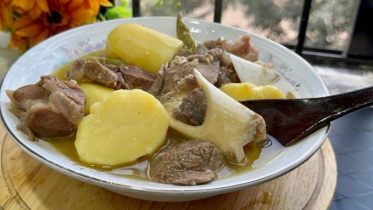
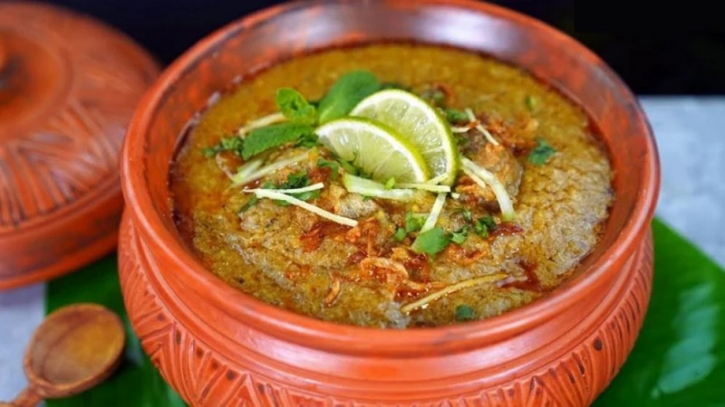
Haleem is a nutritious and delicious dish made from a combination of meat, lentils and wheat, which is known as the main attraction of Iftar, especially in South Asia. Haleem has its roots in the Middle East. It originally comes from an Arabic dish called 'Harish' or 'Harisha'. The recipe for Harisha is found in the famous Baghdad cookbook Kitab al-Tabikh in the 10th century.
This dish entered the Indian subcontinent through Persian and Afghan merchants and soldiers during the Mughal period. Under the patronage of the Nizams of Hyderabad, it was perfected as the modern 'Haleem' with a combination of local spices and lentils.
And when the month of Ramadan comes, the first dish that comes to mind on the Iftar table is Haleem. This thick and nutritious dish made by slow cooking wheat, lentils, meat and spices has gained special status not only for its taste, but also because of its tradition and history. Along with this, Haleem, which has found its place in the kitchens of Bangladesh from the Middle East to South Asia, has also become a cultural dish today.
The long journey of Haleem
As I said earlier, Haleem has its roots in the Middle East. Historians say that there was a dish called 'Harisha' in the Arab region, where wheat and meat were cooked for a long time and thickened. Later, that dish was transformed in Persia and the use of spices increased. After it came to the Indian subcontinent by the Mughals, Haleem became even richer. Various pulses, ghee and fragrant spices were added.
Haleem gained special popularity in Hyderabad. Under the patronage of the Nizams, it became the main dish of Ramadan with a combination of local spices and pulses. Over time, Haleem became an essential part of Iftar in Bangladesh as well. It has a special identity, especially in the Iftar culture of Old Dhaka. And Halim is a storehouse of energy. Wheat and pulses provide complex carbohydrates and fiber, and meat provides high-quality protein. The ingredients are easily digestible due to long cooking time and provide quick energy to the body after breaking the fast. In addition, it also contains iron, zinc and vitamin B-complex.
Halim is not just food, but also a part of the sociability and tradition of Ramadan. This food also creates a kind of social bond by sharing it with the whole family or exchanging it with neighbors. All in all, it can be said that after a long journey of history, Halim has become one of the symbolic foods of Ramadan today. Its popularity on the Iftar table will remain unbroken in the future due to its combination of nutritional value, taste and tradition.
Halim Recipe
Delicious Halim can be easily made at home. For that, you need various pulses (lentils, moong, chickpeas), fragrant rice, meat (beef or lamb), onion, ginger-garlic paste, chili, garam masala, turmeric, cumin, coriander powder, ghee and salt. First, the rice and pulses should be soaked for a few hours and softened. Then, they should be boiled and made into a thick mixture in a blender or beater. On the other hand, the meat should be cooked well with spices and made soft. Then, the wheat-lentil mixture and the meat should be cooked together on a slow flame for a long time, stirring so that all the ingredients mix and form a thick and soft texture. Finally, serving with ghee, fried onions, green chilies, coriander leaves and lemon juice enhances the taste of Haleem.
.png "Advertisement")