
.png)
Scientists warn that a parasite that affects the genitals can spread to different countries
Published: 07:39 PM, 30 January 2026
Scientists warn about ‘snail fever’
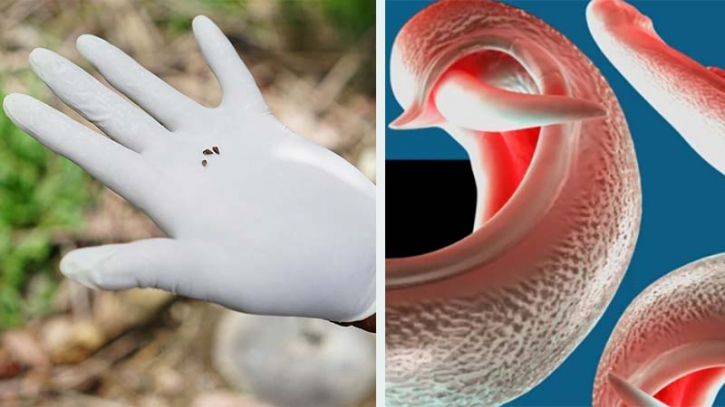
‘Snail fever’ is a parasite that enters the body through the skin and silently hides in the blood. It then silently lays eggs there, which are deposited in the body’s important organs, the liver, lungs and genitals. The concern is that the parasite may remain in the body for a long time, even if it is not detected for years. It has been named ‘snail fever’ because snails or snails carry this parasite.
Very few people know about the disease. The concern is that this parasitic disease is gradually changing, sometimes becoming stronger. In this regard, the World Health Organization (WHO) has said that snail fever has now become a cause of global concern.
According to a BBC Bangla report, there have been some changes in the structure and characteristics of the parasite, due to which it has the potential to spread to new areas. The warning comes as the WHO observes World Neglected Tropical Diseases Day on January 30. The day aims to focus attention on diseases caused by viruses, bacteria, parasites and fungi. Which usually affect more than a billion people living in poor areas.
What is snail fever:
The parasite is carried by a type of snail. This particular type of snail lives in the water where it spreads its larvae or baby parasites. In this situation, if a person comes into contact with that water or goes to bathe, then the person can get infected with this fever. The larvae of the parasite release enzymes that dissolve the skin and enter the human body through the skin.
Then the larvae gradually grow inside the body and turn into adult worms and later start living in the bloodstream. And the female worms start laying eggs. Some of the eggs are excreted from the body with feces or urine. But many eggs get stuck in the body's tissues. When the eggs get stuck, the body's immune system destroys them, damaging healthy tissue around them. This can lead to organ damage. However, some eggs get stuck in the lower abdomen and around the genitals. This condition is called urogenital schistosomiasis. In this case, there is a risk of stomach pain, cancer, and in severe cases, death.
The fever is usually treated with anti-parasitic drugs. The WHO has been advising people at risk, such as young children, agricultural workers and fishermen, to take these drugs every year for the past few years. But Professor Janelisa Musaya, associate director of the Malawi Liverpool Wellcome Clinical Research Program, and other scientists say that new types of snail fever have been found that may not be detected by conventional medical methods.
Deep crisis:
Now the question is, why is this disease spreading again and again in the same places? The study found that parasites living in humans and parasites present in animals are combining with each other to create new 'hybrid' (mixed) forms. And hybrid parasites can infect both humans and animals. This makes it difficult to control the spread of the disease.
Scientists already knew that parasites in humans and animals reproduce with each other. But they were not sure whether these hybrid eggs could survive outside the body. To prove this, the researchers collected samples from people and animals in certain areas of Malawi. They found that seven percent of these parasites were modified hybrids, which was much more than they thought. That is, the new parasites are successfully reproducing and will spread more in the future.
Professor Musaya said that if transmission continues in nature like this, the number will eventually become quite large. He warned that because the research was done in certain areas, this may be just the tip of the iceberg. But the real problem could be much bigger. Especially when the infection is not detected in the test at all. In the future, hybrid parasites may replace the old ones, he said.
He said, this could be a big problem someday. Because, doctors are still not sure how to treat patients carrying these hybrid parasites. Our warning to policymakers is to be aware. Is there anything we can do quickly before the problem gets bigger?
Genital infections are not detected in the test:
Studies have shown that hybrid parasites are also infecting human genitals. But it is difficult to detect. Because the eggs of hybrid snail fever do not look like eggs of ordinary parasites under a microscope. Sometimes health workers can mistake the symptoms for sexually transmitted diseases. If left untreated, urogenital schistosomiasis can lead to genital lesions, infertility and an increased risk of HIV infection. And for women, the physical, social and reproductive effects of the disease are considered more serious.
Professor Musaya said, "Imagine, if a woman cannot have children... Having children is important in our culture. If she does not have children, people will criticize that woman in many ways. Which is a bad and very painful disease.
Progress under pressure:
Scientists have seen that hybrid parasites can spread snail fever to new areas. The fever can spread due to climate change, travel and human migration. And if there are hybrid parasites, control the disease
.png "Advertisement")