.png)
Is artificial intelligence or AI a threat to the entertainment industry?
Published: 02:35 PM, 1 September 2026
Once upon a time, artificial intelligence in cinema was the stuff of science fiction. Now that fantasy is in front of the camera. From character creation, voice change, age reduction, set design, VFX, script writing, to the entire filmmaking process, artificial intelligence (AI) has entered the entire filmmaking process. As a result, the question is no longer 'will AI come to the entertainment world or cinema or not'; rather, how much space will humans have in cinema after AI comes. The answer to this is still unclear worldwide. However, one thing is clear, AI is both an opportunity and a threat to the entertainment industry.
* When the entire movie is made by AI
Experiments with full-length films made with AI have also begun. Its use has begun in Hollywood as well as in the subcontinent. In 2025, Karnataka-based filmmaker S. Narasimhamurthy made the Kannada film 'Love You'. The makers claim that it is one of the first full-length films made entirely using AI; the 95-minute film also received a CBFC certificate. Its production cost was estimated at Rs 10 lakh.
In India, projects like 'Maharaj in Denims' and 'Naisha' came to the fore at the same time. The makers of 'Maharaj in Denims' tried to bring a big-budget historical story to the screen at a low cost by creating characters, scenes and visuals with AI. 'Naisha' director Vivek Anchalia said that about 1,500 hours of AI-based work was done behind the film.
One of the biggest experiments in AI-powered cinema in Bollywood is going to be 'Chiranjeevi Hanuman: The Eternal'. Directed by National Award-winning director Rajesh Mapuskar, the film is scheduled to release on September 25, 2026. According to the makers, it is going to be India's first fully AI-created theatrical film.
* The success of AI-assisted cinema is no less
However, if we only refer to the entire movie as an AI-made movie, the real picture will be incomplete. AI is already being used in big Hollywood and Bollywood movies. The 2024 horror movie 'Late Night with the Devil' was heavily criticized when it was revealed that only a few AI-made images were used. But the controversy did not stop the movie's business. It grossed about $15.4 million worldwide; it earned more than $2.8 million in its opening weekend in the United States.
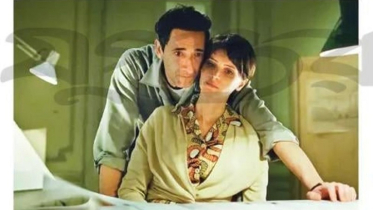
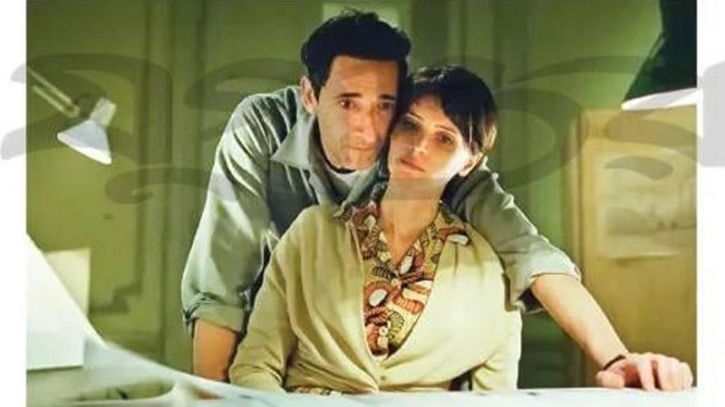
On the other hand, AI-based technology is also helping to reduce costs and time in big-budget films. In 'The Brutalist', ReSpeech's AI voice technology was used to refine the Hungarian accents of actors Adrien Brody and Felicity Jones. In other words, the AI did not act like an actor; rather, it refined human acting.
India has also seen the potential of technology. The 2025 animated film 'Mahaavatar Narashima' was a huge commercial success thanks to the use of AI-assisted technology and modern animation. Its worldwide revenue has crossed Rs 300 crore at various box offices, while the production cost was estimated at Rs 40 crore.
But there are also examples of the opposite. The script for 'The Last Screenwriter' was written entirely in ChatGPT. It was scheduled to premiere at the Prince Charles Cinema in London, but the screening was canceled after nearly 200 complaints. It was later released online.
* Fear is more personal in Bollywood
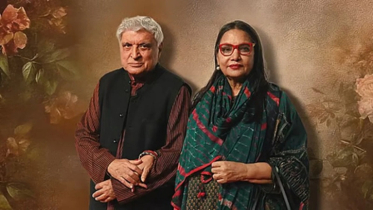
The biggest threat for actors is 'digital double'. When algorithms can copy everything - face, voice, body - what is the value of a star's presence? Bollywood actor Abhishek Bachchan has directly said, 'AI scares me', that is, he is worried about AI. According to him, if not used properly, it can be harmful to actors. At the same time, he believes that the audience also finds a connection with human imperfections in cinema. On the other hand, director Shekhar Kapur is painting a completely different picture of the future. According to him, one day there may be no need for stars like Amitabh Bachchan or Shah Rukh Khan; directors can create their own 'stars' with AI and can also copyright that character. This is not just a fantasy. An Indian court has protected the names, images, voices and personalities of several of the country's star artists against unauthorized use through AI, deepfakes or other technologies.
* Stars in Hollywood are also cautious
Hollywood's fears are even older. AI was one of the big issues in the 2023 Writers and Actors' Strike. Actor Tom Hanks warned fans against fake AI-created ads using his face. The controversy over OpenAI's 'Sky' voice with actress Scarlett Johansson also showed how easily a star's voice can be imitated through technology and how important consent and rights are. Concerns have not abated in 2026. In the UK, many actors, including Nicola Coughlan, Hugh Bonneville, Matt Lucas, have joined the campaign against AI voice cloning without permission.
* The future in the eyes of experts
Nobel laureate Geoffrey Hinton, one of the pioneers of AI, has expressed fears of a massive job crisis due to technology. In contrast, Meta's chief AI scientist Ian LeCun has criticized excessive fear about AI and believes that it is possible to control technology with the right framework and safety measures. Cinema research also shows that AI is already changing the nature of multiple jobs, including editors, VFX artists, and sound designers. However, according to researchers, human experience, emotions, failure, and personal perspective are still at the center of film creativity.
* Threat or new tool?
The benefits of AI are clear - big scenes at low cost, fast VFX, age change, multilingual dubbing, virtual characters, implementation of big budget ideas by small producers and reduction of pre-production time. Industry reports have revealed that the use of AI in the Indian film industry can reduce production costs by up to one-fifth of the conventional method in some cases. But the dangers are just as real - job loss, voice and face theft of artists, copyright infringement, deepfakes, fake news and, most importantly, the undervaluation of human creativity.
Therefore, it is not possible to stop AI by making it a 'villain' of cinema. It is also dangerous to let it go free. The cinema of the future will probably be a joint creation of man and machine, where the story, emotions and decisions will be in the hands of humans; and AI will be a powerful assistant. Because the audience does not go to the theater to watch the perfect movie in the end; they go to find themselves in a story. That feeling is the biggest drawback of AI for now.
.png "Advertisement")