.png)
Only son missing in flood, father searches day after day for Rs 2,000 borrowed
Published: 04:06 PM, 2 September 2026
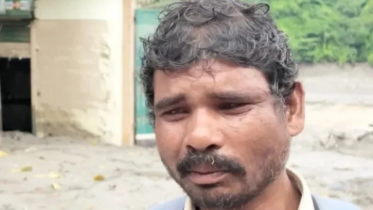
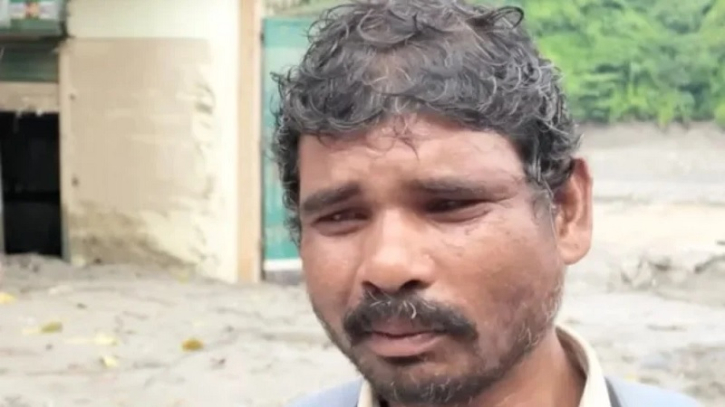
A look of fatigue on his face, a deep line of worry on his forehead. Day after day, his ankles are aching as he walks through the remote mountain paths of Nepal. Hunger in his stomach, anger in his mind. Sometimes he is filled with hope of getting his son back, and the next moment he is filled with despair. Yet, the fifty-something white-haired man does not stop. He is running from one end of Nepal to the other to find his only missing son, Binod.
Talka Sada hails from Saptari district in the southern plains of Nepal's Terai region, where the people are called 'Madhesi'. Binod, 19, has been missing since the devastating flash floods that destroyed homes, schools, bridges and power plants in vast areas of northern Nepal on August 26.
Talkar last spoke to his son a day before the flood. A month ago, Vinod had gone to work as a laborer at a hydroelectric power plant in Rashua district. He did various types of work there, including mixing cement. Four other young men, aged 17 to 19, who worked with him, are also missing after the flood.
"I can't explain how much my wife is crying," says Talka, in pain over the loss of her son. "I am also in deep pain. I don't know what to do."
Borrowing $13 on the way
When he left home to look for his son, he carried a gray backpack. He wrapped himself in orange plastic to protect himself from the rain. In his pocket, wrapped in a dirty handkerchief, was less than two thousand Nepalese rupees—about $13 in U.S. currency. This money was also borrowed.
Talka said that for every 100 Nepalese rupees borrowed, he has to pay 20 rupees in interest. With that money, he and his brother took a bus from Saptari to Kathmandu. It takes about nine hours to cover the 292-kilometer route due to the mountainous terrain.
Upon reaching Kathmandu, they searched hospital after hospital. Many injured and dead people from the flood-hit areas had been brought to the capital. The pictures displayed outside the hospital morgue were sometimes difficult to recognize. Many of the bodies recovered were decomposed or in dismembered condition. But they could not find Vinod's name or picture anywhere.
The two brothers then started walking towards Nuwakot, about 60 kilometers from Kathmandu, where it is believed that Vinod worked at the hydroelectric power plant.
Request to enter morgues and military camps
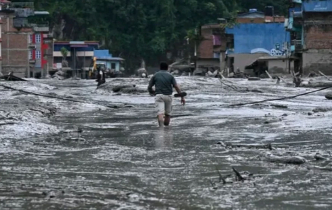
After walking for hours on broken roads, they reached the town of Trishuli, where the market was covered in flood debris, mud and silt.
Talka said they had to pay 1,500 Nepalese rupees to stay at a residential hotel the previous night. In return, they were given a small amount of rice, which could not even satisfy their hunger. He added that if they had stayed for another night, they would have run out of money.
Talqa and his brother claim that they only want to go to the morgues and the army camps where rescue operations are being carried out to see the lists of missing persons and the bodies. But they are repeatedly being turned away.
They allege that they are facing discrimination because they are members of the Madhesi and marginalized communities. The Talkar family belongs to the 'Musahar' community, a highly marginalized community in the Terai region.
"We are poor. They see us as Madhesi and Bihari. We cannot speak Nepali fluently. So we are being sent from one place to another. Even if it is a dead body, we have the right to see it," said Talka, crying.
Nepalese authorities say more than 1,000 people have died in the floods, and they are trying their best to rescue and assist survivors despite the huge crisis, with thousands of people missing.
Source: Al Jazeera
.png "Advertisement")