.png)
Why is Trump seeking help from other countries if he has already
Published: 09:33 PM, 16 March 2026
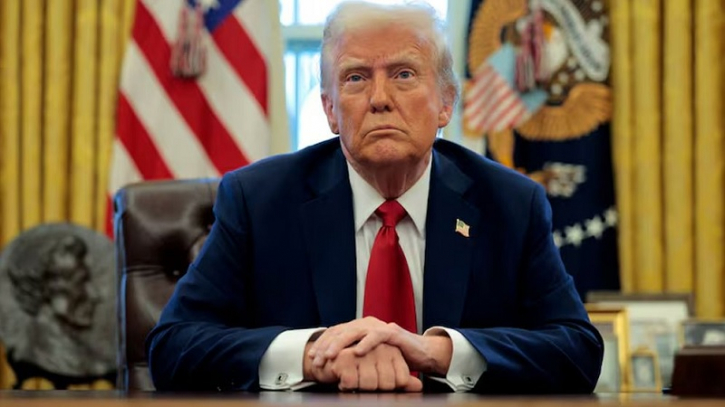
A week ago, US President Donald Trump told Britain that there was no need to send ships to the Middle East because he had already won the Iran war.
Now he is calling on America’s “specially close” countries, NATO members and even China to send ships to help open the Strait of Hormuz. He has signaled that if help does not come, the US security reliance on Europe and his planned summit with Chinese leader Xi Jinping this month could be in jeopardy.
Trump’s remarks in an interview with the Financial Times provided further evidence that despite his repeated displays of victory against Iran, the war is not over.
This is not the first US military campaign this century that has dragged on as Washington had hoped. Perhaps that is why administration officials are making new efforts to reassure the public and global markets that the conflict can be over soon.
US Ambassador to the United Nations Mike Waltz declined to say on CNN’s “State of the Union” program when US troops would return home, but praised them for the kind of dominant victory they have not seen in modern US military history.
Meanwhile, Energy Secretary Chris Wright was more optimistic. “I think this conflict will definitely end in the next few weeks, maybe sooner,” he told ABC News’ “This Week.”
Israel, on the other hand, told CNN that the ferocious bombing of Iranian military and intelligence targets could continue for at least another three weeks. The Jewish state is more accustomed to long-term military operations than American voters and leaders.
Decisions cannot be made in the early weeks of the war
It is too early to assess the overall impact. The joint US-Israeli attack has likely severely damaged Iran’s military power and its ability to threaten the outside world. If true, Trump will argue that he has made the world safer.
Moreover, the war has only been going on for two weeks. That is not a long time by any standard. The frustration among the media and analysts about the short duration of the war is understandable.
But modern history shows that no war is decided in the first few weeks, when America’s vast military might is most effective.
So the White House faces the question of whether it can quickly extricate the United States from the conflict.
Trump’s Misleading Message
Trump has not prepared the country for war, and he is making misleading statements. He insists that the war has already been won. But he says it will only end when he feels it inside. If victory has already been won, then why are soldiers still at risk after 13 US soldiers were killed?
The administration is operating under a dark historical cloud. This war is not yet comparable to wars like Iraq and Afghanistan. But in both cases, the initial victories were thwarted by political influence and limited foreign understanding. The situation in Iran justifies public concerns that this could become a complicated war.
Trump’s Solution-Related Issues
Shutdown of the Strait of Hormuz – This has created a global energy crisis and raised oil prices, which threatens it domestically. Destroying Iran’s missiles, sea-based drones and mining operations could take a long time. This could likely require the deployment of ground troops.
Call for foreign naval assistance – Trump has called for foreign navies to help. But the international response is still uncertain.
Iran’s nuclear status – Iran still has stocks of highly enriched uranium. US special forces could remove them, but that would create the potential for a dangerous ground war.
Seizing Kharg Island – This is Iran’s oil export hub. Seizing it could change Iran’s power, but would cause major US losses and environmental problems.
Doubts about the timeline for the Americans
The political situation in Iran makes it difficult to set a timeline for a war. US and Israeli strikes have slowed Iran’s drone attacks, but have not stopped them. There is no diplomatic solution. Iranian leaders have rejected Trump's demands for "security and unconditional surrender."
The domestic protests in the South and the government's harsh response suggest that the regime has not fallen as Trump had hoped. A fall would have been a major achievement, but analysts fear it could leave US troops in deep trouble for a long time.
Domestic politics and public opinion
The general public, even among Trump's supporters, is skeptical of the timing of his war. Republicans have resisted Democrats' efforts in Congress to limit war powers. But the war has been promised to end in a matter of weeks, to minimize the impact of NATO and the midterm elections.
Defense Secretary Pete Hegsett has called the war "not permanent" like Iraq and Afghanistan. But the lack of consultation with Congress, a vague plan, and an exit strategy have raised questions from Democrats.
Pete Buttigieg has commented, "We went through a war that was sold on false promises." This war is not a war.
.png "Advertisement")