.png)
Did the opposition follow the old path by boycotting the oath-taking of ministers?
Published: 08:32 PM, 18 February 2026
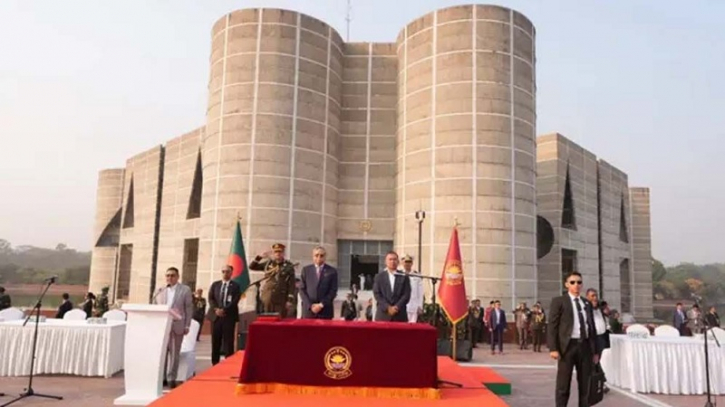
The absence of Jamaat-e-Islami and the elected members of parliament of the party-led alliance from the swearing-in ceremony of the new Prime Minister and ministers of Bangladesh has created a discussion in the political arena.
On Tuesday (February 17) afternoon, a few hours before the oath-taking, Jamaat-e-Islami's Ameer Dr. Shafiqur Rahman was elected the Leader of the Opposition in the 13th National Parliament.
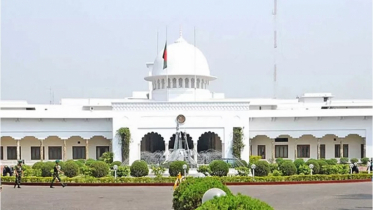
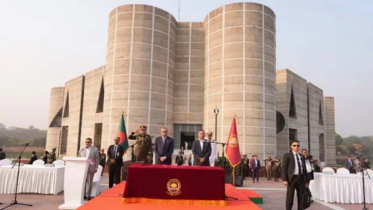
But Dr. Shafiqur Rahman and the MPs of his alliance boycotted the swearing-in ceremony of the Leader of the Parliament and BNP Chairman Tarique Rahman and his cabinet members as the Prime Minister at the South Plaza of the parliament.
Some political analysts see this as an indication of the continuation of the politics of 'exclusion' or 'boycott' of the government and the opposition, which is a traditional political characteristic of Bangladesh.
Others say that this incident has not been a comfortable journey of parliamentary democracy through the 13th Parliament. However, the opportunity to play an effective role in the opposition will come up and then it will be seen how much they can use it.
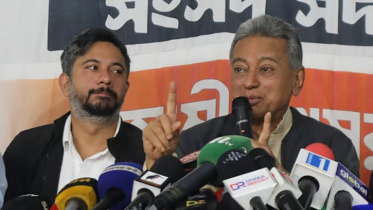
However, Jamaat Naib-e-Ameer Dr. Syed Abdullah Muhammad Taher, who was nominated as the deputy leader of the National Assembly, said that they did not go to the swearing-in ceremony as a protest because BNP did not take the oath of the Constitutional Reform Council.
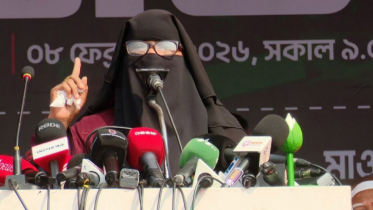
He said, "This is an immediate protest, it is not right to see it as an old culture. We will be a responsible opposition party." Earlier, in a statement on Tuesday night, Jamaat Ameer and opposition party leader Dr. Shafiqur Rahman said, "Democracy is not determined by a single day or an election; rather, it is a long journey. We will continue that journey as a responsible and constructive opposition party - InshaAllah."
What happened on Tuesday
In this year's election in Bangladesh, their old ally Jamaat and the party-led alliance were defeated by BNP and like-minded parties. After the election results were announced, the Jamaat alliance also faced various allegations of irregularities in the election.
But that discussion was largely put on hold after BNP Chairman Tarique Rahman paid a courtesy call on top leaders of Jamaat and its alliance, the NCP, as well as the Islamic Movement, at their homes. As a result, many people on Tuesday thought that the opposition party would also be seen at the swearing-in ceremony of the new prime minister and cabinet at the South Plaza of the National Parliament.
But that morning, Jamaat and NCP reacted angrily when the elected parliament members from BNP, including Tarique Rahman, did not take the oath as members of the Constitutional Reform Council.
Although they initially said they would not take the oath, they later took the oath as MPs and members of the Constitutional Reform Council. After the oath-taking, Dr. Shafiqur Rahman was elected the opposition leader, Dr. Taher the deputy leader, and Nahid Islam the opposition chief whip at the parliamentary party meeting of the Jamaat alliance.
In fact, it was at that meeting that the BNP members decided not to attend the swearing-in ceremony of the prime minister and cabinet in protest against the non-taking of the oath as members of the Constitutional Reform Council.
Dr. Taher says that they protested like this because BNP reneged on the promise that all parties had made to the nation.
He said, "The July Charter came about through the sacrifices of many. We all agreed on the decision. But BNP reneged on it at the beginning. That is why our protest was not to take the oath. It should not be seen as an old culture, but as an immediate protest."
Why is the old culture under discussion
Analysts say that there are many examples of forming a parliament without an opposition party at different times in Bangladesh, and some parties even got the label of 'homegrown opposition' parties.
After the controversial January 2024 elections during the Awami League government, after some members of the then opposition party were placed in the cabinet, the editor of the newspaper, Mahfuz Anam, brought up this issue in an article titled 'The Untimely Death of the Opposition Party in Parliament' in the English daily Daily Star (published on February 2, 2024).
He wrote in that article that until the fall of General Ershad in 1991 and the restoration of democracy, the history of the 'opposition party' in parliament can be roughly called the history of the 'homegrown opposition party'.
Again, the opposite picture was seen after the journey of parliamentary democracy began after the 1991 elections. Since the then opposition party, the Awami League, had 88 members in that parliament, there was an opportunity to create a culture of the opposition playing an effective role.
But then, due to the opposition's regular walkouts and at one point boycotting the parliament, that parliament no longer had a strong opposition party.
Mahfuz Anam wrote in his article that the Awami League spent five years as an opposition party in an attempt to oust the BNP from power and demanding that the next elections be held under a neutral caretaker government. The fundamental ingredient in the effectiveness of the parliamentary system is the coordinating role of the ruling party and the opposition, which was not the case at all in that parliament.
Then, after the controversial elections of February 15, 1996, when the Khaleda Zia government resigned, another election was held on June 12 of that year with the participation of all parties. In that election, the BNP went into opposition with over a hundred seats. But the BNP also followed the path of the Awami League and the bitterness between the government and the opposition grew even more.
Then in the 2001 election, a four-party alliance led by the BNP came to power and the Awami League went into opposition with 62 seats.
“But they were only interested in repeating the bitterness and destructive rivalry of the past. We once again saw endless walkouts, boycotts and resignations, and even then there was no initiative to strengthen the parliamentary system,” writes Mahfuz Anam.
Then the political bitterness between the government and the opposition
.png "Advertisement")