.png)
What lessons has the world not learned a year after the Gaza famine?
Published: 02:46 PM, 28 August 2026
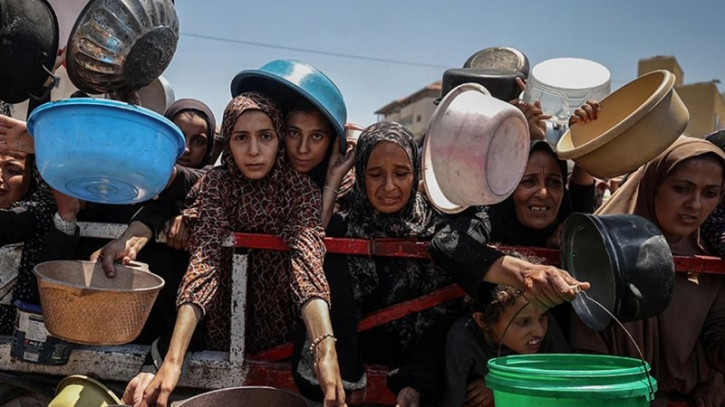
On August 22 last year, the UN-backed Integrated Food Security Phase Classification (IPC) officially confirmed the existence of a famine in the Gaza Governorate, which includes Gaza City. The organization’s assessment shows that a famine situation had developed there as early as mid-August 2025. At that time, more than 500,000 people were at risk of starvation, extreme poverty and death.
The UN’s humanitarian chief, Tom Fletcher, described the situation as a “Gaza famine” in the international media as well as the UN Security Council.
He said that the famine could have been prevented. The blockade of humanitarian access to Gaza and the Israeli war that has been going on since October 2023 created a dire situation for it. According to Fletcher, it was a man-made famine and some Israeli leaders openly spoke of using it as a weapon of war.
The famine situation began to improve after the ceasefire on October 10, 2025, when humanitarian access increased slightly. However, the situation had been dire for about two months before that.
According to the World Health Organization, hundreds of Palestinians had died of malnutrition by September 5, at least 130 of whom were children.
The famine did not suddenly develop on August 22
The famine in Gaza did not suddenly begin on August 22. The IPC's official declaration was the culmination of months of warnings. Several international organizations had previously reported that Gaza's food system was collapsing.
Israel had made the work of humanitarian aid agencies in Gaza increasingly difficult. Even aid workers were attacked. On April 1, 2024, an Israeli attack killed seven workers at the World Central Kitchen.
Israel later admitted the attack was a management error. Two officials were dismissed and several senior commanders were reprimanded, but no criminal investigation was launched into the killings.
Even before the famine was officially declared, many organizations, including the Food and Agriculture Organization of the United Nations (FAO), UNICEF, the World Food Program (WFP), and the World Health Organization, had called for rapid, safe, and unhindered humanitarian access to Gaza.
In May 2025, the IPC warned that the threat of famine was growing in Gaza as humanitarian agencies were unable to reach people in need.
The situation that followed demonstrated how important access to food supplies is. After the ceasefire in October, the increase in humanitarian and commercial food supplies also improved food security and nutrition. By December, the IPC reported that a famine situation was no longer present. However, more than 100,000 people were still in acute food insecurity and the overall situation was critical.
This raises the most important question: if increased access to humanitarian aid reduced the famine, why was it allowed to develop?
Is the same situation developing again?
The current situation in Gaza raises the possibility of a repeat of the same deadly tactic. However, the political context is somewhat different.
In 2025, the Israeli policy of removing Palestinians from Gaza was being openly discussed. Restrictions on the entry of food and other essential goods were part of a larger strategy. As a result, allegations were made that life in Gaza was being made unbearable and that people were being forced to leave.
But with the failure of large numbers of Palestinians to leave Gaza, there is now a risk that the same strategy of controlling food and essential goods could be used for different political purposes.
Withholding food and humanitarian aid during negotiations between Israel and Hamas through mediators could be used as a tool to exert pressure. In April 2025, Israeli Defense Minister Israel Katz publicly described the blockade as a “tool to exert pressure” on Hamas.
The current discussions include the disarmament of Hamas and the withdrawal of Israeli troops from Gaza. There are also disagreements over the measures that were already supposed to be implemented as part of the ceasefire.
In this situation, the use of food and humanitarian aid as political pressure brings up the question of what the world has learned from last year’s famine.
Has the world really learned?
It cannot be completely denied that the world has learned some lessons from the Gaza famine. But learning and putting those lessons into practice are not the same thing.
There were warnings for months before the famine was declared. The situation improved only when one of the factors that caused the famine—the restrictions on humanitarian access—was eased.
But the food system in Gaza is still severely damaged. Agricultural production capacity has been severely reduced. A large part of the population is dependent on humanitarian aid. Most worryingly, access to basic necessities like food is still dependent on political and military decisions that are beyond the control of the hungry people.
This is where the most devastating lesson of the Gaza famine lies. The world may have learned better than ever how to measure famine; but it has not yet learned enough about how to prevent it.
If the political debate over Gaza’s future is once again dominated by the use of pressure tactics to withhold food and humanitarian aid, the question will be whether the world has learned the lessons of last year’s famine.
.png "Advertisement")