.png)
How social media created a migrant crisis in Spain
Published: 10:01 PM, 2 August 2026
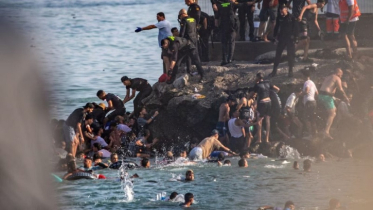
The sudden influx of thousands of migrants to the coast of Ceuta, Spain's North African enclave, and rumors circulating on social media have created a severe crisis and political storm in European politics.
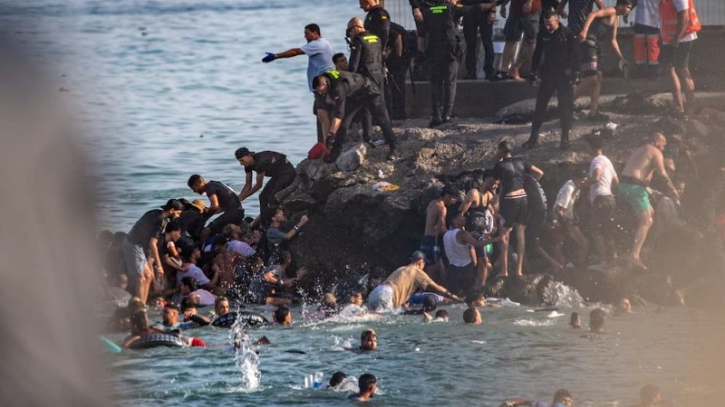
Most of the thousands of migrants who recently swam from Morocco to the Spanish border with Ceuta have now returned to Morocco under the guard of Spanish soldiers and police. However, the sudden move has led to the recovery of at least 72 bodies from abandoned rubber rings and flippers that had washed up on the sea.
The incident has further exposed political divisions across Europe on the sensitive and complex issue of migration. There are now many questions about whether this sudden influx of migrants was caused by false promises of easy entry to Europe and viral videos circulating on social media, or whether there was a well-planned or political motive behind it.
The incident has angered Spanish Prime Minister Pedro Sanchez, who has sharply criticized the behavior of some European Union leaders. In particular, Italian Prime Minister Giorgia Meloni's far-right party, Fratelli d'Italia, posted pictures of migrants running through the streets of Ceuta on social media and criticized Spain's immigration policy. After that, Italian Prime Minister Meloni announced the suspension of the Schengen agreement with Spain, citing security threats, which angered Madrid.
Spain argues that Ceuta is not part of the Schengen area and that Moroccan migrants could not enter the mainland. However, Meloni is believed to have taken this opportunity to attract voters with elections next year and pressure from anti-immigration parties.
Not only Italy, but heads of state from about two dozen European countries have questioned Spain's immigration policy. They see Spain’s recent move to allow hundreds of thousands of undocumented migrants to work as a major draw to Europe.
However, Prime Minister Sanchez says that smugglers have misrepresented a Supreme Court ruling that said those who enter by sea cannot be immediately returned, creating false hopes of an easy route to Europe. The investigation found that certain social media accounts had circulated fake “Spain is open” videos, which showed young people swimming in wetsuits and flippers. But when they reached the shores of Suiza, they were forced to turn back in despair, unable to find food, shelter or a way to get to the mainland.
Various parties in global politics are trying to capitalize on the sudden migrant crisis. Former US President Donald Trump has called it a “disaster” and an “invasion”, while Russia has expressed joy at the chaos in Europe. Morocco has blamed criminal gangs for the incident, but Spanish Prime Minister Sanchez has called Rabat a “good ally.” But critics have urged him to avoid a soft approach.
Spain has extended a long orange-buoyed fence into the sea along the border with Ceuta to deal with the situation, and next week EU interior ministers will discuss further strengthening the external border. In all, the tragedy, which saw at least 72 young people die at sea and return to Morocco in coffins, has had a lasting political and diplomatic impact across Europe.
.png "Advertisement")