.png)
Ceasefire or a plan for deception—what does Trump really want?
Published: 09:48 PM, 2 August 2026
The volatile Tehran-Washington relationship has reached a point where conflict, deep mistrust, and the lack of any clear prospects for dialogue have reached their peak. The main question now is—does Washington really want to end the ongoing crisis with Iran, or is it once again using diplomacy as a tool for pressure tactics?
Since the seizure of the “spy den” (the US embassy in Tehran) at the beginning of the Islamic Revolution’s victory, the two countries have had a long history of continuous crises, unfinished negotiations, sanctions, reciprocal threats, and indirect conflict. Although the 2015 nuclear deal temporarily moved this hostile relationship toward dialogue, the US withdrawal from the deal (JCPOA) in 2018 and its return to a policy of “maximum pressure” have destroyed the fragile foundation of trust on both sides.
In the current situation, the Trump administration’s stance is oscillating between the prospect of a deal and the threat of a harsh military strike. It has turned diplomacy into a tool that relies on pressure and on-the-ground reckoning. Iran, on the other hand, insists that it has not requested a direct return to the negotiating table. Tehran is also skeptical about the credibility of Washington’s promises.
The escalation of attacks on US bases, the more visible Saudi presence in the campaign against the resistance forces in Iraq, the tensions in the Red Sea, and the potential for Egypt to become involved in the crisis suggest that the dispute between Tehran and Washington is no longer a mere bilateral conflict, but has spilled over into the entire region. In such a situation, military spending, the strain on the global economy, concerns about energy security, and the decline in the US arms stockpile, as well as the US domestic electoral reckoning, have all complicated political decision-making and made it more difficult to reach a lasting agreement.
The tools at the White House's disposal to achieve its potential goals on the Iran issue are outlined below:
Continuation of coercive diplomacy
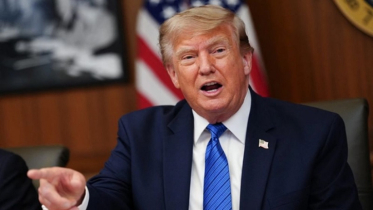
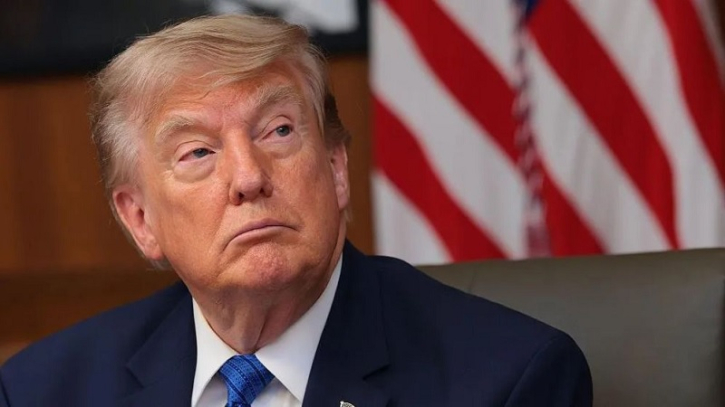
Donald Trump's recent comments and stance on Iran suggest that he does not see diplomacy as a stable and sustainable path based on mutual trust; rather, he wants to use it as a temporary tool alongside military pressure. The 47th President of the United States still talks about the possibility of reaching an agreement with Tehran and insists that negotiations can yield results. However, at the same time, he is issuing strong threats of a massive bomb attack on Iran and publicly stating that he has lost confidence in Iranian officials.
He has also criticized the style of negotiations by Tehran's representatives. He claims that the Iranians spend a long time on issues that, in his opinion, can be resolved in a very short time. From these statements, it is clear that Trump has little commitment to diplomacy in the traditional sense. He accepts negotiations only when they bring quick and favorable results according to the US demands. In fact, these positions suggest that diplomacy and military action are two complementary tools for Trump. Depending on the situation, these tools are used to increase pressure, force Iran to back down, and impose Washington’s desired outline.
The Middle East Reshaping Project
A critical look at Trump’s policy toward Iran reveals that the offer of dialogue and a deal does not necessarily mean that Washington wants a permanent solution to the dispute. Rather, it may be part of a pressure strategy to impose a new balance in the region. In this model, negotiations essentially create opportunities to put economic, security, and psychological pressure on the adversary; at the same time, new demands are raised beyond the nuclear issue.
As a result, accepting specific concessions, such as reducing or stopping uranium enrichment, is not considered a guarantee of ending the conflict. Because then the scope of the demands could be expanded to include Iran’s defense capabilities, regional influence, and foreign policy trajectory.
The history of uneven implementation of the nuclear deal reinforces the suspicion that Iran may not keep its promises in proportion to the concessions it makes. Such a situation should not render diplomacy useless, but rather requires a new definition. Negotiations must be based on the balance of power, verifiable assurances, clear dispute resolution mechanisms, and deterrence. Otherwise, dialogue may become a tool for gradually eroding the country’s capabilities and setting the stage for further pressure.
Donald Trump’s main goal with Iran is to quickly reach a deal that would reopen the Strait of Hormuz, reduce regional tensions, and pave the way for a return to talks on a full nuclear deal. At the same time, he is trying to force Iran and the mediators to accept America’s desired outline by maintaining a credible threat of a return to “terrible military action.” In this equation, stopping the attack does not mean abandoning the military option, but rather temporarily suspending it to explore the path of negotiations.
Diplomacy is not seen as an independent goal here, but rather as a process to quickly reach a practical result. Therefore, from the perspective of the mentioned position, it can be said that while controlling the economic and security costs of escalating conflict, America's dominance in achieving its own goals is essential.
.png "Advertisement")