.png)
Hundreds of ships stuck in Strait of Hormuz, oil prices rise in fear
Published: 07:34 PM, 1 March 2026
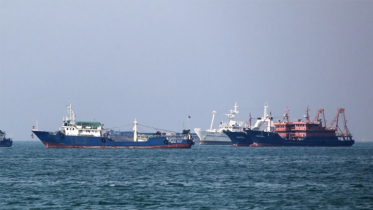
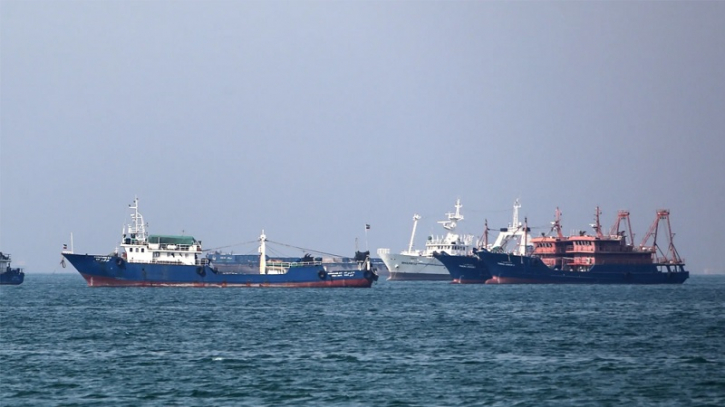
After the deadly US-Israeli airstrikes on Iran, a deadlock has arisen in the Strait of Hormuz, one of the world's most important energy supply routes. According to shipping data, hundreds of ships carrying fuel oil and liquefied natural gas (LNG) are stuck at the two entrances to this strategic waterway.
At least 150 giant tankers are currently waiting at anchor in the open sea outside the strait, Reuters reported, based on data from ship tracking platform Marine Traffic. The majority of these ships are carrying crude oil and LNG. Dozens of ships are also stationary on the other side of the strait.
According to shipping analysts, this situation has arisen as the entire region is at a new risk of war after the US-Israeli attack on Iran on Saturday morning. Most of the ships are maintaining a safe distance from the coasts of Iraq, Saudi Arabia and Qatar.
About 20 percent of the world's total fuel oil demand and about one-fifth of the global LNG supply are transported through this narrow waterway. As a result, the disruption of shipping at this 'chokepoint' of the strait has put the global energy supply chain at serious risk.
Analysts fear that if the stalemate lasts long, crude oil prices could rise sharply in the international market. The ships currently waiting outside the strait are being described by those concerned as 'floating mountains of oil'.
Meanwhile, several top oil companies and trading houses have announced a temporary suspension of shipping through the Strait of Hormuz due to security risks. This has raised concerns that the export activities of LNG export-dependent countries like Qatar and top oil producing countries like Saudi Arabia will be severely disrupted.
Experts say that this crisis could have a major impact not only on the energy market, but also on the cost of power generation, industries and goods transportation around the world. They warn that if the situation does not normalize, new pressures may arise in the global economy.
.png "Advertisement")