.png)
Why the window seat doesn’t match the seat, all unknown information about the plane revealed
Published : 08:55 PM, 17 January 2026
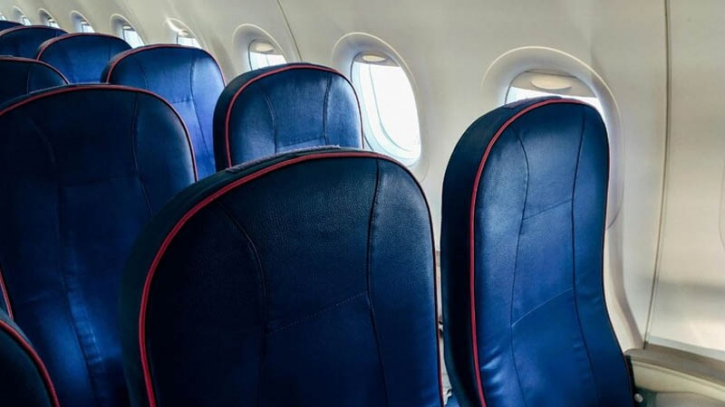
The position of the window of the plane is determined according to its structural needs, not in accordance with the row of seats.
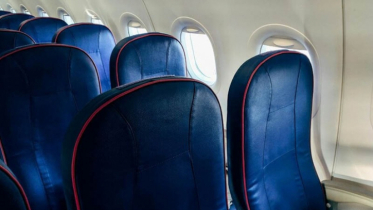
Many people have been disappointed when boarding the plane and sitting next to the window. The window is not right in front, sometimes a little in front, sometimes in the back. The dream of seeing the clouds, sunset or the view below from a very close distance in the middle of the sky remains elusive. Although it may seem like a design flaw at first glance, in reality there is a well-planned engineering, safety and cost-related logic behind it. Below are six reasons why this 'mismatch' between the window and the row of seats on the plane occurs.
Structural design of the plane: The position of the window of the plane is determined according to its structural needs, not in accordance with the row of seats of the passengers. The windows are placed at a certain distance in the fuselage (the main structure of the plane) so that the strength of the structure is maintained by handling the pressure difference at altitude. This engineering constraint is what destroys the window's match with the seat.
Specific ‘seat pitch’: Aircraft seats are arranged according to a specific seat pitch – that is, the distance from one row of seats to the next. This is determined keeping in mind the safety and minimum comfort of the passengers. But the distance between the windows is not done according to this seat pitch, as a result, the two positions rarely match.
Trying to keep the number of passengers as high as possible: Airlines aim to transport as many passengers as possible while maintaining safety. If every seat is placed next to a window, then the number of seats will decrease – which means that revenue will also decrease. Therefore, efficiency and profit are given priority over beauty or enjoying the view.
Modular seat arrangement: In modern aircraft, the seats are arranged in modular blocks, which can be easily used in different models of aircraft. This saves production, maintenance and time. But since the position (alignment) of the windows differs from one model to another, perfect coordination is not realistic.
Variations between aircraft models: Each aircraft has a different fuselage design, and the position of the windows is also different. However, airlines tend to use almost the same seating arrangement for operational convenience. As a result, the location of the windows is neglected.
Cost and maintenance: If each window is equipped with a separate seating arrangement, the cost will increase manifold and maintenance will be complicated. Keeping a standard arrangement reduces costs, simplifies work and speeds up the turnaround time of the flight.
After analyzing some more information about the design of the aircraft, it was found out why the windows of the aircraft are round? Round windows distribute the pressure inside and outside the aircraft evenly, thus reducing the risk of cracking. The pressure at the corners of the square window can weaken the structure. Meanwhile, the white color of the aircraft reflects enough light, reduces heat absorption and makes scratches/cracks easily visible. This makes maintenance easier.
The white spots that appear in the sky behind the aircraft are called 'contrails'. These white lines are formed when the hot smoke of the aircraft mixes with the cold air at an altitude of several kilometers and turns into ice particles.
So before you get upset the next time your window seat doesn't match, remember - this isn't negligence, but a practical decision made with a combination of safety, engineering, and economics.
.png "Advertisement")