.png)
Five Overlooked Realities Facing Bangladeshi Immigrants in New York City
Published: 06:03 PM, 18 January 2026
Standing on a corner of 38th Avenue in Jackson Heights, 41-year-old Abdul Ahad looks visibly exhausted. He works at a restaurant. Fear lingers in his eyes. “I live in constant fear,” he says. “Whenever I see the police, my heart starts pounding. I don’t have a criminal record, yet I’m always afraid. I’m struggling mentally.”
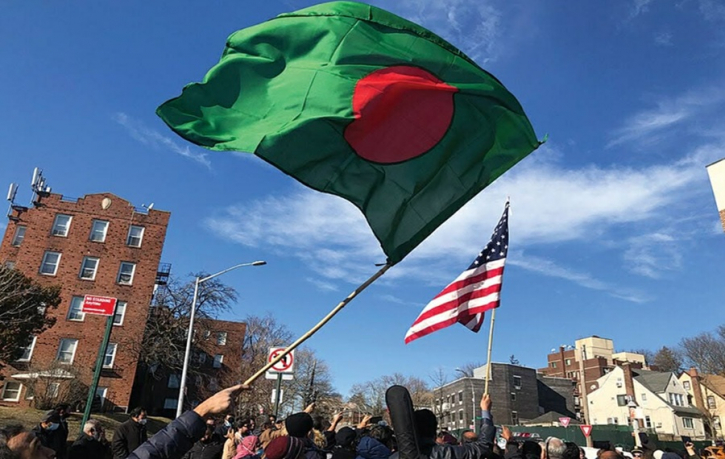
Ahad’s story is not unique. For thousands of Bangladeshi immigrants in New York City, visa uncertainty and immigration anxiety have become a part of daily life. This report highlights five overlooked realities faced by the Bangladeshi immigrant community- realities that remain largely absent from mainstream discussions despite shaping everyday survival.
1. Immigration Fear: A Life Trapped in Silent Anxiety
Monir Ahmed has been living in an underground apartment in Brooklyn for seven years. He applied for political asylum shortly after arriving in the U.S., but his case remains unresolved.
“My life feels suspended,” Monir says. “Seven years have passed. I haven’t been able to visit my parents, get married, or live a normal life. I came to the land of dreams, only to watch those dreams slowly collapse.”
A significant portion of Bangladeshi immigrants in New York are currently in legal limbo, with asylum applications pending. Many hold work permits and Social Security numbers, yet prolonged delays and uncertainty leave their lives deeply insecure. Others remain fully undocumented.
This vulnerability often leads to workplace exploitation. Fear of deportation or retaliation forces many to accept wage theft, unsafe working conditions, and long hours. The same fear discourages them from seeking medical or legal help.
An immigration support volunteer explains, “Fear is the biggest barrier. People know their rights, but they’re too afraid to exercise them.”
According to city estimates, New York City is home to approximately 400,000–500,000 undocumented immigrants, though there is no official breakdown by nationality. Immigration attorney Moin Chowdhury notes that many Bangladeshis fall either into prolonged asylum backlogs or undocumented status, but the lack of precise data keeps their struggles largely invisible to policymakers.
2. The Affordable Housing Crisis: Pain Behind Closed Doors
In a damp, windowless basement in Jamaica Hills, Selim Uddin lives in near darkness. There is no sunlight, no ventilation yet it is his only shelter.
“After paying rent, there’s almost nothing left,” he says. “There’s nowhere to complain. If we speak up, the landlord tells us to leave.”
Overcrowded and unsafe housing has become routine. Community members report that five or six people sharing a single room is now common. Many live in illegally converted basements or partitioned units with no fire safety measures or emergency exits.
A single mother living in a basement with her two children says, “If the landlord evicts us, we’ll be on the street. That fear keeps me silent.”
According to the New York City Comptroller’s Office, the city has approximately 424,800 basement and cellar units, with research suggesting that nearly 100,000 are illegally occupied, particularly in Queens and Brooklyn. These units often violate building codes and pose serious risks from fire and flooding.
Despite having the legal right to file complaints, many immigrants remain silent due to language barriers, legal complexity, and fear of eviction—leaving immense suffering hidden behind closed doors.
3. A Lack of Community Leadership and Political Representation
New York City’s Bangladeshi population is growing rapidly but their presence in the halls of political power remains almost nonexistent.
According to the Pew Research Center (2023), approximately 270,000 Bangladeshi-origin people live in the United States, with nearly half about 115,000 residing in New York City. Census data from NYC Planning shows that 66% of the city’s Bangladeshi residents are concentrated in Queens, a share that has increased by 10 percentage points over the past decade, making it one of the borough’s most significant demographic shifts in recent years.
Yet the community’s political footprint tells a starkly different story. Despite paying taxes, voting in local and national elections, and building dense neighborhood networks across Queens and Brooklyn, Bangladeshi New Yorkers hold virtually no elected offices and have minimal representation in city agencies or community boards.
“We vote and pay taxes,” said Sania Afrin, a resident of Woodside. “But no one represents us at the decision-making table. That’s why our issues are ignored.”
The absence of representation carries real economic consequences. According to the NYC Mayor’s Office of Immigrant Affairs (2024), 28.2% of Bangladeshi New Yorkers live below the poverty line significantly higher than the citywide rate of 20.6%. Among children, the figure rises to 35.1%, a level that poverty researchers describe as a marker of systemic neglect.
Community organizations do exist, but many residents say they fall short. Groups claiming to represent Bangladeshi interests are often focused on cultural events and personal achievements rather than the everyday struggles of working-class families wage theft, unsafe housing, immigration backlogs, and lack of healthcare access.
“Too many leaders, too little direction,” said one senior community member, who asked not to be named.
Bangladesh Society General Secretary Mohammad Ali acknowledged the structural barriers that keep the community on the margins of mainstream politics. “No one gives you space you have to create it yourself,”
he said. “Unfortunately, Bangladeshi representation remains extremely low.”
Youth engagement, analysts note, is critically lacking. With no pipeline for young Bangladeshi leaders entering local government or civic institutions, the community risks repeating the same cycle of invisibility for another generation.
Without sustained investment in leadership development, political organizing, and cross-generational unity, analysts warn, marginalization will not just persist it will deepen.
4. The Absence of Genuine Media Representation
Despite being a large and active community, Bangladeshi immigrants remain largely invisible in mainstream American media. Critical issues labor exploitation, immigration trauma, housing insecurity, and mental health rarely receive sustained coverage.
Even within Bangla-language media, many community members feel that investigative reporting is limited, often overshadowed by festival coverage or personal achievements.
“No one tells our real stories,” says Rayhan, a factory worker. “Our struggles never become news.”
Young activists echo this concern. “Without media, we don’t exist,” one says. “If problems aren’t reported, solutions never follow.”
Editors acknowledge constraints—limited resources, funding challenges, and audience pressure but experts stress that meaningful representation requires consistent, investigative journalism capable of influencing policy.
5. Mental Health and Social Isolation: The Invisible Crisis
On a quiet evening in a one-bedroom apartment in the Bronx, 56-year-old Safia Khatun sits alone. She has lived in New York for nearly a decade, yet she has almost no one to call.
“I have no one to talk to,” she said. “The loneliness is slowly destroying me.”
Safia’s experience is far from unique. Across New York City’s Bangladeshi immigrant community, a mental health crisis is unfolding in silence driven by long working hours, language barriers, family separation thousands of miles away, and the relentless psychological weight of immigration uncertainty.
Yet for most, help remains out of reach.
According to NYC government data, while approximately 48% of U.S.-born residents receive mental health treatment, only 34% of immigrants do a 14-percentage-point gap that persists even though immigrants report comparable or higher levels of chronic stress and trauma.
The barriers are concrete and well-documented. Research by the Center for Migration Studies of New York identifies the three most common reasons immigrant New Yorkers avoid mental health care: lack of time due to work or childcare demands, language barriers, and inability to afford services. Bengali-language counseling remains particularly scarce across the five boroughs.
The financial barrier is compounded by a widespread insurance crisis. According to NYC Health + Hospitals (2024), 35% of the city’s 1.4 million non-citizen residents are uninsured. Among the estimated 541,000 undocumented immigrants, the figure rises to 64% meaning nearly two out of three have no health coverage of any kind.
The political climate of 2025 has made an already dire situation significantly worse. According to the KFF/New York Times Survey of Immigrants conducted between August and October 2025 with 1,805 immigrant adults nationally 77% of likely undocumented immigrants reported experiencing negative health impacts, including anxiety, disrupted sleep, and worsening mental health, directly attributable to immigration-related fears since January 2025. Separately, 41% of immigrants said they personally worried about the detention or deportation of themselves or a family member a figure that has surged from 26% in 2023.
Mental health stigma adds yet another layer. Within the Bangladeshi community, emotional distress is rarely discussed openly, particularly among men. Seeking psychological help is often viewed as a sign of weakness or family failure a cultural dynamic that clinicians say drives suffering further underground.
“People are carrying enormous pain,” said one community health worker who asked not to be named. “But they come home, they go to work, they say nothing. There is no space to fall apart.”
Experts warn that without culturally competent services, community-based support networks, and a serious effort to reduce stigma, this crisis will not only continue it will grow. For a community already navigating poverty, housing instability, and immigration fear, untreated mental illness may prove to be the heaviest burden of all.
Conclusion
New York City proudly calls itself a city of immigrants. Yet the lived realities of Bangladeshi immigrants reveal a deep gap between policy and practice.
Prolonged immigration backlogs fuel fear and mental distress. Unsafe housing puts lives at risk. Lack of political and media representation renders struggles invisible. And an untreated mental health crisis quietly erodes lives.
These stories are not just about one community, they are about the future of social justice in New York City. Until these realities are acknowledged and addressed, meaningful solutions will remain out of reach.
.png "Advertisement")