.png)
US precision strike failure: How many innocent lives were lost
Published: 08:22 PM, 12 March 2026
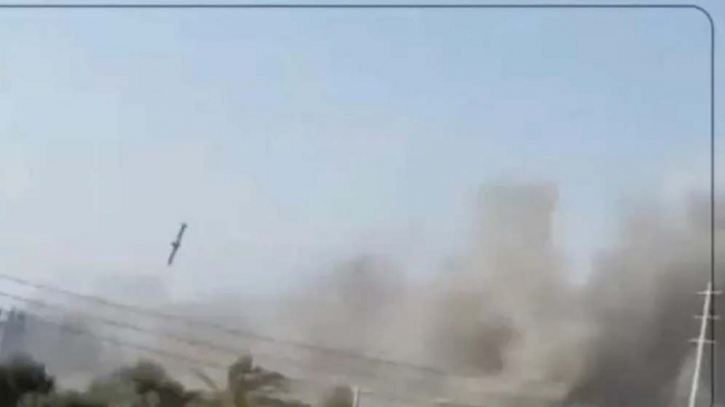
The genocidal Israel and its ally the US jointly attacked Iran on February 28. On the very day of the invasion, Washington and Tel Aviv launched a devastating attack on the city of Minab in the coastal province of Hormuzgan in the Islamic Republic. Several pieces of evidence have already been released that a US Tomahawk missile attack was carried out on a girls' school there. Although the US has not yet claimed responsibility for it. According to local media reports, about 180 young children were killed in the attack.
Experts say that if the girls' school named Shazareh Tayyiba in Minab was not deliberately targeted, the US forces have once again demonstrated their wrong aim or failure to determine the target of the precise attack. Before this, US troops have killed many civilians in different countries due to information errors or failure to carry out precise attacks.
According to a report by Al Jazeera, evidence has emerged that US forces have killed many innocent civilians by mistakenly targeting them.
Despite US claims to only target military installations and specific individuals, the country's armed forces have a long history of killing civilians - and sometimes cover-ups.
During the 1999 NATO bombing of Yugoslavia, the US mistakenly identified part of the Chinese embassy in Belgrade as a Yugoslav military installation and attacked it.
Three Chinese journalists were killed and more than 20 people were injured in that attack. Washington later said that the bombing was caused by intelligence analysts relying on old maps that mistakenly identified the embassy compound as a military target.
The incident sparked a major diplomatic crisis with China, leading to large protests in front of US diplomatic missions in Beijing and other cities.
“In 1991, during Operation Desert Storm, the US also attacked the Amiriyah bunker in Baghdad, believing it was a command-and-control center,” Kansian explained. Kansian added that only civilians were there and 403 people were killed.
Operation Desert Storm was a US-led air and ground operation during the Gulf War, which began after Iraqi leader Saddam Hussein invaded Kuwait in 1990. In January 1991, the coalition launched a massive air campaign against Iraq, aiming to cripple its military infrastructure, leadership networks, and command centers.
In that incident, two precision-guided bombs penetrated the bunker, killing more than 400 people, many of them women and children. The attack became the deadliest civilian casualty of the war and drew widespread condemnation around the world.
In a 2021 interview, four-star General Merrill McPeek said that at the time, the United States primarily relied on satellites for intelligence gathering.
“It never occurred to us that this was a place where civilians could take shelter—we thought of it as a military bunker, with a command-and-control facility,” McPeek told journalist Sofia Barbarani. McPeek was the chief of staff of the US Air Force during the Gulf War.
In the Belgrade incident, the CIA fired a mid-level intelligence officer responsible for identifying targets. Six senior managers were also reprimanded.
No criminal charges were filed, however. The United States later paid the Chinese government $28 million for damage to the embassy and $4.5 million to the families of the victims.
The US military did not consider the attack a mistake and no personnel were fired or disciplined in the Amiriyah bunker incident. US officials claimed that the bunker was a legitimate military target, also used to shelter civilians.
Decades earlier, in 1968, during the Vietnam War in what became known as the My Lai Massacre, US soldiers killed between 347 and 504 civilians in a village and gang-raped women.
The US military initially covered up the war crimes, but an investigative report by journalists Seymour Hersh and Ronald Ridenhower brought the horrors of My Lai to the world's attention. It fueled anti-war sentiment in the United States and fueled demands for accountability.
Although 26 soldiers were charged in the incident, only one—the platoon leader, Lieutenant William Calley Jr.—was convicted. He was sentenced to life in prison, but his sentence was later reduced; he ultimately served only three and a half years under house arrest.
The investigation into the Minab school bombing is still ongoing, but experts say the consequences are likely to be limited even if the United States admits responsibility. Kansian said that if a specific individual can be held responsible for the mistake, only departmental disciplinary action is likely.
“But the US Secretary of Defense has repeatedly told the responsible members, ‘I stand with you,’ so disciplinary action is unlikely,” he added.
.png "Advertisement")