.png)
What is the future of Argentina after Messi’s retirement? Lessons learned from the past
Published: 02:21 PM, 15 September 2026
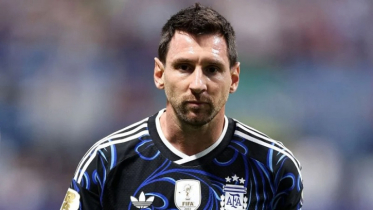
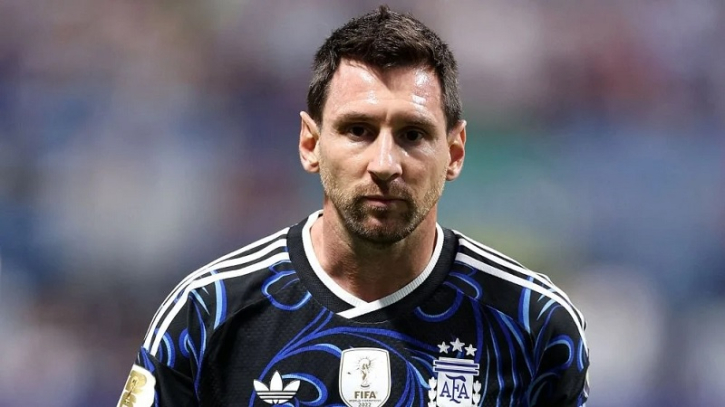
Some players don't just play for their team. They become the identity of the team. Just as Pele became the symbol of Brazil, Diego Maradona and Lionel Messi became the soul of Argentina.
When a player takes off his boots, it's not just the end of a career. A big question arises - what next? After Pele won the 1970 World Cup, Brazil had to wait 24 years for another title. After the Maradona era ended, Argentina had to wait the same long time. They won the title again in the 2022 World Cup in Qatar. Now Messi has announced his retirement from international football. As a result, the same uncertainty is looming again.
Maradona's international career ended in a dramatic fashion. He last played for Argentina in the 1994 World Cup, in a group stage match against Nigeria. He returned to the team and was axed. Argentina had emerged as the tournament's top contenders after a 4-0 win over Greece, which saw them beat Nigeria 2-1.
Before the World Cup, Maradona said, 'Argentina wants me.' That call came. Coach Alfio Basile called him after a 5-0 defeat to Colombia and he responded. The team then had rising stars like Diego Simeone, Fernando Redondo, Claudio Canizia and Gabriel Batistuta. That team also won the 1991 and 1993 Copa Americas.
But Maradona's resurgence came to an abrupt halt at the World Cup. He was eliminated for using banned substances. The team could not overcome that shock. Argentina was eliminated in the Round of 16 by Romania. This was Maradona's last World Cup.
After Maradona, the number 10 jersey fell to River Plate star Ariel Ortega. But his campaign ended in a moment against the Netherlands in the quarter-finals of the 1998 World Cup. He received a red card for headbutting Dutch goalkeeper Edwin van der Sar. Argentina lost 2-1.
The problem in Maradona's later years was not just the number 10 jersey. The team lacked a long-term leader who could make an impact both on the pitch and in the dressing room. Simeone became captain in 1998. Juan Sebastian Veron and Batistuta shared the responsibility at the 2002 World Cup. Juan Pablo Sorin took over in 2006 and Javier Mascherano in 2010. The captain's armband kept changing hands.
Juan Roman Riquelme was coach Jose Pekerman's preferred number 10 at the 2006 World Cup. And a young Messi was showing the world his magic for the first time on the field wearing the number 19 jersey.
The 2010 World Cup brought big changes. Maradona himself was the coach at the time. And Messi wore the iconic number 10 jersey. After his extraordinary performance at the club, Messi was expected to achieve the same feat with the national team. Although he lost to Germany in the quarter-finals, that World Cup was the true beginning of the Messi era.
Now a new chapter is beginning. Argentina still produces good footballers. But the same old challenge is looming. Adapting without someone who once seemed indispensable. The years after Maradona show a way. Argentina may not get another Messi. But history shows that they can reinvent themselves without their main star.
.png "Advertisement")