How will victory and defeat be determined in the US midterm elections?

Published: 01:25 PM, 3 November 2026
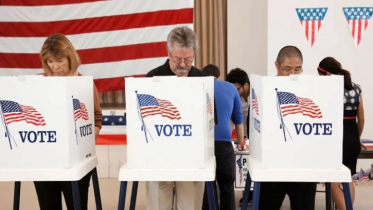
Much of the final two years of US President Donald Trump's second term will depend on the results of the midterm elections, as voters in the country go to the polls next Tuesday to elect members of the House of Representatives and the Senate.
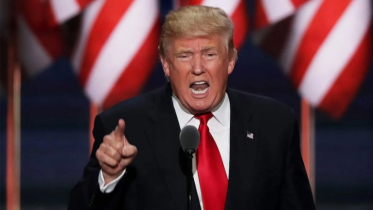
If Congress loses control in this election, there is a risk that the Trump administration will face major obstacles in policymaking and lawmaking.
While thousands of positions are up for election in the United States, the main focus of this year's midterm elections is on the two houses of Congress—the House of Representatives and the Senate. Both chambers are currently controlled by Republicans. However, declining public support, the rising cost of living, and the impact of the military conflict surrounding Iran have created electoral challenges for Republicans.
On the other hand, opposition Democrats are dreaming of regaining control of both houses of Congress. Victory or defeat in several key seats could ultimately determine who will control Congress.
Trump's public support is declining, Republicans are under pressure
Political analysts see Trump's declining approval ratings ahead of the midterm elections as a big opportunity for Democrats. According to the Silver Bulletin, a polling website, Trump's approval rating has fallen from just over 50 percent at the start of his second term to around 40 percent.
His public approval rating was around 42 percent when he decided to join Israel in a military strike against Iran in late February of this year. A few days later, it fell below 40 percent. Today, the rate is around 37 percent.
By comparison, Trump's approval rating was 43 percent at the same time in his first term eight years ago. Joe Biden's approval rating was also around 40 percent at the same time. During both presidents' terms, the ruling party lost control of the House of Representatives in the midterm elections. However, they were able to retain control of the Senate.
Trump's current popularity has given Democrats hope, with the party even seeing opportunities to contest seats in states where Republicans have consistently won in recent years.
A fierce battle looms in the House of Representatives
The Republican majority in the House of Representatives, the lower house of Congress, is currently very narrow. Republicans hold 218 seats in the 435-member chamber. One independent also votes with them.
Members of the House of Representatives are elected for two-year terms, so all 435 seats will be up for election in the next election.
However, not all seats are equally contested. In many areas, support for a particular party is so strong that the chances of winning those seats are essentially the same for one party's candidate.
According to the Cook Political Report, an election analysis firm, the outcome is uncertain in only 18 seats. Of these, 14 are currently held by Republicans and four by Democrats.
Democrats are not just aiming for these 18 seats. Another 36 seats that are in their favor and leaning towards the party are also part of the electoral calculus. Holding these seats could pave the way for them to regain control of the House of Representatives.
History shows that the president's party typically loses seats in the House of Representatives in midterm elections. According to statistics available since 1934, the party of the incumbent president has lost an average of 27 seats in midterm elections. Only three out of 23 elections have the incumbent party increased its seats.
It's tough for Democrats to gain control of the Senate.
Republicans have a slightly stronger position in the Senate than in the House of Representatives. The party holds 53 seats in the 100-member chamber. In addition, two independents vote with the Republicans. On the other hand, Democrats hold 45 seats.
Senators are elected for six-year terms, so about one-third of the seats are up for election every two years. This time, 35 seats will be up for election.
According to an analysis by the Cook Political Report, only seven of these seats are in the balance of power. Six of them are held by Republicans and one by Democrats.
Democrats need a major electoral victory to gain a majority in the Senate. They will need to win not only the uncontested seats but also seats that are likely to be held by Republicans or that are leaning towards the party.
Retaining their seat in Michigan is a key challenge for Democrats, with the race intensifying between left-wing political figure Abdul El-Sayed and Trump ally and former FBI official Mike Rogers.
In addition, Democrats are trying to win Senate seats in states like Alaska, Iowa, and Ohio, where Trump won by double-digit margins in the 2024 election.
The party is also eyeing opportunities in Texas, where Democrats could win their first Senate seat in the state since 1988 if former teacher James Tallarico defeats Republican candidate and close Trump ally Ken Paxton.
Cost of living and Iran war top concerns for voters
The cost of living could be the biggest factor influencing voters' decisions in this election. During the 2024 election campaign, Trump promised to control inflation and bring America back within the reach of ordinary people.
In his State of the Union address on February 24, Trump claimed that gas prices in most states had fallen below $2.30 per gallon. But four days later, the outbreak of war with Iran led to disruptions in Middle Eastern energy supplies. This also affected the US energy market. Gas prices rose to $4 per gallon.
The impact of the war was not limited to the energy market. The instability in the global economy and rising consumer spending have also put pressure on the lives of ordinary Americans.
A poll conducted last August found that 63 percent of respondents expressed dissatisfaction with Trump's role in dealing with the Iran situation.
Along with the cost of living, healthcare and immigration have also become important election issues, with the Trump administration touting the reduction in illegal immigration across the border as one of its successes.
On the other hand, Democratic candidates are emphasizing the high cost of health insurance, the general public's access to medical care, and the impact of the Trump administration's policies on the healthcare sector in their election campaigns.
Republicans also lead in the money fight
Despite falling behind in terms of public support, the Republicans are in a strong position in terms of campaign funding. The party is trying to overcome the negative impact of public opinion polls by spending huge amounts of money on the election campaign.
In mid-October, the Republican National Committee and its affiliates had about $320 million in cash on hand, compared to just under $230 million for Democrats.
In addition, Trump's MAGA Inc. group had more than $160 million in its hands. This organization, associated with the Make America Great Again movement, is serving as an important means of raising and spending money in election campaigns.
Using this financial power, Republicans are spending large sums of money on advertising campaigns in various states.
According to research firm AdImpact, more than $1 billion worth of political advertising was directed at U.S. voters in September, with Republicans spending nearly $200 million more than Democrats, with the party spending more on advertising in volatile Senate seats.
Republicans are hoping to get their supporters to the polls with this last-minute campaign. One of the goals of Trump and his party is to increase voter turnout and minimize potential losses.
The 2028 presidential election will be discussed immediately after the election.
While most midterm election predictions favor Democrats, the final outcome will depend on voter turnout and the competition for key seats. Trump and his party have outperformed polls in the past.
However, if Republicans fail to retain control of both houses of Congress in this election, the final two years of Trump's second term could become even more difficult. His administration could face obstacles from opposition Democrats in enacting laws, approving the budget, and implementing administrative policies.
On the other hand, if Democrats regain control of Congress, they will have the opportunity to further strengthen their political position before the 2028 presidential election.
According to the US Constitution, no person can be elected president more than twice. As a result, Trump is constitutionally barred from running for a third term. The results of the midterm elections could determine not only the future of his current administration, but also the power positions of the two major political parties ahead of the 2028 elections.