.png)
Iran War Shakes China
Published: 05:34 PM, 7 March 2026
China has not yet been hit by the ongoing unrest in the Middle East, but it is starting to feel the ripple effects.
In the short term, China has enough oil reserves to last a few months. Later, if necessary, it can seek help from neighboring Russia.
But China is now calculating what the impact could be in the long term. Because the issue is not only related to its investments in the Middle East, but also to its strategic plans.
Thousands of Communist Party representatives are meeting in Beijing this week. The main topic of discussion is how China, the world's second-largest economy, will move forward amid pressure from consumer spending cuts, a long-standing property crisis and huge local debt.
For the first time since 1991, the Chinese government has lowered its economic growth expectations, although the high-tech and renewable energy sectors are developing rapidly.
China may have thought that by increasing exports, they would be able to escape this economic pressure. But for the past year, they have been in a trade war with the United States.
Meanwhile, there is now a threat of instability in the Middle East, through which China's important shipping lanes and a large part of China's energy supplies come from the Middle East.
The longer this war in the Middle East lasts, the greater its impact on China is likely to be. Especially if shipping through the Strait of Hormuz is blocked.
Philip Shetler-Jones of the Royal United Services Institute said that if instability and insecurity continue for a long time in the Middle East, it will also have an impact on other regions important to China. For example, African countries have long benefited from large and consistent investment from Gulf countries. If that investment decreases, instability there could increase, which could ultimately harm China's long-term interests.
In other words, if the war lasts long, it could affect Chinese investments and markets beyond the Middle East. And like many other countries, China is worried about this new uncertainty.
Kerry Brown, a professor at King's College London, said, "China may be thinking the same way that others are thinking... What is the plan for this war? The United States certainly did not get involved without a plan."
Then he added, "Perhaps they (China) may feel, like others, that they (the United States) got involved without a clear plan. We (China) do not want to get involved in this conflict, we do not want to get involved in anything else. But we (China) have to do something."
Relationship but not deep friendship
Many Western analysts have long referred to Iran as an ally of China.
The two countries certainly had close relations. The last foreign visit of Iran's Supreme Leader, the late Ayatollah Ali Khamenei, to Beijing was in 1989. At that time, a photo of him was taken in front of the Great Wall of China.
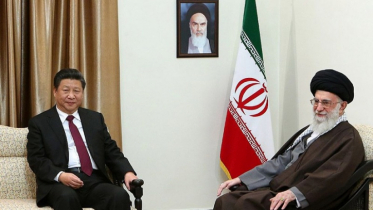
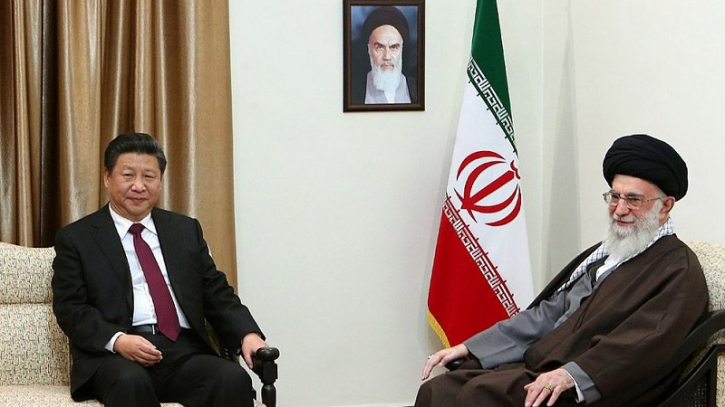
Relations between the two countries grew closer when Xi Jinping visited Tehran in 2016. Later, in 2021, they signed a 25-year strategic partnership agreement. According to the agreement, China promised to invest about $400 billion in Iran over 25 years. In return, Iran would supply China with regular oil.
However, according to analysts, only a small part of the promised money has actually reached Iran. But the flow of oil from Iran to China has not stopped.
According to the Center on Global Energy Policy, in 2025, China imported about 1.38 million barrels of Iranian crude oil per day, which is about 12 percent of its total imports. It is alleged that many of these oil shipments were re-labeled as Malaysian oil to hide the source.
A study by Columbia University said that there are more than 46 million barrels of Iranian oil in floating storage in Asia. In addition, there is more oil stored in bonded storage in the Chinese ports of Dalian and Zhoushan, which has not yet received customs clearance. The National Iranian Oil Company rents tanks there to store oil.
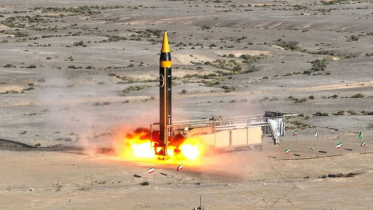
There have also been allegations of arms trade between the two countries. Although China has denied selling anti-ship cruise missiles to Tehran, US intelligence agencies claim that China has helped Iran's ballistic missile program by training Iranian engineers and supplying various components.
Human rights organizations allege that facial recognition and surveillance technology provided by China has also played a role in Iran's harsh crackdown on protesters and government opponents.
All in all, it may seem that the relationship between the two countries is very close.
For these reasons, some tabloid media have described China and Iran as an alliance of countries that create instability in the world, along with North Korea and Russia. However, in reality, the relationship between China and Iran has been largely transactional.
Kerry Brown, a professor at King's College London, said that there is no strong ideological or cultural relationship between China and Iran that would make them close.
According to him, Iran has been a constant irritant to the United States for many times, which has been strategically advantageous for China. The reason China has maintained relations with Iran is mainly negative, not positive. The relationship built on such a foundation is very fragile. It worked for a while, but there was no deep relationship here.
China does not view alliances or partnerships in the same way that Western countries do. They do not usually sign mutual defense agreements and are not quick to get involved in wars for their allies.
Rather, Beijing generally wants to stay out of any conflict.
China's ability to help allies is limited
However, this
.png "Advertisement")