.png)
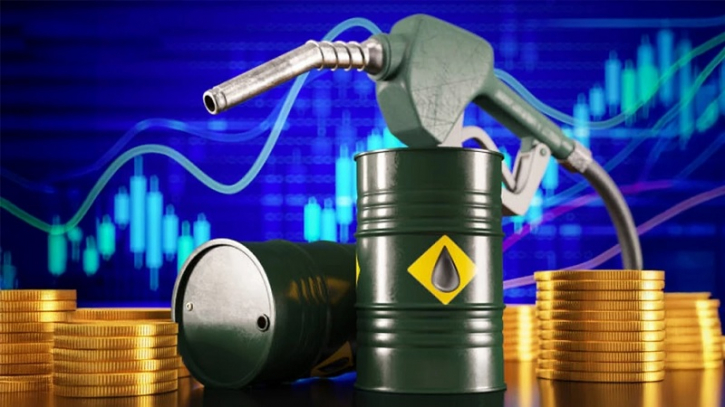
Oil prices hit two-year highs
Published: 11:41 PM, 7 March 2026
As the war in the Middle East intensifies, global crude oil prices have reached their highest level in two years. On Friday (March 6), the price of crude oil in the global market exceeded $93 per barrel; an increase of about 34 percent in a week. This is the highest price of crude oil in the international market since 2023.
Meanwhile, Qatar's Energy Minister Saad Al-Kaabi warned that oil and gas exporting countries in the Gulf region could stop production in the next few days. After this announcement, a major disaster is feared in the global economy.
Qatar Energy CEO Saad Al-Kaabi said in an interview with the British newspaper Financial Times that this conflict in the Middle East could devastate the global economy.
According to energy analysts, if this trend of rising oil prices continues, it will have a huge impact on the lives of ordinary people. In addition to the increase in transportation costs, heating, food and imported goods are also expected to increase significantly. Qatar Energy said it had been forced to halt production due to a military attack on its LNG production facility. Saad al-Kaabi warned that if the war lasts for several weeks, oil prices could hit $150 a barrel.
According to Qatar’s energy minister, if the war continues, global GDP growth will grind to a halt. Fuel prices will skyrocket and there will be a severe shortage of goods as factories shut down.
About a fifth of the world’s oil supplies pass through the strategically important Strait of Hormuz. Since the Iran and US-Israeli conflict began last week, shipping through the narrow waterway has almost come to a halt. As a result, major economies such as China, India and Japan, which rely on the route for crude, are facing a severe crisis.
Rystad Energy analyst Jorge Leon described the situation as a “real risk” for the global economy. “We are at a juncture where it is not clear whether this is a temporary crisis or the beginning of a major economic catastrophe,” he said. “If supply systems are shut down for more than two weeks, it will have a serious impact on the global macroeconomy.”
The UK’s market watchdog, the CMA, and the energy regulator, Ofgem, are closely monitoring the situation. Petrol and diesel prices in the country have already reached their highest levels in 16 months.
Analysts say that although Middle Eastern countries have a few weeks of oil reserves, if those reserves are depleted and production completely stops, it will be difficult to manage the global market. To control the situation, governments around the world may plan to release their emergency oil reserves into the market, as was done in the wake of the Russia-Ukraine war.
Amrita Sen, founder of energy consultancy Energy Aspects, said many traders initially thought the conflict would end quickly. That is why the pace of oil prices rose relatively slowly at the beginning of the week.
She added that during the Russia-Ukraine war, oil prices briefly rose to $128, but then fell rapidly. But this time the situation is different.
In her words, “This time, at least about 10 million barrels of oil supply are directly at risk.”
Some market analysts now believe that if the situation is prolonged, oil prices could return to triple digits permanently.
“The longer the war goes on, the more certain it becomes that oil prices will reach triple digits. I think it is not just a possibility — it is ultimately inevitable.”
.png "Advertisement")