.png)
Trump could fall into Iraq trap if he attacks Iran
Published: 09:24 PM, 26 February 2026
The Iraq war severely damaged public trust in US establishment leaders. Otherwise, Donald Trump might never have become president.
So it is ironic that he is now repeating the same rhetorical and strategic mistakes that led President George W. Bush to disaster in the Middle East after 2003.
Trump has reportedly not made a final decision on whether to attack Iran. But his massive naval and air force presence in the region is the largest military buildup since the invasion of Iraq that toppled President Saddam Hussein. It could add pressure to pressure Iran to back down at the crisis talks that resume in Geneva on Thursday (February 26). But without a major diplomatic breakthrough, bringing such a large force home without firing a single shot would be a blow to Trump’s reputation.
The Trump administration was built on the back of a “MAGA” movement that has a deep aversion to foreign wars. Perhaps that’s why it has yet to come up with a coherent argument for the war it is threatening.
The downside of this approach is that while the US military is ready for war, the general public is not.
Bush spent months building public opinion in favor of war before invading Iraq—albeit on flawed intelligence and falsehoods. The Trump administration, on the other hand, has so far provided only vague and confusing justifications.
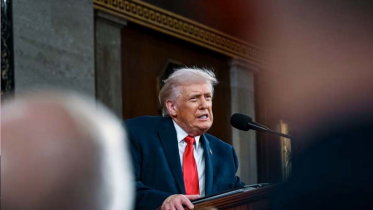
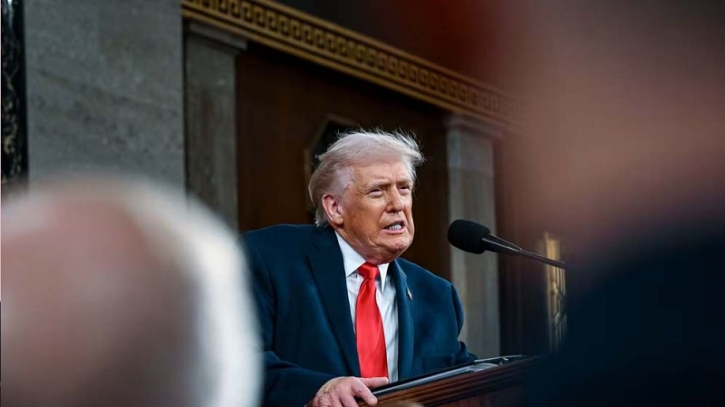
In his State of the Union address on Tuesday night, Trump attempted to provide some clarity, though it could back him into a corner.
He warned, as traditional presidents do, that Iran will never be allowed to build a nuclear bomb. But his remarks have raised doubts about his intentions and integrity, as he claimed last year to have “destroyed” Tehran’s nuclear program. Trump also cited the deaths of hundreds of US troops in Iraq at the hands of Iranian-backed militias. He also condemned the recent brutal crackdown on Iranian protesters, in which thousands of civilians may have been killed.
The missile conundrum
But the echoes of history are most powerful when he looks at Iran’s ballistic missiles. Trump said they have already developed missiles that can threaten Europe and our bases abroad, and they are working on missiles that will soon be able to reach the United States.
He may be overstating Iran’s capabilities. But by citing the threat to his own country, he followed the controversial path of the Bush administration and British Prime Minister Tony Blair’s government, which they used to justify the Iraq war.
Secretary of State Marco Rubio issued a similar warning on Wednesday. “You see them increasing the range of their missiles and they are clearly moving in a direction where one day they could have a weapon that could hit the American mainland. They have weapons that can reach much of Europe as we speak. And the range is increasing geometrically every year, which is truly astonishing.”
It all sounds very familiar
In 2002, Bush said that American civilians in Saudi Arabia, Israel, Turkey and other countries were at risk from Iraqi missiles. He even claimed that Iraq was looking into using drones that could deliver chemical and biological agents “on missions targeting the United States.” That same year, Vice President Dick Cheney warned in Nashville that Iraq was threatening US allies in the Middle East with missiles and was seeking delivery systems that could eventually “subject the United States or any other country to nuclear blackmail.”
The missile scare is not the only reason for nostalgia for the Iraq War. One of the Bush administration’s biggest failures was its failure to plan for the aftermath of the war, which led to sectarian divisions and insurgencies.
Iran is arguably a much more powerful state than Iraq. But Trump has yet to tell Americans what a US military move to overthrow Iran’s clerical regime might entail.
General Dan Kaine, chairman of the Joint Chiefs of Staff, is uncertain about the outcome of regime change in Tehran. Sources said earlier this month that US intelligence agencies believe the hardline Islamic Revolutionary Guard Corps is the most likely candidate to fill the leadership vacuum. So the removal of Tehran’s clerics may only lead to an equally radical and anti-American alternative, which will not bring any tangible improvement to US or regional security.
The Trump administration has a history of regime change, having ousted Venezuelan President Nicolas Maduro earlier this year. But it is unlikely to find an Iranian counterpart like Venezuela’s acting President Delcy Rodriguez to force him to act in Washington’s interests.
How the adversary will behave will depend on
.png "Advertisement")