.png)
‘New Headache’ in the White House
Published: 06:50 PM, 23 February 2026
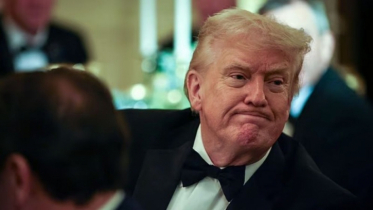
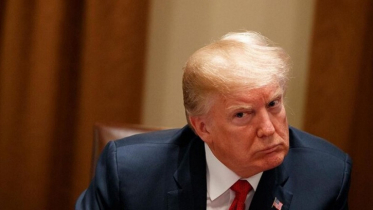
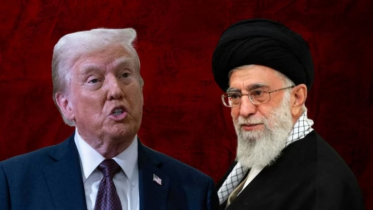
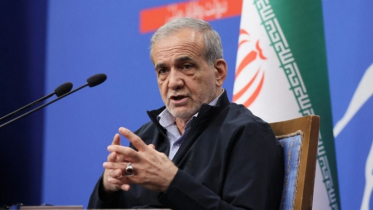
In a recent interview with Fox News, Trump’s special envoy Steve Witkoff said that the US president is facing a kind of frustration and bewilderment—bewilderment, why Iran, despite massive pressure, repeated threats and a show of military might, is not backing down.
This ‘bewilderment’ carries a clear message: According to Trump and his team, Iran should have behaved like some of the weaker states—countries that change their tactics from the start under economic pressure or military threat and give up some of their strategic interests to cut costs. But this idea was based on a flawed assumption from the start.
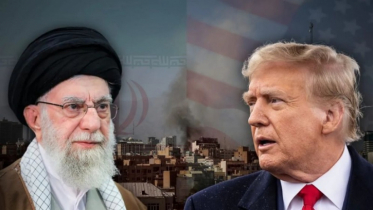
Washington’s main problem is not just a lack of force, but a misunderstanding of the nature of the adversary. The US government assumes that any country that faces devastating economic pressure and a constant military threat will eventually back down. Therefore, the deployment of air forces to the region, the deployment of advanced fighter jets, the widely publicized military exercises, and the intensification of sanctions—these measures are determined within this logic, to create “maximum pressure” and persuade Tehran to unilateral demands.
Alongside these on-the-ground arrangements, a narrative war has also developed. Many Western media outlets have repeatedly discussed Iran’s silence, internal unrest, or economic decline, to create the image that Tehran is faltering under pressure. The term “strategic vertigo” has even been used, as if Tehran’s decision-making process is confused and collapsing under pressure. But what has now become clear is the opposite of this picture. The confusion here is within the Americans themselves—why their planned equation is not working in practice.
When the US president, the man with the most extensive military and economic power in the world, asks explicitly or implicitly why the other side has not agreed, the question is less about Iran and more about the collapse of Washington’s mental model. Trump began foreign policy with a deal-making mindset. He saw politics as an extension of the logic of business; a place where pressure is increased and the other side eventually gives in and a deal is made. Within this framework, each side has a “breaking point”—the point at which the costs become so high that retreat seems the most logical course of action. But in the case of Iran, this analysis fails.
The Atlantic magazine reported in its analysis that Trump fails to understand why pressure and threats are failing to sway the Iranian leadership. In his view, every person can be bought and every country can be brought to terms through threats and inducements. But this view fails in a framework where independence and resistance are part of Iran’s identity. For more than four decades, Iran has made its strategic decisions based not on fear but on security, identity, and historical calculations. Within this framework, yielding to external pressure is not a strategic option, but rather a weakening of the foundations of its internal legitimacy.
Iran’s power is not limited to military might or missiles, although these are part of the equation. What makes a policy of pressure from within viable is the combination of political will, structural solidarity, and historical experience in the struggle against external threats. Since the founding of the Islamic Republic, Iran has faced various forms of pressure: imposed war, multi-layered sanctions, military threats, and attempts at internal destabilization. This experience has created a “strategic memory” that influences decision-making. In such a context, increasing pressure not only changes behavior but also strengthens internal solidarity.
The US military buildup was primarily intended to create fear and deter Iran. The White House assumed that a visible display of force, combined with economic pressure, would weaken Tehran.
But the results were not as expected. There was no sign of agreement or a departure from the red line. Rather, Iran has diplomatically attempted to maintain relative peace while simultaneously demonstrating its capacity for neutralization, sending a clear message: threats are not an effective tool in this equation.
Meanwhile, the reality does not quite match the claims of some Western sources. Iran has gone through difficult years, faced with the most stringent sanctions in modern history, yet it has not wavered from its policies. Even complex attempts to create internal instability have failed to bring about structural changes in its foreign policy. The continuity of this behavior now poses a puzzle for US policymakers. They hoped that increasing pressure would quickly achieve their desired results; but reality does not match their initial mental framework.
If the term “strategic vertigo” must be used, it is more applicable in Washington, where a section of the political establishment still refuses to admit that the policy of maximum pressure may not be effective against a country like Iran. Repeating the same policy, hoping that “it might work this time,” reflects not strength but an inability to reassess. History has shown that misunderstanding the will and capabilities of the other side can lead to uncontrollable and costly decisions.
The key issue, therefore, is not a lack of leverage in the hands of the Americans, but an inability to understand that not all states respond to threats in the same way. Iran has determined its course based on national interests, security considerations, and identity.
.png "Advertisement")