.png)
US Defense Budget: Unprecedented Aid to Israel and New Military Priorities in the Middle East
Published : 06:52 PM, 11 December 2025
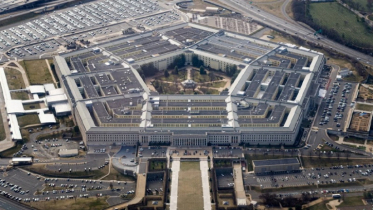
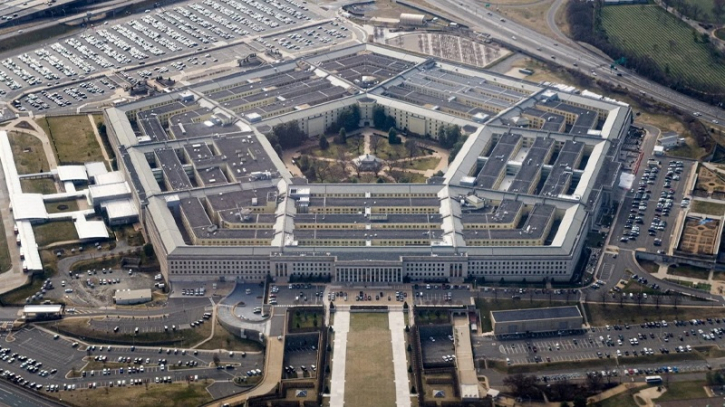
Pentagon Headquarters, United States.
The annual US defense budget, known as the National Defense Authorization Act (NDAA) for fiscal year 2026, is awaiting passage in Congress. The nearly 3,000-page bill sets the Pentagon’s spending for the coming year at $900.6 billion. Last year, the budget was $883.7 billion.
The defense budget is expected to have a major impact on military diplomacy in the Middle East. The budget’s impact on the North African region is also profound. The media outlet Middle East Eye has detailed information on this.
‘Unprecedented’ Aid to Israel
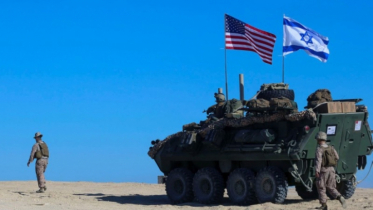
The US House Armed Services Committee described the budget as “unprecedented levels of assistance” for Israel’s security. Although the total amount of aid Washington is providing to Israel has not been disclosed, it has mentioned spending in some specific sectors. Of this, $200 million has been allocated for the maintenance of the Iron Dome, David's Sling and Arrow defense systems.
$80 million will be allocated for the joint US-Israeli anti-tunnel project to detect, locate and destroy underground tunnels in Gaza. Another $70 million will be spent on countering drones and emerging airspace threats. In addition, $35 million will be spent on emerging technology cooperation programs with Israel and G7 countries - AI, robotics, cybersecurity, quantum technology.
The bill states that the United States will take steps to fill the gap as some countries, including Spain and Canada, have imposed arms embargoes on Israel. In addition, the issue of including Israel in the US National Technology and Industrial Base (NTIB) is also under review. Currently, this group includes the US, Canada, the UK and Australia.
The House Armed Services Committee has announced that supporting further defense cooperation with Israel is one of the policies of the United States. In addition, the US Department of Defense will be prohibited from participating in international events where Israel is banned due to the divestment and sanctions (BDS) movement.
Iran: Identified as the ‘main threat in the Middle East’
The Pentagon has been asked to report to Congress on the growing threat from Iran. The country is seen as the US’s central enemy in the region and a key driver of regional insecurity. The NDAA also considers Iran to be a “major adversary” of the US.
The NDAA also said that detailed reports must be submitted to Congress on Iran’s drone chain, ballistic missile development, potential arms purchases from Russia, and the activities of allied groups such as the Houthis and Hezbollah. Intelligence surveillance of Iran’s nuclear program must be strengthened. Congress must also be notified of any significant nuclear developments or enrichment of uranium above 60 percent.
Iraq: Pressure to control Iran-linked militias
While aid to the Iraqi military has been extended until the end of 2026, conditions have been added. No more than 75 percent of the total allocation will be disbursed until the Iraqi government takes concrete steps to reduce the strength of the Iranian-backed militias.
Secretary of Defense Pete Hegseth can waive the restrictions on funding if it is deemed necessary in the national security interests of the United States.
The Badr Group, which the United States considers an Iranian terrorist proxy and has been operating in Iraq since 1982, is barred from receiving U.S. funding. According to the NDAA, the amount allocated for the Counter-ISIS Training and Equipment Fund (CTEF) in Iraq is set at $212.5 million.
While the funding allocation is not disclosed, the NDAA says that funding for the Peshmerga forces in the Iraqi Kurdistan Region will be maintained and no restrictions will apply there.
Syria: Caesar Act Sanctions Lifted
Washington has finally lifted the 2019 Caesar Act sanctions. The sanctions further disrupted the lives of ordinary people in Syria. Syrian President Ahmed al-Sharaa has been demanding the lifting of the embargo since taking office. He has also held at least two face-to-face meetings with US President Donald Trump since taking office.
The NDAA also requires the Pentagon to provide Congress with reports on the status of IS detention camps, the presence of US forces and the possibility of reopening the US embassy in Damascus. The report also identifies Iran and its Quds Force as the primary threat to US interests in Syria.
Afghanistan: No allocation
The 2026 US defense budget does not allocate any funds for Afghanistan-related projects. The decision has raised deep concerns among refugee rights activists, as the Trump administration has previously halted the processing of visas and resettlement applications for Afghan citizens following the shooting death of two National Guard members in Washington by an Afghan.
In this context, the refugee rights organization Afghan Evaq said that the decision undermines years of bipartisan efforts and puts further pressure on a resettlement system that is already on the verge of collapse.
Guantanamo Bay prison
ND on closing Guantanamo Bay prison
.png "Advertisement")