.png)
Strict rules for traveling to the United States, citizens of 42 countries will be subject to
Published: 05:38 PM, 10 December 2025
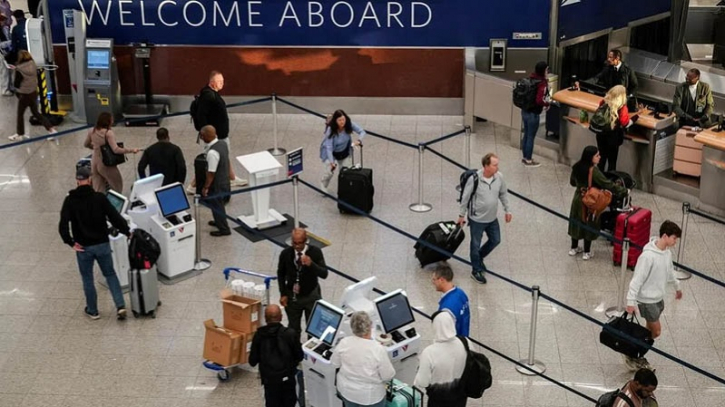
The country's Customs and Border Protection (CBP) has proposed a new stricter rule for foreign tourists entering the United States.
The country's Customs and Border Protection (CBP) has proposed a new stricter rule for foreign tourists entering the United States. If the proposal is implemented, citizens of 42 countries, including the United Kingdom, France, Germany and South Korea, may have to submit their social media usage history for the past 5 years. The New York Times reports.
In a document published in the Federal Register on Tuesday (December 9) local time, the CBP said that in the future, extensive personal information may be collected from applicants for travel authorization. This will include social media information, email addresses used in the past 10 years, and the names, dates of birth, places of birth and residential addresses of parents, spouses, siblings and children.
The change will mainly apply to citizens of countries included in the Visa Waiver Program (Visa Waiver Program). Currently, citizens of these countries are allowed to travel to the United States without a visa for up to 90 days through the Electronic System for Travel Authorization (ESTA).
Currently, the information required to apply for an ESTA includes: an email address, phone number, home address, and emergency contact information. The authorization is usually valid for two years. Such surveillance has been introduced before. The agency's initiative is not entirely new. The US government has previously introduced social media verification rules for applicants for H-1B visas (skilled workers) and student and researcher visas.
The government is also planning to introduce a new $250 "visa integrity fee," although citizens of visa-waiver countries will be exempt from this fee.
The US travel industry has strongly objected to the plan. Last November, a coalition of more than 20 travel and tourism organizations opposed it in a joint letter. They fear that the strict rules will discourage millions of people interested in attending major international events such as the World Cup.
A senior tourism official, speaking on condition of anonymity, said the CBP had not consulted with industry on the move, calling it a “serious overreach” in its screening of travelers.
The CBP said it would allow 60 days for public comment on the proposal. Immigration law firm Fragman said the new rules could be phased in over a period of weeks or months if approved. Bo Cooper, a partner at the firm, called the change a “paradigm shift.”
Previously, social media was used primarily to verify specific security information, but the new system would also review online discussions and opinions, and officials could cancel trips at their discretion, he said.
Sophia Kopp, senior attorney at the Electronic Frontier Foundation, a digital rights group, said such mandatory social media monitoring “is a major threat to civil liberties.” He said the system has not proven effective in combating terrorism, but rather stifles the freedom of speech and violates the privacy of ordinary travelers.
The US administration has already revoked the visas of more than 85,000 immigrants this year. If implemented, the new plan could make it even more difficult for travelers to enter the United States. The CBP did not immediately respond to a request for comment.
.png "Advertisement")