.png)
Home and Away Kits in Football: Why Do Teams Wear Two Different J
Published: 05:40 PM, 21 June 2026
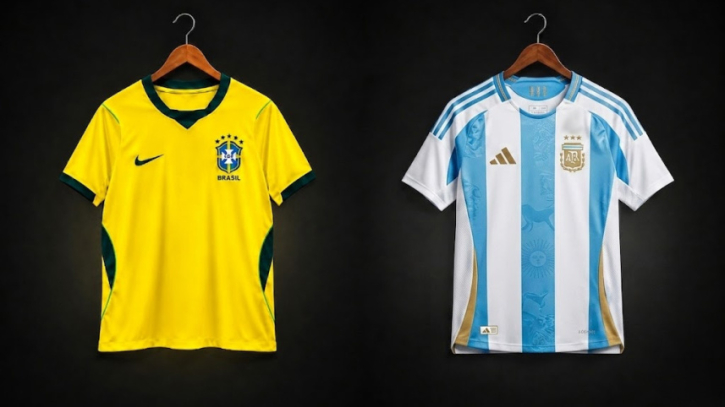
Standing in front of two jerseys of the same team, with the same badge but completely different colors, many fans often wonder: why does a team need two kits?
The answer lies in both tradition and practicality.
What is a home jersey?
The home jersey is a team’s primary kit. It represents the club or national team’s traditional colors and identity. Most of the time, players wear this kit when playing in front of their own supporters or in matches where there is no color clash with the opponent.
Over the years, the home jersey becomes strongly associated with a team’s identity, history, and iconic moments. Fans usually recognize a team first through this kit, which rarely changes in design compared to other versions.
What is an away jersey?
The away jersey is the alternative kit. It is designed in a different color from the home kit so that teams can be clearly distinguished on the pitch.
The main purpose is simple: avoid confusion. If both teams’ home colors are similar, one team must change. Usually, the visiting side switches to its away kit.
There is no fixed color for away jerseys. They can be black, red, blue, pink, purple, gold, or any design as long as it does not clash with the opponent’s kit.
Over time, away jerseys have also become a creative space for designers, often producing some of the most popular and visually striking kits in football.
What happens at neutral venues?
In major tournaments like the FIFA World Cup, UEFA European Championship, or Copa América, matches are often played at neutral venues where neither team is at home.
In such cases, the organizing authority assigns one team as the “home team” and the other as the “away team” before the match. The designated home team usually gets priority to wear its home kit.
However, if there is still a color clash, the organizing body may instruct one or both teams to switch kits to ensure clear visibility for players, referees, and viewers.
Is the away jersey always white?
This is one of the most common misconceptions in football.
There is no rule that says away kits must be white. The only requirement is contrast.
For example, national teams like France, Germany, Japan, and England have used away kits in black, red, pink, gold, or other bold colors in different tournaments. The choice depends on design, branding, and visibility—not tradition.
A brief history of away kits
The concept of separate kits dates back to the late 19th century.
- 1890s: Football authorities introduced rules requiring teams to register official colors to avoid clashes.
- 1920s: It was clarified that the visiting team must change kits if there is a clash.
- 1960s: With the rise of color television, clearer contrast between kits became even more important.
- 1990s: Third kits became common when both home and away colors clashed.
- Modern era: Away kits have become a major part of football culture and branding, sometimes even more popular than home kits.
Final thought
Football jerseys are more than just sportswear. The home kit represents tradition, identity, and history, while the away kit serves a practical purpose—ensuring clarity on the field. Together, they reflect both the culture and the evolving creativity of modern football.
.png "Advertisement")