.png)
Germany’s World Cup Triumphs and the Legends They Denied
Published: 10:49 PM, 20 June 2026
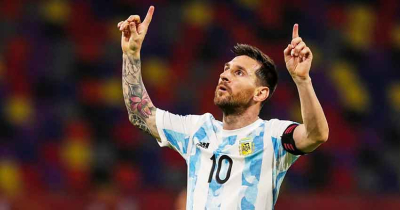
Football history is filled with images that remain etched in the hearts of millions long after the final whistle. One such image is that of Diego Maradona breaking down in tears after Argentina’s 1-0 defeat to West Germany in the 1990 World Cup final. Another is Lionel Messi staring wistfully at the World Cup trophy following Argentina’s extra-time loss to Germany in the 2014 final. Both moments have become enduring symbols of heartbreak for Argentine fans.
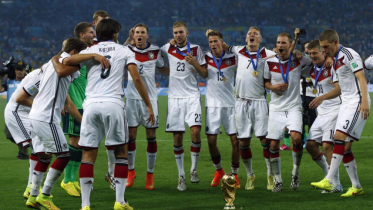
Germany have won the World Cup four times. Even more remarkably, each of those triumphs came at the expense of one of football’s greatest icons. Among the legends denied by Germany on football’s biggest stage are Ferenc Puskás, Johan Cruyff, Diego Maradona and Lionel Messi.
Puskás and the Miracle of Bern
The first name on that list is Ferenc Puskás, leader of Hungary’s legendary “Mighty Magyars” of the 1950s. This was a team that seemed to redefine football through tactical innovation, technical excellence and extraordinary cohesion.
Puskás, with his stocky build, unmistakable left foot and remarkable footballing intelligence, was the heartbeat of that side. Under his leadership, Hungary became an unstoppable force, going four years without defeat and arriving at the 1954 World Cup on a 32-match unbeaten run.
A year earlier, Hungary had stunned the football world by defeating England 6-3 at Wembley, ending the English national team’s long-standing aura of invincibility at home. The match became immortalized as the “Match of the Century.”
Unsurprisingly, Hungary entered the 1954 World Cup as overwhelming favourites. They crushed South Korea 9-0 and West Germany 8-3 during the tournament. Yet in the final, despite Puskás’ presence, Hungary suffered a shocking 3-2 defeat to West Germany in what became known as the “Miracle of Bern.”
Although the loss denied Puskás the World Cup trophy, it did nothing to diminish his legendary status.
Cruyff and the Birth of Modern Football
Next came Johan Cruyff, widely regarded as the father of modern football.
The Dutch maestro was the driving force behind “Total Football,” a revolutionary tactical philosophy that transformed the sport. At the 1974 World Cup, Cruyff guided the Netherlands to the final, where once again West Germany stood in the way.
Despite taking an early lead, the Dutch were beaten 2-1, leaving Cruyff without a World Cup winner’s medal.
Yet his influence extended far beyond international football. He won three consecutive European Cups and three Ballon d’Or awards with Ajax and later laid the foundations for Barcelona’s modern football identity. Much of Pep Guardiola’s football philosophy can be traced back to Cruyff’s vision and ideas.
Maradona: Beyond Goals and Statistics
Unlike Puskás and Cruyff, Diego Maradona did lift the World Cup.
At the 1986 tournament, he produced two of football’s most famous moments against England: the controversial “Hand of God” goal and the unforgettable “Goal of the Century.” Those moments cemented his place among the game’s all-time greats.
However, Maradona’s significance transcended goals and statistics.
Just four years earlier, Argentina and the United Kingdom had fought the Falklands War, known in Argentina as the Malvinas War. The conflict left deep scars on Argentine society, with hundreds of young Argentines losing their lives.
Before facing England in the 1986 World Cup quarter-final, Maradona admitted that the memory of those young men weighed heavily on his mind. For Argentina, the match carried emotional, political and symbolic significance.
Maradona inspired his nation to glory almost single-handedly, becoming an immortal figure in football history.
His impact was equally profound at club level. He transformed Napoli from an underdog into Serie A champions, breaking the dominance of northern Italian clubs. In Naples, he became more than a footballer; he became a symbol of hope and identity.
That connection was evident at the 1990 World Cup when Argentina met Italy in the semi-finals in Naples. While much of Italy supported the Azzurri, many Neapolitans found themselves torn between their country and their beloved Maradona.
Argentina eventually prevailed on penalties, but their journey ended in heartbreak. In the final, West Germany defeated Argentina 1-0, producing the unforgettable image of a tearful Maradona that remains one of football’s most emotional moments.
Messi’s Redemption Story
The final legend on Germany’s list is Lionel Messi.
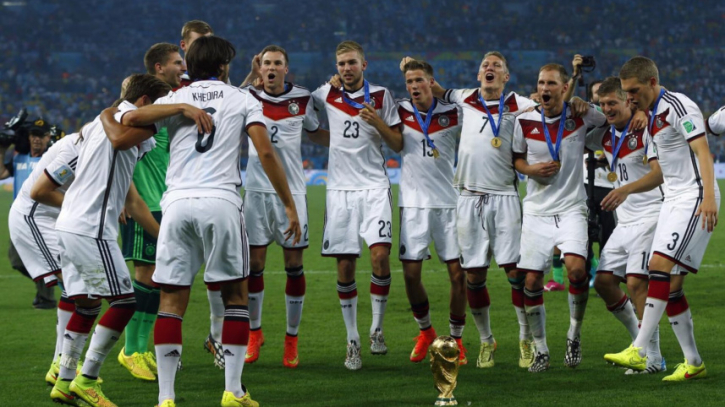
In 2014, Messi inspired Argentina to another World Cup final. Yet, just like Maradona 24 years earlier, he left the pitch devastated after Mario Götze’s extra-time winner secured a 1-0 victory for Germany.
The image of Messi gazing at the World Cup trophy after the match became an enduring symbol of unfulfilled ambition.
But unlike Puskás and Cruyff, Messi’s story did not end there.
Eight years later, he finally completed football’s ultimate quest by leading Argentina to World Cup glory in 2022. Combined with eight Ballon d’Or awards, 46 major team trophies and more than two decades of excellence at the highest level, Messi firmly established himself among the greatest players the game has ever seen.
Following his hat-trick against Algeria at the 2026 World Cup, Brazilian legend Ronaldo Nazário declared: “The time has come to accept Messi as the greatest player in football history. The world should no longer ignore that reality.”
More Than Trophies
Germany’s World Cup legacy is not only defined by four titles. It is also defined by the legends they defeated in those finals—Puskás, Cruyff, Maradona and Messi.
Yet those defeats did not diminish the greatness of these icons. If anything, they made their stories more human, more relatable and ultimately more memorable.
Puskás and Cruyff never won the World Cup. Maradona and Messi eventually did. But all four proved the same timeless truth: greatness in football is not measured solely by trophies.
Sometimes, even defeat can make a legend immortal.
MMR
.png "Advertisement")