.png)
Several rare cosmic sights to see in February – when and how
Published: 05:41 PM, 2 February 2026
A number of rare cosmic sights will be seen throughout the month of February.
February 26 is going to be a month to remember for space enthusiasts. One amazing sight after another will be seen in the sky throughout the month. This month, you will be able to see six planets of the solar system with the naked eye. A rare annular solar eclipse will also be seen this month. Let's take a look at the events in space that will leave a mark on your mind this month.
Meteor Shower
The 'Alpha Centaurid' meteor shower will be seen in February. This meteor shower will be visible in the sky until February 20. However, it will be most visible on the night of February 8. If the sky is clear and dark, you can get a chance to see at least six meteors every hour. This meteor shower is best seen from countries in the southern hemisphere. However, it is also possible to see it from some areas in the southernmost part of the Northern Hemisphere.
Annular solar eclipse
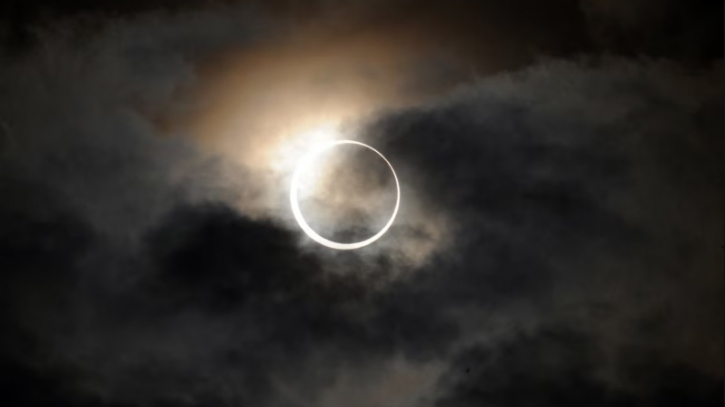
A rare annular solar eclipse will be seen in space on February 17. In this eclipse, the moon cannot completely cover the sun. Because the moon is quite far from the Earth at that time, sunlight is seen around the moon, which looks like a bright 'ring of fire' or ring of fire.
This total form of the solar eclipse will mainly be seen from Antarctica and the southern Indian Ocean area. However, countries like Argentina, Chile, Botswana and South Africa will also be able to partially see this solar eclipse.
Moon and Mercury sighting
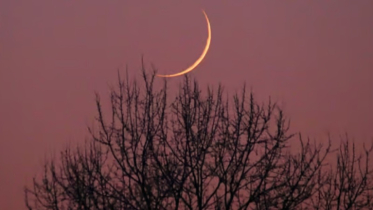
If you look at the sky on the evening of February 18, you will see a strange and beautiful sight. Just one day after the new moon, a thin line of the moon will be seen very close to the planet Mercury. It will look great with binoculars. To see this sight, you will have to go to an open area.
However, it is important to take special precautions. Before the sun sets completely, you should not look at that part of the sky with a telescope or binoculars. Looking directly at the sun can cause serious eye damage.
Best opportunity to see the planet Mercury
On February 19, Mercury will reach its farthest position from the sun. Simply put, on this day, Mercury will move away from the sun and will be in the most convenient place for us to see it. If you look at the western horizon just after sunset that day, you will see this planet shining brightly.
Parade of Planets
A wonderful sight will be seen in the night sky towards the end of February. This special position of the planets in this row in the sky is called the Parade of Planets or the procession of planets. From February 20 to early March, six planets will be seen in a row in the evening sky. If you look at the western sky within exactly one hour of sunset, you will see Venus, Mercury and Saturn together.
At this time, Neptune will move very close to Saturn. And if you look towards the eastern part of the sky, you will see the bright planet Jupiter in the middle. Apart from this, Uranus will be right next to the constellation 'Krittika' in the southern sky. However, while Venus, Mercury, Saturn and Jupiter can be seen with the naked eye, Neptune and Uranus will require a good telescope or binoculars to see.
Source: National Geographic Night Sky Guide
.png "Advertisement")