.png)
Why did oil prices rise again despite the US-Iran deal?

Published: 07:55 PM, 19 June 2026
Despite a deal between the US and Iran, oil prices have started to rise again in the global market. This upward trend in the fuel market has been mainly due to the new conflict in Lebanon and the slower-than-normal movement of commercial ships in the Strait of Hormuz, a vital waterway in the Persian Gulf.
The price of 'Brent Crude', the main benchmark for oil prices in the international market, increased by 0.65 percent on Friday (June 19). However, its price had fallen by almost 0.9 percent earlier in the day. This fluctuation in the oil market is being observed amid traders' intensive analysis of how effective the memorandum of understanding between the US and Iran to end the war and reopen the Strait of Hormuz will be in reality. Brent crude for August delivery is currently at $80.37 per barrel, the first time it has crossed the $80 mark since Wednesday (June 17).
The geopolitics of the Middle East are playing a major role in this sudden increase in oil prices. Recently, a series of Israeli attacks in Lebanon have killed 16 people, which has put a fragile ceasefire agreement between the United States and Iran under new threat. Israeli media reported that four Israeli soldiers were killed in clashes with Hezbollah forces in southern Israel on Friday (June 19). A previously scheduled meeting between US and Iranian officials in Switzerland has been canceled due to the attack. The geopolitical instability has also affected Asian stock markets. The stock markets of Japan and South Korea have seen sharp fluctuations today.
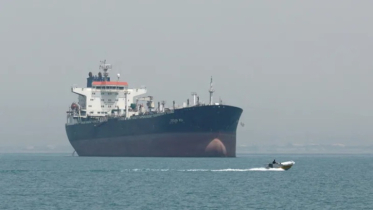
Meanwhile, very limited fuel transport has resumed through the Strait of Hormuz. Three Saudi-flagged supertankers carrying about 6 million barrels of crude oil passed through the Strait of Hormuz on Thursday (June 18), maritime analytics firm Kepler said. The ships had been in the Persian Gulf for weeks with their tracking systems (transponders) turned off. An oil tanker from Hong Kong and an LNG tanker from France also passed through the waterway.
Despite the passage of a few ships, the current situation in the Strait of Hormuz is far from what it was before the war. In normal times, 120 to 130 ships would pass through the channel every day, supplying about a fifth of the world's total oil demand. More than 500 ships are currently waiting at the mouth of the strait to exit the Persian Gulf.
While Iran and the United States have committed to reopening the waterway, shipping companies have expressed deep concerns about the safety of their vessels and crews. There have been at least 46 attacks on ships in the region since the war began in late February, killing 14 sailors. There are also concerns that Iranian naval mines may be present in the strait, which could take weeks to clear.
Tim Wilkins, managing director of the international tanker owners' association Intertanko, said in a statement that many shipowners are hesitant to use this risky route until there is a clear outline of safe passage. While the situation appears positive in the emerging situation, the safety of sailors is now the top priority.
Source: Al Jazeera.
.png "Advertisement")