.png)
US sanctions 11 ICC officials, president and lawyers on list
Published: 03:29 PM, 19 August 2026
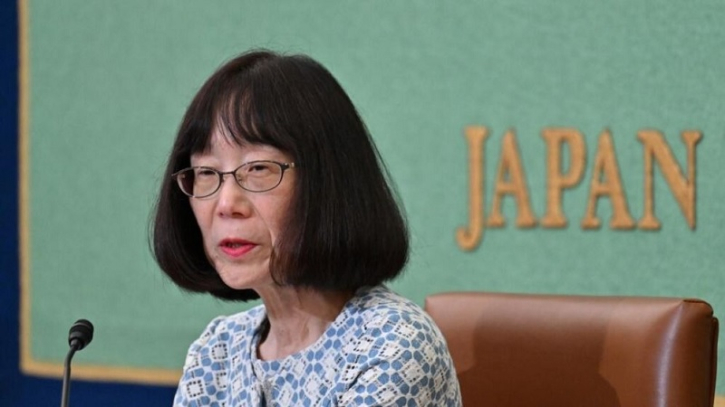
US Secretary of State Marco Rubio has announced sanctions on the president of the International Criminal Court (ICC) and a senior lawyer.
This is the latest manifestation of the Trump administration's anger, which aims to "break up" the court, which has the power to investigate war crimes. More than 120 countries around the world are members of the court, which is empowered to investigate international war crimes.
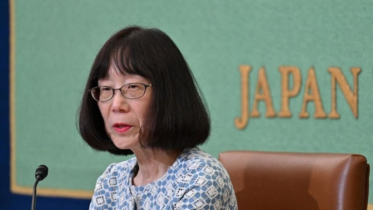
Marco Rubio said that sanctions are being imposed on ICC President Tomoko Akane of Japan and ICC Senior Lawyer Abdoulaye Sey of Senegal. He alleged that they were involved in efforts to bring to justice government officials whose governments did not accept the ICC's jurisdiction.
The ICC says it stands by its employees and believes that what Rubio announced is a step that will undermine the rule of law. Marco Rubio called the ICC "a corrupt and heavily politically influenced court."
He alleged that the court had deliberately abused its power and exceeded its jurisdiction. He said, “We will not tolerate attacks on the sovereignty of states.”
President Donald Trump or the White House have not yet commented on the matter. The Trump administration has already announced sanctions on at least 11 ICC officials. Among them are nine judges and the chief prosecutor.
The sanctions include asset freezes, travel bans and restrictions on receiving services from US companies.
The sanctions are being imposed in retaliation for the ICC’s investigation into US troops and officials in Afghanistan and the arrest warrants issued against top Israeli officials, including Benjamin Netanyahu, for alleged war crimes in Gaza.
Netanyahu has denied the war crimes charges and accused the court of being biased against him. Neither the US nor Israel are members of the ICC.
But the Palestinian state became a member of the ICC in 2015, opening the way for the court to investigate alleged crimes committed in Palestinian territory.
Trump’s opposition to the ICC has been a long-standing issue since his first term, when he first described the ICC as a “threat” and told the UN General Assembly that the court had “no jurisdiction, legitimacy or authority” over the United States.
Last month, Rubio called on the ICC’s 125 member states to withdraw from the court, part of a campaign by the US government to dismantle the ICC.
A US official said that Washington would be watching with interest to see who heeded their call and who did not.
The ICC, established in 2002, has international jurisdiction to prosecute genocide, crimes against humanity and war crimes in its member states.
The court can also investigate and try cases referred to the UN Security Council.
In a statement on Tuesday, the ICC said that targeting judges, prosecutors and staff who are tasked with implementing the mandates that states have entrusted to the ICC undermines the rule of law. When judicial officials are threatened for enforcing the law, the international legal system itself is at risk.
Rights groups have opposed the Trump administration’s actions, which they see as undermining international law and stifling efforts to combat impunity for governments around the world.
At a press conference last week, Liz Evenson, international justice director at Human Rights Watch, said the Trump administration is seeking to create a climate of impunity for anyone it chooses.
Her comments came after four leading US human rights groups sued the Trump administration, which they say is unconstitutional.
Human Rights Watch, the Open Society Institute, the American Friends Service Committee and the Center for Constitutional Rights said in a lawsuit filed in New York that the sanctions prevent them from working with the ICC to ensure justice for genocide, war crimes and crimes against humanity around the world.
In June, three ICC judges also sued the Trump administration in a federal court in New York, challenging the US sanctions imposed on them last year, arguing that the sanctions were unlawful.
Judges Kimberly Prost of Canada, Solomon Balungi Bosa of Uganda and Reine Alapini-Gansou of Benin said the sanctions were intended to exert extrajudicial pressure on the judges, punish them and force them to do certain things.
A White House official said at the time that Trump had lawfully used his authority under the International Emergency Economic Powers Act (IEEPA) to impose the sanctions.
Sanctions also severely limit an individual's ability to conduct daily financial transactions. It is expected that banks with ties to the United States or those that transact in US dollars will also be forced to comply with these sanctions.
Since Trump took office for a second term, his administration has taken a much tougher stance against the ICC.
In July, the campaign to dismantle the ICC
.png "Advertisement")