.png)
Is Washington looking for a message of ’victory’ in the story of the rescue of the downed US pilot in Iran?
Published: 02:07 PM, 15 September 2026
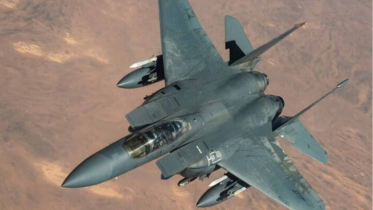
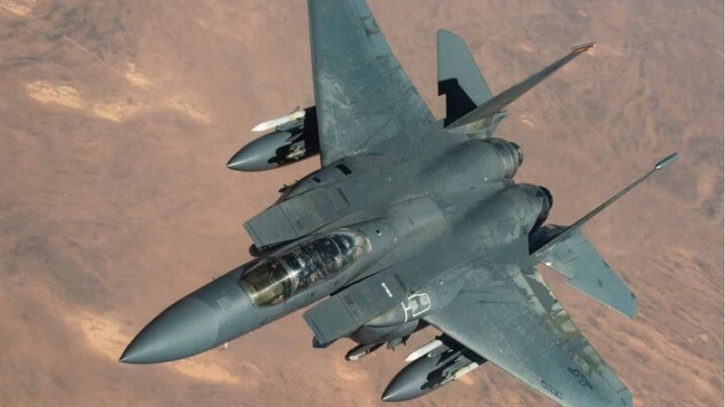
Washington is touting the rescue of a downed US pilot as a major success, nearly seven months after the start of the war with Iran. But critics say it is not just a successful rescue operation; it is an attempt to create a "victory story" for the Trump administration, which is facing questions about the true outcome of the war.
According to the report, at the beginning of the war, US President Donald Trump's administration assumed that the US's military, air and technological superiority would quickly turn the tide of the war and force Iran to accept Washington's terms. But even after seven long months, there is no clear answer to the question of how much the strategic goal of the war has been achieved.
In this context, the US administration recently released detailed videos and reports on the operation to rescue a downed US fighter pilot inside Iran. The videos dramatically depict the special forces operation, military aircraft, injured pilots, and complex rescue operations conducted in remote mountainous areas.
But analysts say this narrative misses a crucial point: the US warplane was shot down over Iranian territory before the rescue operation. Why is a rescue operation being given so much importance, they ask, instead of achieving the main objective of the war?
The published information states that the pilot had serious injuries to his back, arms and shoulders. At the same time, it is claimed that after the accident, he was able to reach a mountain ridge at an altitude of about seven thousand feet. Critics believe that there are some inconsistencies between these two information. According to them, the question also arises whether the incident is a complete picture of reality or a 'heroic' description.
There is little debate about the complexity or efficiency of the rescue operation. But analysts say a successful military operation is not the same as winning the entire war. When a rescue operation is presented as a symbol of the success of the entire war, it becomes part of the political and media narrative.
Recent US public opinion polls have also been a source of concern for the Trump administration. A Quinnipiac University poll found that 60 percent of Americans said the military campaign against Iran was not worth the cost. Only 34 percent said the opposite. In the same poll, 45 percent said the war had weakened the United States' standing in the world; 33 percent said it had strengthened it.
On the other hand, in a CBS and YouGov poll, 69 percent of respondents said the war was not worth its cost. According to 57 percent, the war created more problems than it solved.
Analysts say the figures are important for the Trump administration ahead of the upcoming midterm elections. To maintain political support, the administration needs a narrative that portrays the war as a successful and necessary step, rather than a failed or costly undertaking.
Meanwhile, a report by US media outlet CNN claimed that US Defense Secretary Pete Hegseth's office played an active role in getting the crew of the downed F-15 fighter jet to appear on the popular television program '60 Minutes'. However, the Pentagon denied the allegations, saying that participation was completely voluntary.
Critics say that when these events are considered together, it is not just the story of a soldier; it becomes a political and media narrative in which the downed fighter jet is left behind, the wounded pilot becomes a hero, and the rescue operation becomes a symbol of strength.
Their question is, if the United States has indeed achieved a major strategic victory in the war, where is the evidence of that achievement? Has Iran accepted Washington's main demands? Has the regional balance of power permanently shifted in favor of the United States? Has the economic and human costs of the war been justified?
In August, a Reuters/Ipsos poll found that Trump's job satisfaction had fallen to 33 percent, the lowest level of his presidency, while many Americans expressed concern about the war's protracted nature.
That's why the video and propaganda surrounding the pilot's rescue is not just a military success story, analysts say, but an attempt to redefine the meaning and success of war. They argue that it's easy to portray a rescue operation as a symbol of victory without a visible tactical victory on the battlefield, but it doesn't change the overall outcome of the war.
In their words, downed warplanes are still downed, the political and economic value of war still exists, and the questions raised about the war in the public mind cannot be erased with a few minutes of dramatic video.
.png "Advertisement")