.png)
Economic pressure instead of weapons against Iran - what is the US calculating?
Published: 06:49 PM, 15 August 2026
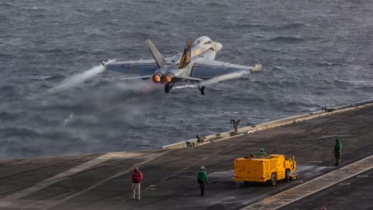
In addition to military pressure on Iran, the US is intensifying its economic war this time. In particular, Washington is moving towards sanctions, naval blockade and increasing financial pressure to force Tehran to open the Strait of Hormuz.
However, some defense analysts believe that not only the strategy of weakening Iran's economy is behind this, but also the fact that the US has been depleting its long-range missiles and ammunition stocks in the long-term military campaign.
Dan Grazier, director of the National Security Reform Program at the Stimson Center, a US policy research institute, said in an interview with Al Jazeera that Tehran has the capacity to cope with the additional economic pressure being put on Iran to open the Strait of Hormuz.
According to Grazier, Iran has been under US sanctions since the Islamic Revolution in 1979. The country has had experience dealing with various types of harsh economic sanctions for decades. As a result, there is no reason to assume that Iran will quickly surrender if new economic pressure is applied.
He said, what is more surprising is that the US administration now believes that it can achieve the goal that the military campaign of about six months could not achieve through economic warfare.
Grazier, a former officer in the US Marine Corps, believes that an important reason for Washington's shift from military strategy to economic pressure may be the pressure created by the stockpile of long-range weapons.
According to him, despite the US administration's contradictory statements about the stockpile of weapons, the available evidence shows that there has been pressure on the missiles and precision-guided munitions necessary for conducting long-range warfare. However, the US campaign against Iran largely depends on long-range aircraft, missiles and other stand-off weapons.
In such a situation, it is not easy for the US to continue its military campaign by further reducing its stockpile of weapons. Because the US has military commitments in various regions of the world, including Europe and Asia, outside the Middle East. As a result, the Pentagon will not want to risk using the entire arsenal in a particular battlefield.
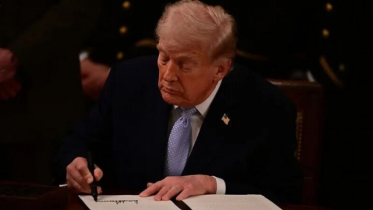
Such discussions about the US weapons stockpile have also come to the fore recently. US President Donald Trump, however, has denied the issue of missile shortages and said that the US is rapidly rebuilding its weapons stockpile. He also claimed that the US stockpile had decreased due to the large supply of weapons to Ukraine during the previous administration.
On the other hand, there are clear indications that the US is now trying to use economic pressure as an alternative to military action.
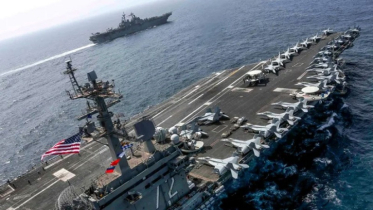
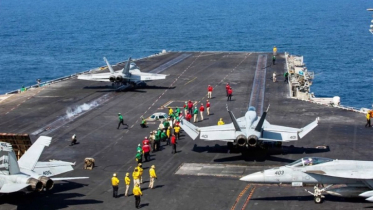
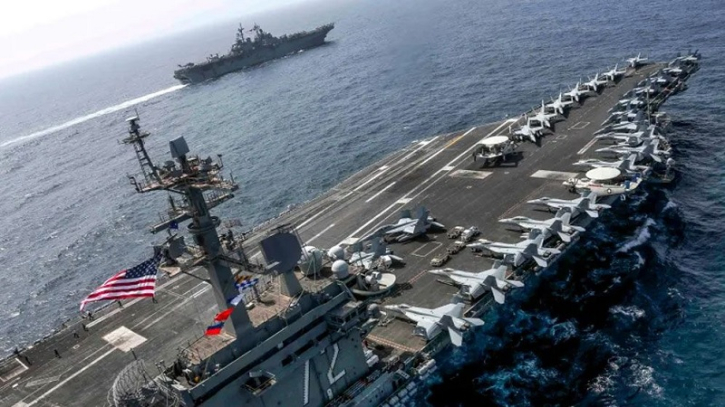
On August 13, US officials said that Washington has the ability to maintain a naval blockade on Iran for a long time. At the same time, US Treasury Secretary Scott Besant hinted at more economic pressure and new sanctions.
Why is Hormuz so important
The Strait of Hormuz is at the heart of the Iran-US conflict. This waterway, which connects the Persian Gulf and the Gulf of Oman, normally carries about 20 percent of the world's total oil and gas trade.
As a result, its prolonged closure or impasse could cause a major blow not only to Iran but also to the global energy market.
Iran is using this geographical advantage as a tool to create strategic pressure against the United States. If shipping traffic in Hormuz is disrupted, not only does Iran's oil exports suffer, but it also creates instability in the oil price and supply system in the world market.
As a result, the US effort to force Tehran to open the strait has become an economic and geopolitical battle at the same time. Recently, the US has also strengthened its naval blockade to prevent Iranian oil exports.
According to an analysis by Al Jazeera, the impasse in Hormuz has put Iran's oil exports, energy supplies and domestic economy under great pressure. The country has also experienced fuel shortages, power shortages and inflationary pressures.
However, there is no guarantee that this pressure will force Iran to surrender quickly. Tehran may try to withstand prolonged pressure due to decades of experience in dealing with sanctions, trade with China and alternative financial and oil sales networks.
Why Washington is turning from military to economic war
In the current situation, the United States faces two main risks. On the one hand, continuing the military campaign will further strain its stockpiles of missiles and precision ammunition and increase the cost of the war.
On the other hand, if a major military campaign is carried out directly in Hormuz and attempts are made to completely open the waterway, there is a risk of Iranian counterattacks and a wider regional conflict.
The geographical location of Hormuz also poses a challenge for the United States. The strait is narrow and it is possible to threaten shipping from Iran's coast and islands with various types of missiles, drones, mines, and small boats.
As a result, it may be difficult to ensure safe navigation in the long term once the strait is opened by using military force.
That is why analysts believe that economic pressure is becoming increasingly important in Washington's strategy. If Iran's oil revenues are reduced through sanctions and a naval blockade, it is possible to increase political pressure on Tehran without resorting to military conflict—this is probably one of the goals of the US strategy.
But the big question now is how effective it will be. Decades of sanctions on Iran have weakened the country's economy, but the government
.png "Advertisement")