.png)
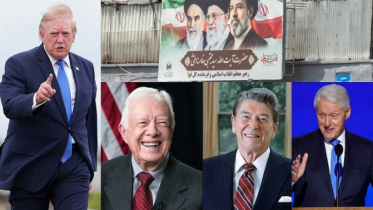
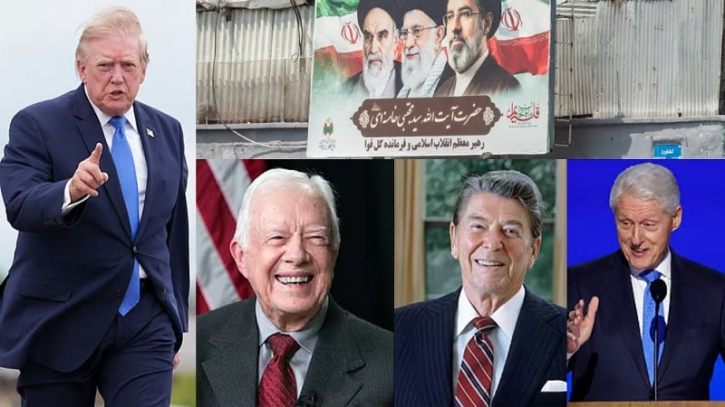
From Carter to Trump—Iran’s leaders have struggled to understand what’s behind the scenes
Published: 10:27 PM, 6 August 2026
On Monday, Trump angrily claimed that Iran is behaving incredibly deceitfully in its dealings with the United States. It was the latest evidence of how quickly he is struggling to understand Tehran’s adversaries.
Trump considers himself a master at assessing his adversaries and exploiting their weaknesses. But Iran’s leaders have made a fool of him. “They just make me angry,” he told reporters last week.
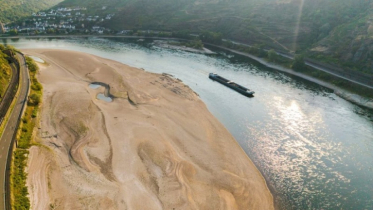
More disappointments may lie ahead for the US president. Trump administration officials say a new deal to reopen the Strait of Hormuz may be close, but Iran is adamant on its demands to pay tolls there, which Trump has dismissed as unacceptable.
Trump’s failure to reach a favorable deal with Iran has not only cost him politically with war-weary voters, but the ongoing conflict over the vital waterway has also destabilized the oil market, hurting the global economy and US consumers.
Trump is not the first US president to struggle to understand Iran. Since the 1979 Islamic Revolution, almost every one of his predecessors has tried to understand Iran’s mysterious power structure and the mindset of its political leadership.
Most of them have failed; some have been severely damaged. A rare exception was President Barack Obama, whose 20 months of diplomatic efforts resulted in the 2015 Iran nuclear deal. While Obama considered it a major achievement, Republican and some Democratic leaders criticized Iran for trapping him in a flawed deal by pretending to be moderate.
But Kenneth Pollock, a former CIA analyst and National Security Council official who has worked on Iran for decades, said Trump may be the president who has least understood the Iranian leadership.
Pollock added that in many ways Trump is the culmination of America’s frustration with Iran. He has been the most eager to make a deal with Iran, but he has also used the most force against it. But he has seen none of this get him where he wants to go.
Trump often speaks as if using massive force will get him a quick deal. After the war began with the death of Iran’s Supreme Leader Ali Khamenei in an airstrike on February 28, Trump called on the Iranian people to rise up against their government. He also said at the time that he would then choose Iran’s next leader.
Several other senior Iranian officials were also killed in the airstrikes. But there was no mass uprising. Instead, Iran’s hardline government took a harder line. In March, it appointed Khamenei’s son, Mojtaba Khamenei, as the new supreme leader. U.S. officials believe he is more inflexible than his father and more interested in acquiring a nuclear bomb.
Iran has simply ignored Trump’s public declaration that the younger Khamenei would be an unacceptable choice. The younger Khamenei has not even responded to Trump’s offer of a direct meeting.
Still, Trump has not given up hope for a big change. In late April, he said, if Iran makes a deal, they could be in a very good place. Iran could become a legitimate country, not a country dependent on death and terror.
Iranian officials say they can negotiate with Trump on issues like the Strait of Hormuz and its nuclear program, even though they have rejected many of his key demands. But in a political system built on anti-Americanism, no one is interested in a broader agreement with America.
The way Trump has been negotiating with Iran for months shows no sign of understanding the country’s system of government very well. Trump has been inconsistent and has changed his assessment of his ministers throughout the conflict. He has sometimes called them crazy, sometimes rational, sometimes very clever, sometimes completely insane.
In a sense, Trump is going through the same frustrations that have plagued his predecessors.
Suzanne Maloney, director of foreign policy at the Brookings Institution in Washington, said that for decades, U.S. policymakers have consistently underestimated the Islamic Republic’s ideological commitment and deeply institutionalized power structures.
A major problem, Maloney said, is the extreme lack of direct contact between U.S. officials and top Iranian leaders. No U.S. official has ever met with Iran’s first supreme leader, Ayatollah Ruhollah Khomeini, the late Ali Khamenei, or his son.
Maloney added that the war has likely further consolidated the power of Iran’s religious and military leadership, leaving no viable alternative power center.
Iran’s semi-democratic political system (where the president and parliament are under the absolute religious authority of the supreme leader) has occasionally produced high-ranking officials who favor friendly relations with the United States. But whenever Washington has tried to reach out to those leaders, the results have often been disappointing.
A veteran of Middle East diplomacy who has served under presidents of both parties, De
.png "Advertisement")