.png)
How Loneliness Became New York’s Quietest Public Health Crisis

Published: 03:44 PM, 14 March 2026
NEW YORK- New York is the city that never sleeps. A metropolis defined by lights, speed, and constant motion. Yet behind the crowded subways, busy offices, and packed cafés, a quiet crisis is unfolding: loneliness. Experts say it is no longer just a personal struggle, it is gradually becoming a public health emergency.
‘Now I Talk to Myself’
On the third floor of an apartment building in the Church-McDonald area of Brooklyn, 67-year-old Jamal Uddin sits alone. His wife has passed. His children live elsewhere.
"There was a time when I had everything," he says slowly. "After my wife passed, my children didn't want me to stay with them. So now I live alone. Now I talk to myself. Everyone here is busy. No one has time for anyone."
Though he has two sons and a daughter, the television has become his primary companion.
In Upper Manhattan, Ditlea Andro, now in his sixties, attends social gatherings simply to meet people. After his divorce, he left a large home and moved into a small room. His only companion is a dog.
"Sometimes I feel extremely restless," he says. "That's why I look for people, go out somewhere; just to have someone to talk to."
Loneliness is not limited to older adults. Risan Ahmed, a second-semester student at New York University who lives in Jamaica, Queens, says isolation has taken a serious toll on his mental health. He has seen a doctor, not for a physical illness, but because the loneliness became unbearable. He describes loss of appetite, chronic anxiety, and sleep disturbances.
"You can be surrounded by people and still feel completely alone," he says.
What nymorning.com Found
Jamal, Ditlea, and Risan are not exceptions. Over the course of this reporting, nymorning.com spoke with 25 residents across Brooklyn, Queens, the Bronx, and Manhattan from recent immigrants to long-time New Yorkers, from college students to retirees. Among those interviewed were Toni Kaku, Sajedur Rahman, Shiv Shankar, and Natalia, people of different ages, ethnicities, and circumstances, united by a single experience: loneliness.
A clear pattern emerged from the conversations: residents over the age of 40 showed the strongest tendency toward chronic isolation. Many in this group described losing social networks over time through divorce, the death of a spouse, children moving away, or the grinding pressure of long work hours and financial strain. Several said they had not had a meaningful conversation with another person in days. Some said weeks.
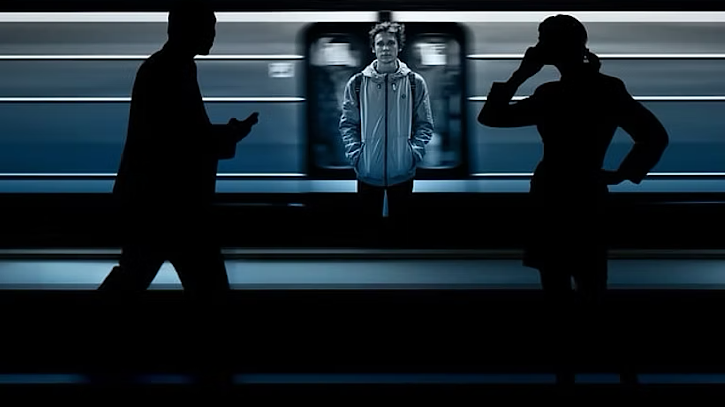 Across all four boroughs, the feeling was the same: New York moves too fast to pause for human connection. People want companionship. But in this city, they say, that is not easy to find.
An Invisible but Real Crisis
The experiences reported by these 25 residents align with a growing body of public health data. According to the New York City Department of Health and Mental Hygiene's Community Health Survey, roughly 40 to 50 percent of adults in New York City experience loneliness or social isolation at some point in their lives. Approximately 1.2 million city residents. nearly one-third of all households live alone, one of the highest rates among major American cities.
In 2023, U.S. Surgeon General Vivek Murthy issued a landmark advisory identifying social isolation as one of the country's most urgent public health challenges, noting that chronic loneliness carries health consequences comparable to smoking 15 cigarettes a day, significantly raising the risk of heart disease, stroke, depression, and premature death.
Researcher Julianne Holt-Lunstad, a leading authority on social connection and health, argues that loneliness creates sustained biological stress, directly affecting the cardiovascular system and long-term cognitive function.
"People may live physically close to one another, yet socially they are drifting further apart. It is one of the great paradoxes of modern urban life." -Kazi Fawzia, Drumbeat
Kazi Fawzia, director of the community organization Drumbeat, who has worked for years on social behavior issues in New York, says the problem is accelerating. Former NYC Health Commissioner Ashwin Vasan has similarly warned that mental well-being is deeply connected to social relationships, and that prolonged isolation increases long-term health risks across every demographic.
Immigrants Bear a Disproportionate Burden
While loneliness cuts across every community in New York, research consistently shows that immigrants face a heightened and often overlooked risk. A 2023 study by researchers at NYU Grossman School of Medicine identified language barriers, economic instability, long working hours, and family separation as the primary drivers of psychological stress among newly arrived immigrants.
A 2024 mental health analysis by the Asian American Federation found that more than 60 percent of Asian New Yorkers reported experiencing social isolation or anxiety. The report points to language limitations, cultural stigma around mental health, and structural barriers to care as factors preventing many from seeking support.
Narayan Patel, an Indian immigrant worker living in Woodside, Queens, works 10 to 12 hours a day. When he returns home, there is no one to talk to.
"Video calls with family back home help a little," he says. "But they're not enough. Over time, a sense of emptiness grows."
Mental health specialists say that for immigrants, loneliness is inseparable from economic and structural conditions. Irregular schedules, shared housing, limited social networks, and immigration-related uncertainty place long-term strain on mental well-being. Observations from the NYC Department of Health and Mental Hygiene indicate that many foreign-born New Yorkers are not adequately connected to social support systems, increasing their vulnerability to loneliness and depression.
Young Adults: A Generation at Risk
For years, loneliness was considered primarily a problem of aging. Recent research has overturned that assumption. The Surgeon General's 2023 advisory found that adults aged 18 to 34 report the highest levels of loneliness of any age group in the country. Research from the Harvard Graduate School of Education found that approximately 61 percent of Americans aged 18 to 25 experience serious loneliness,significantly higher than older cohorts.
The same trend is visible among university students in New York. According to the Healthy Minds Network, social isolation, anxiety, and psychological distress among students have increased markedly in the post-pandemic period.
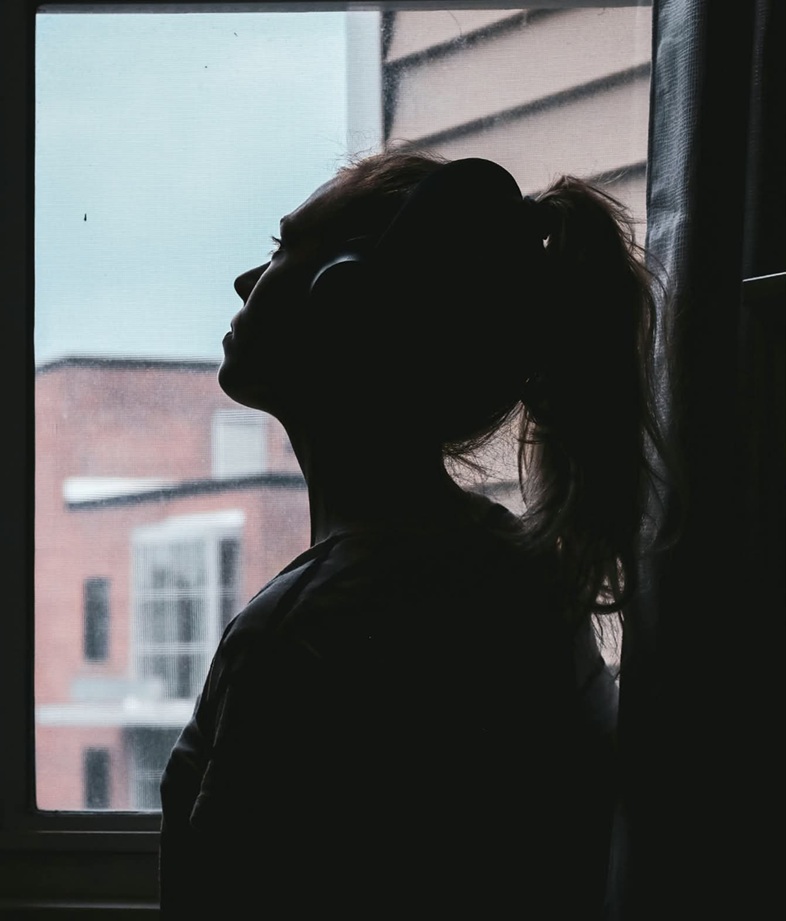
Anthony, a university student, says social media has reshaped the way young people relate or fail to.
"We're more connected to social media now," he says. "But that makes it harder to build deep, real-life relationships. We spend more time alone. When problems arise, there's often no one to stand beside us."
Alexander Barbier, a professor at CUNY who studies student mental health and behavior, identifies two converging pressures: excessive social media use and the structural demands of urban life.
"High living costs, academic pressure, and the fast pace of the city are reducing real-world social interaction," he says. "As a result, young people are becoming more vulnerable to mental health challenges and loneliness."
The Economics of Isolation
Researchers say the rising cost of living in New York is directly eroding residents' social lives. Data from the U.S. Bureau of Labor Statistics show that full-time workers in urban areas spend more than eight hours daily on the job, significantly reducing time available for family, friendship, and community. The NYC Housing and Vacancy Survey indicates that more than half of renter households spend over 30 percent of their income on rent, a condition economists classify as rent burden, which carries direct consequences for social participation and mental well-being.
Community organizers say many working New Yorkers are now forced to prioritize income stability over social engagement, making it increasingly difficult to maintain the friendships, family ties, and neighborhood relationships that sustain mental health.
For many two-income households, the problem runs even deeper. With both partners working opposite shifts, one leaving as the other returns, meaningful time together becomes rare. The result is a quiet disconnection that unfolds not between strangers, but within the walls of home.
The City's Response, and Its Limits
New York City has begun to acknowledge the scale of the problem. The city's Fiscal Year 2026 budget allocates approximately $2.3 billion for mental and behavioral health services, funding community-based programs, mobile crisis response teams, behavioral health clubhouses, and the 988 mental health hotline. The NYC Department of Parks and Recreation has expanded park-based social programming, senior engagement initiatives, and community events aimed at rebuilding social connection. Urban planners increasingly view parks, libraries, and neighborhood community centers as essential public health infrastructure.
But public health analysts caution that despite these efforts, more than 70 percent of New Yorkers at risk of loneliness remain outside the reach of structured support systems. Older adults living alone, low-income workers, and newly arrived immigrants face disproportionately high risk and are least likely to access available services.
Experts argue that addressing loneliness in a fast-paced city requires solutions that extend well beyond healthcare, including reforms in work hours, housing policy, community planning, and civic participation. Without coordinated action, one of the world's most densely populated cities risks becoming increasingly socially fragmented.
nymorning.com reached out to the NYC Mayor's Office and the Department of Health and Mental Hygiene for comment. No response was received by publication time.
A City Confronting a Silent Crisis
New York has long been defined by its density, its diversity, and its relentless energy. But the data and the voices of 25 residents across four boroughs tell a more complicated story: a city where proximity does not equal connection, and where millions of people move through crowded spaces carrying a private and largely invisible weight.
"If we don't address loneliness now as a public health priority," Fawzia warns, "it could evolve into a broader mental health crisis affecting every level of society."
The Surgeon General's advisory echoes that warning at the national level, identifying social isolation as a fundamental threat not only to individual health but to civic life, economic productivity, and the overall resilience of urban communities.
For Jamal Uddin in Brooklyn, Ditlea Andro in Upper Manhattan, and Risan Ahmed in Queens- separated by age, background, and circumstance the experience is the same. In a city of millions, countless people move through their days in silence. In a city that never sleeps, far too many of its people have no one to talk to.
.png "Advertisement")