.png)
Why is it shown as close to capacity?
Published: 07:56 PM, 13 June 2026
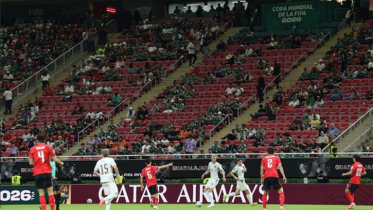
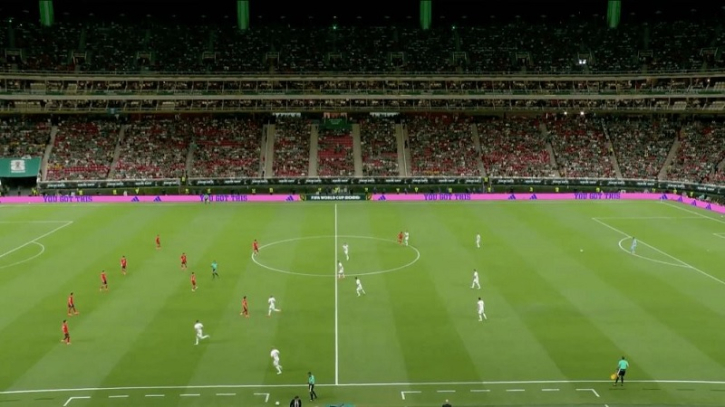
Many football fans, especially those who watched the opening match between South Korea and the Czech Republic, have been left wondering why the stadium was shown to be close to full capacity despite the numerous empty seats?
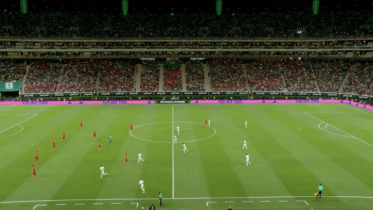
The official attendance at the Guadalajara Stadium for the second match of the tournament was 44,985. According to FIFA, this is only about 700 less than the stadium's listed capacity of 45,664. According to these figures, there should be very few empty seats in the gallery. But in reality, thousands of empty seats were seen during the match, especially around midfield.
Although South Korea defeated the Czech Republic 2-1 to finish level on points with Mexico in Group A, the attendance figure was at the center of the discussion. The question is, does the announced number really reflect the number of spectators present at the stadium?
What is the reason for the higher announced attendance?
Simply put, football clubs and tournament organizers usually report the number of spectators in the stadium, not the number of tickets sold.
The situation is even clearer in domestic leagues. Many season ticket holders are included in the seat count even if they do not attend the matches, because their tickets have already been sold.
The same situation occurs in major tournaments, because a significant number of tickets are reserved for corporate sponsors. Even at major sporting events such as the French Open in tennis, the front row corporate seats visible on television are often empty or partially full, especially early in the tournament.
The density of empty seats around midfield in the Guadalajara match may also be partly the result of the absence of corporate ticket holders.
Why do stadiums have reduced capacity at the World Cup?
Many stadiums have had to make structural changes to meet FIFA's standards, which has resulted in reduced seating capacity.
Several of the current World Cup venues are not specifically designed for football. For example, SoFi Stadium, which was originally built for American football, is a good example. An American football field is typically 53.3 yards (48.8 m) wide, while a soccer field is typically 75 to 80 yards (68.5 to 73.2 m) wide.
As a result, parts of the stadium have had to be rebuilt and some seats have been removed to increase the width of the field for the World Cup. Last season, the LA Rams averaged 73,325 spectators at matches, but SoFi Stadium is set to have a capacity of 70,492 for the World Cup.
In addition, seating capacity is reduced due to advertising boards, international media work areas, and other administrative requirements.
What are the rules for declaring attendance?
In short, while local law enforcement, the UK’s Sports Ground Safety Authority and the Premier League may require clubs to provide gate statements for security and crowd management purposes, clubs and organisers are free to decide what kind of attendance figures they publish.
Some clubs publish actual attendance figures, while many others only report the number of tickets sold.
A source familiar with the inner workings of an English Football League (EFL) club, who asked not to be identified, said that data agencies also sometimes ask for actual attendance figures. This information can be useful in securing sponsorship deals and could be a factor in allegations of crowd-fixing.
In other words, if a fan or ticket reseller thousands of miles away from Guadalajara buys a ticket but does not attend the match, FIFA can count those tickets.
A FIFA spokesperson said that official attendance figures are based on scanned tickets and spectators present inside the stadium, not on the apparent occupancy of seats at any given time. FIFA works closely with stadium authorities and ticketing teams to ensure that all published figures are based on verified information.
He added that many ticket holders were seen in the concourse or circulation areas during the match in Guadalajara, rather than sitting in their seats, throughout the match.
Is FIFA struggling to sell World Cup tickets?
In January this year, FIFA said that more than 500 million applications had been received for World Cup tickets during the month-long application period. FIFA President Gianni Infantino later claimed that tickets for every match had already been sold. FIFA later retracted this statement.
FIFA reserves some tickets for the most popular matches of the World Cup, which can create an artificial shortage in the market. Some matches are in real demand. For example, Mexico's 2-0 win over South Africa in Mexico City was a sellout. Given the city and stadium conditions, it is estimated that more than double that number could have been expected.
However, not all matches have seen such interest. The match between South Korea and the Czech Republic in Guadalajara was relatively low.
As of Sunday night, The Athletic reported that about 10,000 tickets had been sold on various resale platforms for the United States' opening match against Paraguay.
.png "Advertisement")