Bomb scare on planes across Europe disrupts air travel
Published: 11:11 AM, 4 November 2026
A series of bomb threats to passenger planes in various European countries has raised serious security concerns. On Tuesday (November 3), at least seven flights and a cruise ship bound for Israel were threatened with bombs. Emergency searches have been carried out at several airports in the wake of these incidents. Even an airport in the Polish capital Warsaw had to be temporarily closed. However, no explosives or bombs were found during the searches.
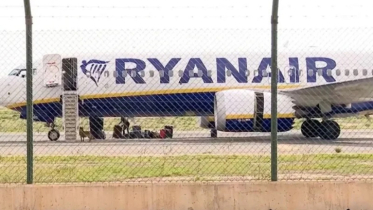
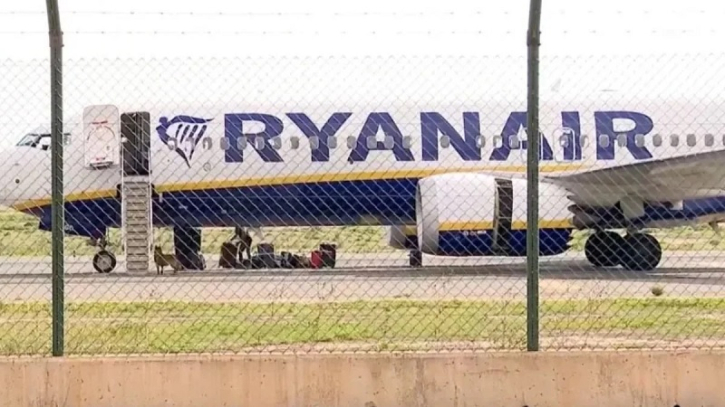
Al Jazeera reported on Wednesday (November 4) that all the planes that were threatened landed safely. The affected planes included flights from Irish low-cost carriers Ryanair, Wizz Air, Scandinavian Airlines and Polish state airline LOT. Of these, four Ryanair flights were most at risk.
Two flights to Warsaw in Poland received bomb threats. A Scandinavian Airlines flight from Copenhagen landed safely at Warsaw Chopin Airport. Later, one of the airport's runways was temporarily closed to inspect the aircraft.
On the other hand, a flight from London's Heathrow Airport was diverted to Modlin Airport instead of Warsaw. Precautionary measures were also taken there. However, no explosives were found on the plane. The airport later resumed normal operations.
Two Eurofighter jets from the Italian Air Force escorted a Ryanair flight from Dublin to Rome. The plane landed safely at Rome's Fiumicino Airport at 10:45 a.m. local time. Earlier, another Ryanair flight from Lisbon was also subjected to a bomb search. Nothing suspicious was found after passengers, luggage and the aircraft were checked.
In Spain, the country's airport operator AENA activated emergency security measures after receiving reports of a bomb on a Ryanair flight from Manchester. The plane landed safely at Murcia airport.
A Wizz Air flight from Bergamo, Italy to Sofia and a Ryanair flight from Dublin to Sofia were also threatened. Both planes were searched after landing in the Bulgarian capital Sofia. However, no explosives were found.
The UK's London Metropolitan Police said there were threats to four flights departing or arriving at Heathrow Airport on Tuesday. A flight from Manchester Airport was also alerted. Later checks found no security risk.
On the same night, a bomb threat was also made to a Panamanian-flagged cruise ship called the Crown Iris, anchored off the Greek island of Syros. It was carrying about 1,500 passengers and crew. The ship, which was heading to the Israeli port of Haifa, was evacuated. No explosives were found during a search. The ship was then ordered to resume its voyage.
Earlier on Monday, a Wizz Air flight from London's Luton Airport to Sofia received a mid-air bomb threat and was diverted to Budapest, Hungary. Hungarian Defense Minister Romulus Rusin-Szendy said that after being alerted by NATO's air defense warning system, the country's Gripen fighter jets quickly scrambled to help the plane land safely.
Fear of 'hybrid attacks'
No individual or group has claimed responsibility for the threats across Europe, and no country has been directly blamed. However, European officials have recently accused Russia and Iran of being involved in cyberattacks, sabotage and various types of "hybrid attacks." Both Moscow and Tehran have denied the allegations.
This week, there have been cyberattacks that have disabled the refrigerators of supermarkets in several European countries. Experts believe that such fake bomb threats could also be part of a strategy to create chaos in a way that is cheap and can be denied.
Rhys Jones, an executive at aviation risk analysis firm Osprey Flight Solutions, said the number of confirmed bomb threats in one day was "exceptional" and suggested the threats were aimed at disrupting the overall aviation system, rather than targeting a specific country, airline or route.