What was the outcome of the ruling party in the US midterm elections after 1946?

Published: 10:55 AM, 4 November 2026
In the last 20 midterm elections in the United States, the incumbent president's party has only managed to increase its seats in the House of Representatives twice. They have lost seats in the remaining 18 times. The 2026 election is no exception to this trend.
President Donald Trump's Republican Party suffered a crushing defeat in both houses of Congress in the midterm elections held in the United States on Tuesday (November 3).
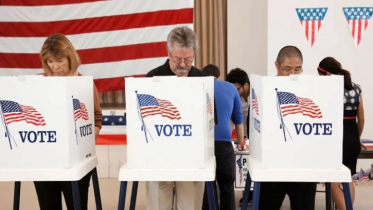
The election, held midway through a president's four-year term, saw American citizens vote for all 435 seats in the House of Representatives and 35 of the 100 seats in the Senate.
With victories in the Senate, the upper house of the legislature, and the House of Representatives, the lower house, Democrats will have control of Congress for the next two years.
Even though the president's name is not on the ballot, this election is seen as an assessment of his rule, and almost every time, the ruling party has to pay the price.
Of the 20 midterm elections held from 1946 to 2022, the party in control of the White House has lost seats in the House of Representatives in 18 of them. The party has lost an average of 26 seats each time. The only exceptions were the Democratic Party led by Bill Clinton in 1998 and the Republican Party led by George W. Bush in 2002.
Political scientists call this trend the "presidential penalty" or "midterm penalty." The incumbent president's party typically loses seats in midterm elections as voters try to regain control of the White House.
House of Representatives: Ruling party loses 18 seats in 20 elections
Al Jazeera's report highlights how many seats the president's party has gained or lost in the House of Representatives in each midterm election from 1946 until Joe Biden's presidency.
Democratic presidents' parties have suffered the biggest setbacks during this period, losing an average of about 29 seats in the midterm elections, while Republican presidents' parties have lost an average of about 23 seats.
The biggest defeat came in 2010. Two years after Barack Obama was elected the first black president of the United States, Democrats lost 64 seats in the House of Representatives in the midterm elections, giving Republicans control of the chamber.
Previously, in 1946, the Democrats, led by Harry S. Truman, lost 56 seats. In 1994, the party lost 54 seats under Bill Clinton. In both elections, the Democratic Party lost control of the House of Representatives.
On the other hand, the biggest defeats for Republicans include losing 50 seats in 1958 under Dwight D. Eisenhower and 48 under Gerald Ford in 1974. In the 2018 midterm elections during Donald Trump's first term, Republicans lost 42 seats and control of the House of Representatives.
The ruling party often loses its majority in the chamber due to large losses. Control of the House of Representatives has shifted from one party to another in midterm elections in 1946, 1954, 1994, 2006, 2010, 2018, and 2022.
Senate: Ruling party has lost seats 13 times in 20 elections
Of the 20 midterm elections held since 1946, the incumbent president's party has lost seats in the Senate 13 times. But it has lost control of the chamber only six times. The elections were held in 1946, 1954, 1986, 1994, 2006 and 2014.
There is a big difference between the House of Representatives and the Senate. While all seats in the House of Representatives are up for election every two years, only about one-third of the 100 Senate seats are up for election every election. This is because senators are elected for six-year terms and not all seats are elected at the same time. As a result, the national political situation and which states are holding elections also have a significant impact on the results.
The biggest setback in the Senate during this time was the Republicans led by Eisenhower. They lost 13 seats in the 1958 election. In 1946, the Democrats led by Truman lost 12 seats, and in 2014, the Democrats led by Obama lost 9 seats. As a result, control of the Senate passed to the Republicans.
Sometimes, the results of elections in the two houses of Congress have been contradictory. In 1982, Republicans led by Ronald Reagan lost 26 seats in the House of Representatives but gained one seat in the Senate.
In 2018, Trump's party lost seats in the House of Representatives but gained one seat in the Senate. Similarly, in 2022, the Biden-led Democrats were able to gain one seat in the Senate despite losing seats in the House of Representatives.
These results show that voter anger against the president does not affect the two chambers of Congress equally. If the electoral map in the Senate is favorable, a party can maintain its position there, while losing in competitive seats in the House of Representatives.
What does it mean to lose control of the House of Representatives or the Senate?
Losing seats and losing control of the chamber are not the same thing. In 1966, Democrats under Lyndon B. Johnson lost 47 seats in the House of Representatives but retained their majority. Twenty years later, in 1986, Republicans under Ronald Reagan lost control of the Senate despite losing only four seats in the House. The party lost eight seats in the Senate in that election.
Control of the two chambers of Congress determines which party sets the legislative agenda and which bills will pass. A bill must pass both the House of Representatives and the Senate before it can be sent to the president for approval or veto. As a result, if the opposition party has a majority in either chamber, it is possible to block the president's plans.
A majority in the House of Representatives allows a party to investigate and impeach the president. A majority in the Senate, on the other hand, allows it to block the appointment of presidential nominees, including federal judges who serve for life.
Source: Al Jazeera