.png)
UN invitation, US obstruction—who has the real power?
Published: 12:38 PM, 9 October 2026
The United States has not allowed Palestinian President Mahmoud Abbas to travel to New York. He has not been granted a visa. Yet the UN General Assembly has allowed him to speak virtually. This conflict between the opportunity to participate in the UN session and the visa authority of the host country raises a big question - who will speak on the international stage, and whose decision is final?
Heads of state and government from around the world gathered in New York for a week of high-level meetings of the United Nations General Assembly from September 22. However, for the second year in a row, visas were not granted to Palestinian officials. The US says the reason is that the Palestinian Authority has failed to implement reforms and is trying to internationalize the Israeli-Palestinian conflict. This includes various actions taken against Israel in international courts.
But the UN has a different position. On September 17, the General Assembly voted 152-3 to allow Palestinian officials who are unable to enter the United States to participate in General Assembly meetings and other UN conferences via video.
UN Secretary-General Antonio Guterres also expressed concern. According to his office, the United States was also called upon to fulfill its responsibility to ensure necessary access for delegates coming to participate in UN work.
Palestine is not a full member of the United Nations; its status in the UN is that of an 'observer state'. But this status does not mean that Palestine has no opportunity to participate in UN activities. However, this question has been part of legal and diplomatic discussions between the UN and the United States for many years.
The dispute is based on the 1947 UN-US Headquarters Agreement. Article 11 of the agreement states that representatives of UN Member States and persons visiting the headquarters on official business at the invitation of the UN shall not be prevented from entering the headquarters area. Article 12 further clarifies that this access shall not depend on the relationship of the person concerned with the United States.
And Article 13 states that the laws of the United States relating to the entry of aliens shall not be applied in such a way as to impede the right of entry granted in Article 11. The agreement also provides for the rapid and free issuance of visas to those who require them.
However, since they are entering US territory, their visas and entry are processed through US authorities; but the main legal question in Abbas' case is whether that visa system can be used in a way that hinders the right to participate in the work of the United Nations.
The United Nations has a long history of disputes with the United States over visas and access to its headquarters. The issue of visas, movement restrictions, and access to headquarters for representatives of countries such as Russia, Cuba, and Venezuela has been raised at the UN on several occasions.
Palestine has a history of such disputes. UN documents state that the permanent observer mission of the Palestine Liberation Organization (PLO) to the UN falls under Articles 11, 12 and 13 of the Headquarters Agreement. That is, the UN position was that the United States had a contractual obligation to ensure their access to New York for official UN business.
The Iranian incident has added a new dimension to the debate. While denying visas to Palestinian officials, the United States allowed the main delegation, including Iranian President Masoud Pezeshkian and Foreign Minister Abbas Araghchi, to attend the General Assembly, but with the condition that their movements be limited to certain areas.
In the case of Palestine, the US did not issue visas. In the case of Iran, although visas were granted, restrictions on movement were imposed. As a result, the nature of the two decisions is not the same, and the reasons given by Washington are not the same. This distinction is important, because viewing the two incidents simply as 'US obstruction of entry to the United Nations' obscures the difference in legal and diplomatic realities.
Putting the two events side by side, the question arises: does the actual opportunity to participate in a UN session depend solely on a country's UN status; or does the country in which the headquarters is located also affect visa and movement decisions?
The General Assembly's high-level week is not just a place for speeches by heads of state and government. There are numerous bilateral meetings, informal discussions, diplomatic contacts and corridor diplomacy. Abbas was able to speak by video; but the big question is to what extent video connections can be an alternative to physical presence in New York for direct meetings, informal discussions or diplomatic contacts with heads of state and government. This is where the difference between 'participation' and 'presence' comes to the fore.
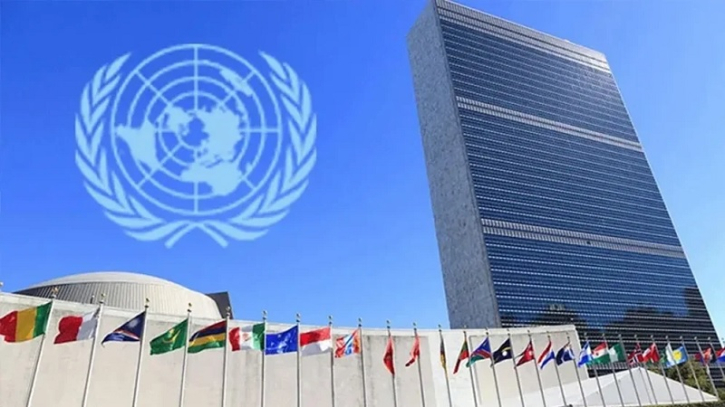
The United Nations is an international organization; but its headquarters are on the territory of the United States. If a state wants to restrict the entry of people coming to participate in the activities of international organizations located on its territory, the question arises—where are the limits of that power? Again, if the United Nations wants to ensure the right to participate in its activities, what is the way to actually implement that right?
The Abbas incident does not provide a definitive answer to that question. Rather, it confronts a legal framework from 1947 with today's geopolitical realities.
And therein lies the main question—if the UN stage is open to all, who has the power to ensure the right to access that stage—the UN, or ultimately the country on whose territory the UN headquarters is located?
.png "Advertisement")