.png)
Drone and missile attacks heat up the Middle East, a new turn in the US-Iran conflict
Published: 05:06 PM, 22 July 2026
Iran and its allies' continued attacks on US military bases and energy transport routes in the Middle East have created intense tension. US forces have also continued to attack Iran. As a result, there has been renewed instability in the price of fuel oil in the international market.
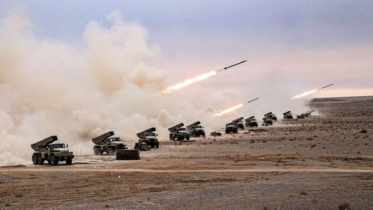
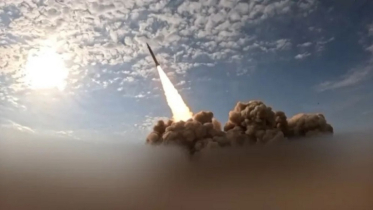
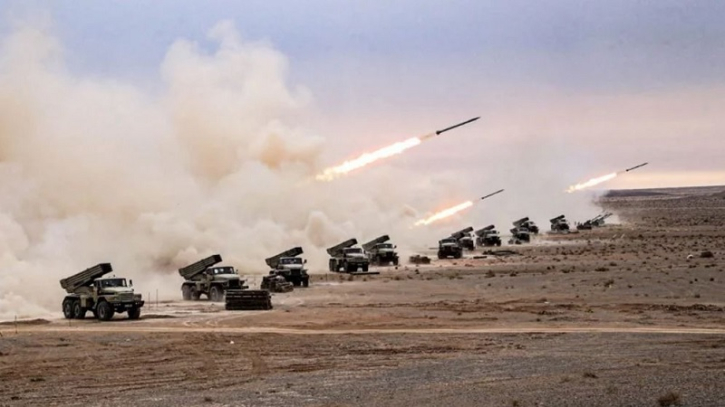
Iranian state media IRIB reported that Iranian forces launched multiple drone and missile attacks targeting US military infrastructure in Al-Azraq in Jordan, Sheikh Isa in Bahrain and Camp Doha in Kuwait on Wednesday morning (July 22).
The Jordanian military said that out of the six Iranian missiles that entered their airspace, four were successfully destroyed and the remaining two fell in uninhabited areas. There were no casualties or damage in the attack.
On the other hand, Bahrain claimed to have intercepted several drones and missiles with its air defense system.
The semi-official Tasnim news agency reported that the attack used a large number of attack drones to target ammunition and supply centers of US ground forces at Camp Doha in Kuwait.
Iran claimed to have attacked a regional data center of US technology company Amazon in Bahrain.
US retaliatory strikes for the 11th consecutive night
The US Central Command said it had carried out airstrikes on various Iranian military bases for the 11th consecutive night to limit their ability to attack commercial shipping in the Strait of Hormuz.
According to Iranian media, a US missile strike on a power substation near the Bushehr nuclear power plant caused a temporary power outage. The attacks in Bushehr and Ilam provinces killed 50 civilians and injured about 500, an Iranian health ministry official said.
US President Donald Trump confirmed that 18 US soldiers had been killed in the war so far. He also renewed his threat to attack Iran's Natanz nuclear facility.
Standstill in the Red Sea and Strait of Hormuz
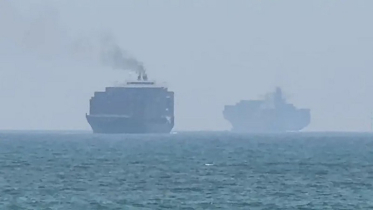
Three tankers carrying Saudi crude oil were forced to change their routes in the Red Sea after Iran-backed Houthi rebels in Yemen declared a blockade or naval blockade on Saudi Arabia's energy transport.
French shipping company 'CMA CGM' has announced an emergency surcharge of $ 65 to $ 165 per container from August 1 as fuel prices have increased due to extreme tension in the Strait of Hormuz.
The price of Brent crude oil in the international market has exceeded $ 91 per barrel and the price of gasoline in the United States has exceeded $ 4 per gallon.
Amid the ongoing unrest, US Secretary of State Marco Rubio said that Washington is still ready to resolve the crisis through diplomacy, but Tehran is not sincere about talks. Meanwhile, the Iranian government is reportedly examining a proposal for a 10-day ceasefire brokered by Pakistan.
Source: The Express Tribune
.png "Advertisement")