The message that Sayed gave to American politics, with a stand for Palestine
Published: 10:55 AM, 7 November 2026
Abdul-Sayed won the election by speaking out against the Israeli occupation and apartheid regime in Palestine. His victory shows that speaking out for Palestine is no longer an electoral obstacle in US politics. In fact, this position has become one of the strengths of Abdul-Sayed's victory in the Michigan election.
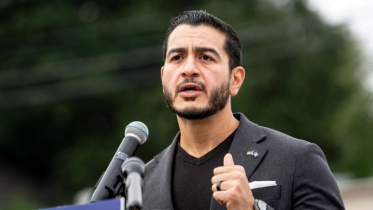
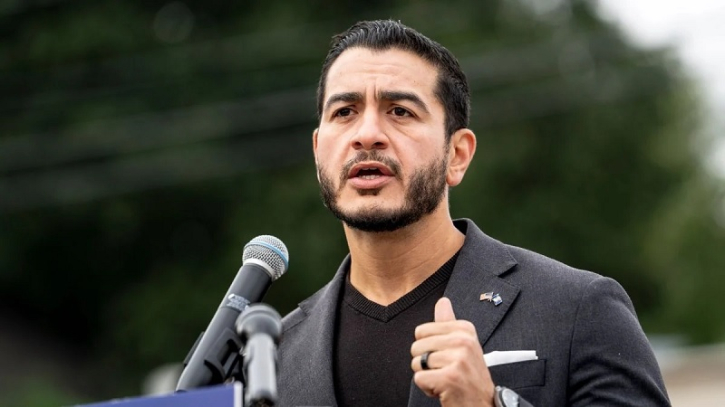
Dr. Abdul El-Sayed was elected to the United States Senate in the Michigan election held on November 3. He received 52 percent of the vote, defeating Republican candidate Mike Rogers, who received 46 percent.
El-Sayed made history with this victory. He is the first Muslim-American elected to the US Senate and only the sixth Arab-American to win a Senate seat.
El-Sayed's victory was part of a major electoral victory for Democrats, who took control of both houses of Congress.
But Abdul El-Sayed's victory is not just an electoral success for a Democratic candidate. It also has profound political and social significance for Michigan, the United States, and international politics.
This victory proves that opposing the powerful pro-Israel lobby and taking a firm stand for Palestine was not the reason for his electoral defeat in a key swing state in the Midwest. On the contrary, it can be said that this position played a significant role in ensuring his victory.
Political examination in the name of recognition
Notably, throughout the election campaign, El-Sayed was repeatedly asked whether he recognized Israel's "right to exist."
El-Sayed highlighted the absurdity of this media question and its inherent double standards. He asked, "Are politicians ever asked whether Palestine has the right to exist? Whether the Palestinians have the right to self-determination?"
The Palestinians have the right to live freely, with equal dignity and security in their homeland. There can be no compromise on this right.
Last September, a group of Michigan rabbis, cantors, and Jewish community leaders launched a campaign called NonNegotiable Michigan. Supported by the Zionist Action Fund, the campaign asked Democratic candidates and party leaders to commit to five policy issues: Jewish safety, the right to self-determination, Jewish sovereignty in Israel, and a positive view of the Middle East.
It was essentially a political initiative by frustrated Zionists, presenting an Israel-centric political agenda as a broader concern for Jewish voters' security and identity, and creating pressure to accept that agenda as a criterion for acceptance for Democratic candidates.
Of course, there is no objection to the demand that Jewish citizens of the United States ensure their security, dignity, and political participation. These rights must be inviolable. Abdul El-Sayed has also repeatedly expressed his support for these rights.
But El-Sayed could not offer any statement that would satisfy those who sought to equate criticism of Israel with anti-Semitism, because their aim was to place Israel's settlement expansion project above criticism and accountability.
This question will remain important as we continue to fight for a change in US policy and an end to US support for Israel's long-standing aggression against the existence, rights, and freedom of the Palestinian people.
Israel has no right to continue as a violent colonial and apartheid state, denying the basic human rights of Palestinians and committing mass atrocities to maintain its dominance over their land and lives.
No state can have such a right. The Palestinians have the right to live freely, with equal dignity and security in their homeland. There is no compromise on this right.
Politics of fear and hatred
Abdul El-Sayed's victory is also important in the fight against anti-Muslim and anti-Arab sentiment. He has been the target of an open hate campaign throughout the election campaign. Mike Rogers and his supporters have spent months trying to portray El-Sayed's Arab and Muslim identity as a political weakness.
He has been accused of having ties to Hezbollah, Hamas, and the Muslim Brotherhood. He has even been accused of supporting the September 11, 2001 terrorist attacks. He has also been known to campaign against Islam, including trying to impose Sharia law in the United States.
These accusations had no factual basis. The aim was to systematically portray him as an outsider, dangerous, and anti-American.
It is deeply saddening and disappointing that El-Sayed, his campaign team, and supporters have repeatedly stated that he was born in Michigan and is an American like any other US citizen.
This tendency to isolate is not new to the United States. Rather, it has long been part of the country's mainstream culture. It has been reinforced through political discourse, popular media, entertainment, and social discourse.
The bad guys lost.
In the words of newly elected Senator Abdul El-Sayed, 'The bad guys lost.'
Michigan voters rejected a campaign built on fear and hatred. But this victory should not be seen as a defeat for the politics of hate.
El-Sayed's victory dealt a major blow to a long-held argument among the Democratic Party's established political leadership: that progressive candidates are unfit to win elections.
Using this logic, the party's dominant leadership has long cornered progressive candidates, protected the established political system, and avoided implementing its own declared policies.
The main argument against Abdul El-Sayed in the party primaries was that he would not be able to win the general election in a politically swing state like Michigan because he was too progressive.
In other words, challenging the influence of the pro-Israel lobby or demanding an end to US involvement in Israeli human rights abuses is theoretically acceptable, but it cannot be done if it risks harming powerful political interests.
Lessons from the 2024 election
The 2024 presidential election is an important example in this regard.
A public opinion poll conducted by the Institute for Middle East Understanding and YouGov shows that Kamala Harris could win five to seven times more votes than she would lose if she took a stand in favor of stopping arms sales to Israel.
The organization presented the results of the survey at the Democratic National Convention in Chicago and also conveyed them to Harris' campaign, but the issue was ignored.
Democratic leaders prioritized existing policies and the satisfaction of powerful interest groups rather than responding to the concerns and demands of voters.
The impact has not been limited to one issue or one election. Rather, it has deepened political alienation among voters who have been repeatedly told that their concerns and values matter, but who ultimately find that they are of little importance compared to the demands of big donors and the interests of party insiders.
There is no guarantee that El-Sayed's victory will ensure the necessary changes, but his supporters believe that the victory opens the door to new possibilities in politics.
Source: Middle East Eye