.png)
US-Iran dialogue in Switzerland: What is being discussed, who is participating?
Published: 08:45 PM, 21 June 2026
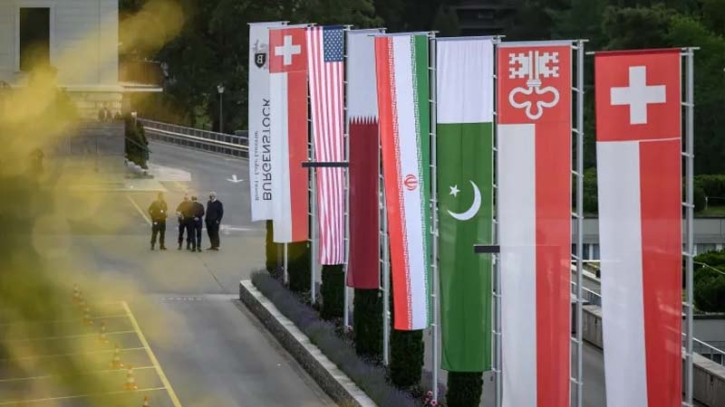
The much-awaited technical-level dialogue between the US and Iran has begun in Switzerland. Several important issues, including the ongoing crisis in the Middle East, Iran's nuclear program, the implementation of the ceasefire in Lebanon and the situation in the Strait of Hormuz, are going to be discussed. The meeting, which was mediated by Qatar and Pakistan, is being attended by top-level representatives of the two countries as well as regional leaders. And it could play an important role in determining the future situation in the Middle East.
Al Jazeera says that the agreement signed between Tehran and Washington last week has come under new pressure due to Israel's continued attacks on Lebanon. Iran claims that the agreement includes a ceasefire in Lebanon and that Israel's attacks are a clear violation of that agreement.
And in such a situation, talks between the US and Iran are being held on Sunday (June 21) under the mediation of Qatar and Pakistan. Earlier on Thursday, US President Donald Trump and Iranian President Masoud Pjeshkian signed a memorandum of understanding (MOU) electronically.
Who is participating?
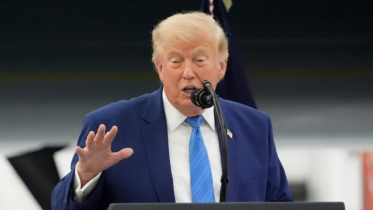
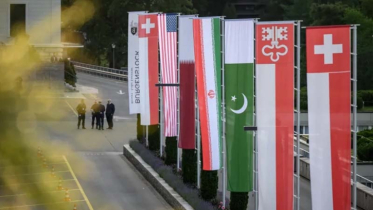
The talks on Sunday are being held at a luxury hotel complex on Lake Lucerne in the Swiss town of Bürgenstock. The Iranian delegation is led by the country's parliament speaker Mohammad Bagher Ghalibaf and Foreign Minister Abbas Araghchi. The US delegation is led by Vice President J.D. Vance. He is accompanied by Trump's special envoy Steve Witkoff and son-in-law Jared Kushner.
Pakistani Prime Minister Shehbaz Sharif, Army Chief Field Marshal Asim Munir and Qatari Prime Minister Sheikh Mohammed bin Abdulrahman bin Jassim Al Thani are also scheduled to attend the talks.
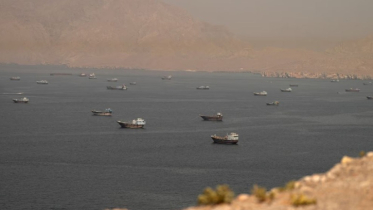
Meanwhile, Iran's Islamic Revolutionary Guard Corps (IRGC) has announced the closure of the Strait of Hormuz, accusing it of violating a ceasefire in Lebanon. Before leaving for the talks on Saturday, JD Vance told reporters that he hoped for progress on the "nuclear issue" and the "Lebanon ceasefire issue."
Iranian Foreign Ministry spokesman Esmail Baghai said the Iranian delegation would emphasize the implementation of the US commitments in the MOU and seek a clear explanation of how they will be implemented.
What will be discussed?
The technical talks between the US and Iran will last for 60 days. During this time, officials from both sides will discuss the final stages of the peace process and seek solutions to complex issues such as Iran's nuclear program and the war in Lebanon.
However, Al Jazeera's Rasul Sardar Atas from Tehran reported that before leaving for Switzerland, Ghalibaf said that Iran was essentially going to remind the US that they must first implement the MOU, or at least start implementing it. Technical talks will proceed only after it is accepted.
Atas said Iran is specifically raising the issues of ending the war in Lebanon, lifting the US naval blockade, reopening the Strait of Hormuz, releasing Iran's seized assets and lifting US sanctions on the oil and petrochemical sectors.
Mohammad Mokhbar, an advisor and aide to Iran's Supreme Leader, warned on Sunday that Tehran will not accept a paper agreement. Washington must fully implement its promises.
In a post on X, he said that the US understands the language of economics and profit and loss best. He wrote, "If the agreement is limited to paper only, then the flow of energy in the Middle East will also stop."
He added, "Our negotiators will not be satisfied until the full implementation of the promises and the rights of the people are ensured." He also mentioned the victims of the conflict, saying that Iran will not forget them.
Lebanon at the center of the talks
However, the ceasefire in Lebanon could become the most important issue on the first day of the talks. Despite the ceasefire announced on Saturday, dozens of people have been killed in Israeli attacks in Lebanon.
Al Jazeera's Mohammad Wal reported from Tehran that Iran will not move forward with the implementation of the MOU unless Israel abides by the agreement. The first clause of the memorandum of understanding states that the United States and Iran have agreed to "immediately and permanently cease military operations on all fronts, including Lebanon."
The memorandum also promises to protect Lebanon's "geographical integrity and sovereignty." However, it does not mention Israel by name. Israel currently occupies about a fifth of Lebanon and has been carrying out attacks almost daily since early March. More than 4,000 people have been killed and more than a million displaced.
According to Iran, the United States has the responsibility to force Israel to abide by the agreement.
Ross Harrison, a senior fellow at the Middle East Institute, told Al Jazeera that both sides want the first phase, that is, the implementation of every clause of the MOU, to be successful before moving on to the second phase of technical negotiations.
In his words, "Iran's position is very clear. Both Israel and the United States have attacked Iran in the past during the negotiations. So they want to be sure that the United States can prevent Israel from taking military action against Hezbollah in Lebanon."
Harrison said that according to Iran, according to the MOU, it is the responsibility of the United States to control Israel. Because Israel is not a signatory to the memorandum and can take steps to nullify the agreement if it wants.
In his words, "Israel could become a major obstacle to these negotiations at this point. They are a signatory
.png "Advertisement")