.png)
Hydration breaks at the World Cup: a relief or a reason to lose the rhythm of the game?
Published: 11:05 PM, 23 June 2026
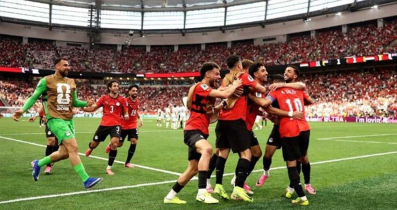
The rules of football have changed many times over time. After the permission of substitutions in 1970, the introduction of VAR in 2016, hydration breaks have now become the focus of discussion at the 2026 World Cup. The two three-minute breaks scheduled for each half of the match are now the new reality of the World Cup, which has sparked widespread debate.
According to FIFA, the main purpose of this break is to keep players cool and ensure adequate water supply in the North American summer weather. However, in reality, it has now become more than just a water break, but an important tactical break.
Additional opportunities for coaches
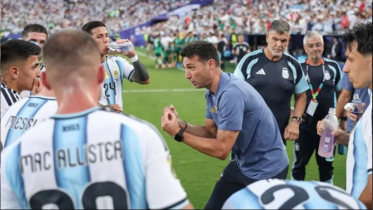
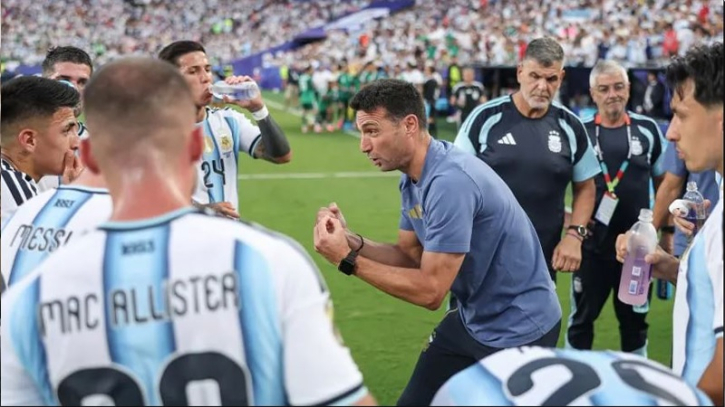
Argentina coach Lionel Scaloni said that during normal breaks, players have very limited time to talk effectively due to their trips to the dressing room. But hydration breaks allow coaches to give quick instructions on the sidelines.
United States coach Mauricio Pochettino analyzed the team's weaknesses using a laptop at this time. Although Scaloni does not use technology, he also believes that these breaks provide an opportunity to change tactics according to the match situation.
Breaks change the course of the match
There have been 44 matches in the World Cup so far. An analysis has begun to determine how much hydration breaks change the course of the match.
A report by the Spanish newspaper El Pais said that in 24 of the 56 breaks in the first 28 matches, the pace of the match changed after the restart. In another 20 cases, the attacking team lost their dominance. That is, in about 78 percent of cases, the break affected the rhythm of the match.
Some notable examples
Argentina vs. Austria: After Lionel Messi missed a penalty, Austria began to take control of the match. But after the break, Argentina regrouped and regained dominance in the match.
Brazil vs. Morocco: Carlo Ancelotti's team was in control of the match before the break, but then lost it. The match ended in a 1-1 draw. Australia vs Turkey: Both of Australia's goals came after the hydration break.
South Korea vs Czech Republic: After Korea's equalizer, celebrations, double substitutions and hydration breaks took 5 minutes and 16 seconds, while only 17 seconds of actual play took place. This completely stopped the pace of the match.
Mixed reactions in the gallery
Argentina fans expressed their dissatisfaction with the hydration breaks at the start of the World Cup. As soon as the break was announced in the matches against Algeria and Austria, two sounds could be heard from the gallery. However, that reaction changed within seconds. Spectators began to crowd the stadium corridors for food, drinks or toilets.
Criticism is high
Many World Cup coaches have criticized the new rule. France coach Didier Deschamps said, "No matter how well a team plays, a three-minute break breaks the rhythm of the game."
According to Lionel Scaloni, ‘It’s dividing the match into four halves. That’s the reality now.’
Uruguay coach Marcelo Bielsa was more blunt, saying, ‘It doesn’t add anything significant, it loses a lot.’
However, former US footballer Alexi Lalas has a different opinion. According to him, ‘It’s changing the way football is played, trained and watched. But at one time, substitutions, three-point wins or VAR brought about the same changes.’
All in all, the traditional 45-minute football of two halves is now taking on a new form. And the debate over hydration breaks is set to intensify throughout the World Cup.
.png "Advertisement")